
Shop Now
Institutional page for the HOMCOM brand hub.
Quick Answer: How Do You Clean Sofa Covers?
The safest way to clean sofa covers is to match the cleaning method to the cover’s care instructions, fabric, and construction.
A practical cleaning process is:
The key point is that a removable sofa cover is not automatically machine washable. Always check the care instructions before washing it.
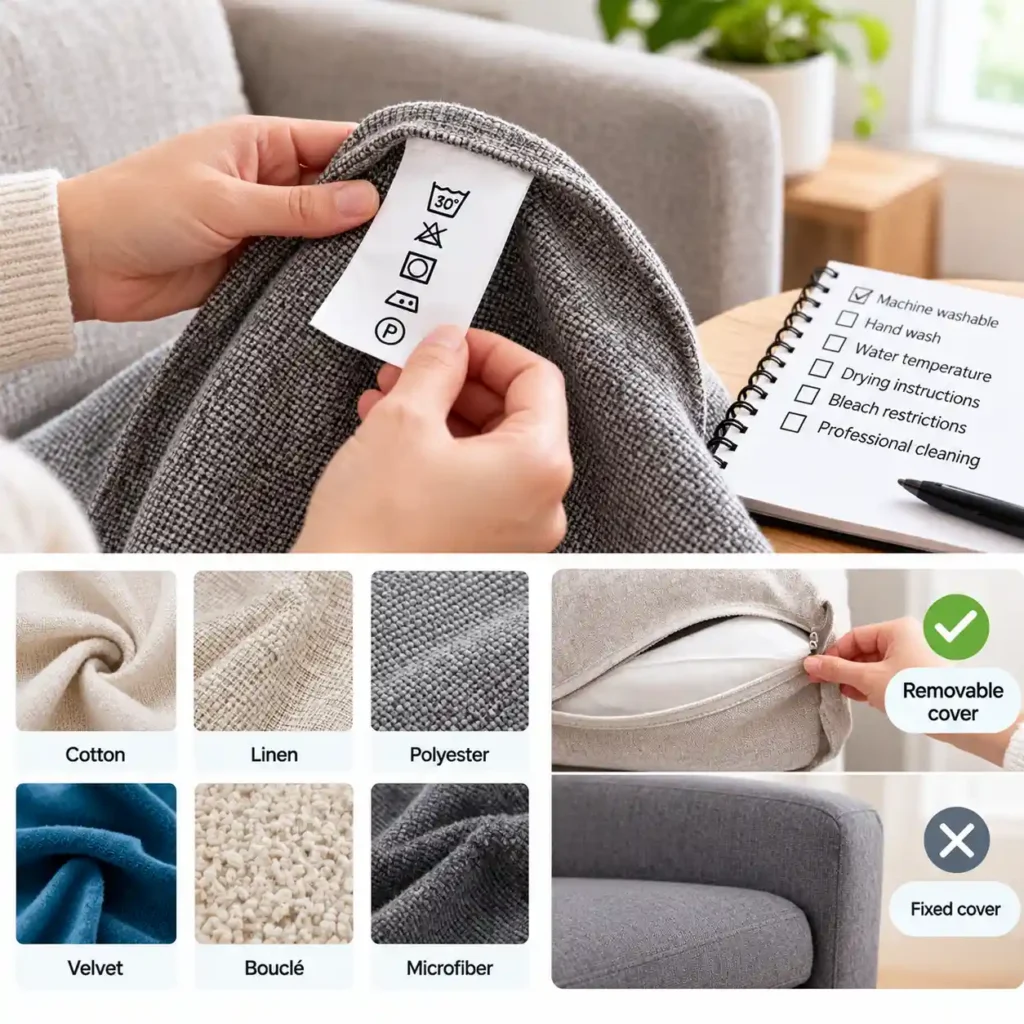
Before applying water, detergent, or another cleaning product, check the sofa cover’s care label and manufacturer’s instructions.
Look for information about:
Care labels are there to help prevent damage caused by using the wrong washing or cleaning method. When instructions are available, follow them instead of relying on a general cleaning routine. [1]
The same cleaning method does not work for every sofa cover.
Common upholstery fabrics include cotton, linen, polyester, performance fabrics, velvet, bouclé, and microfiber. Covers can also be either removable or permanently attached to the sofa.
Before cleaning, determine:
If the information is unclear, choose the least aggressive method allowed by the care instructions rather than assuming that water or a washing machine is safe.

Start with dry cleaning before introducing moisture.
Use an upholstery attachment to remove:
Vacuuming first prevents loose debris from becoming mixed with water or cleaning products during the next stage.
For removable cushions, also clean around the areas underneath them, where dust and hair can accumulate.
If pets use the sofa, remove as much loose hair as possible before spot cleaning or washing the cover.
A vacuum or lint roller can help with surface hair. For heavily used sofas, making hair removal part of regular maintenance can reduce the amount of deep cleaning needed later.
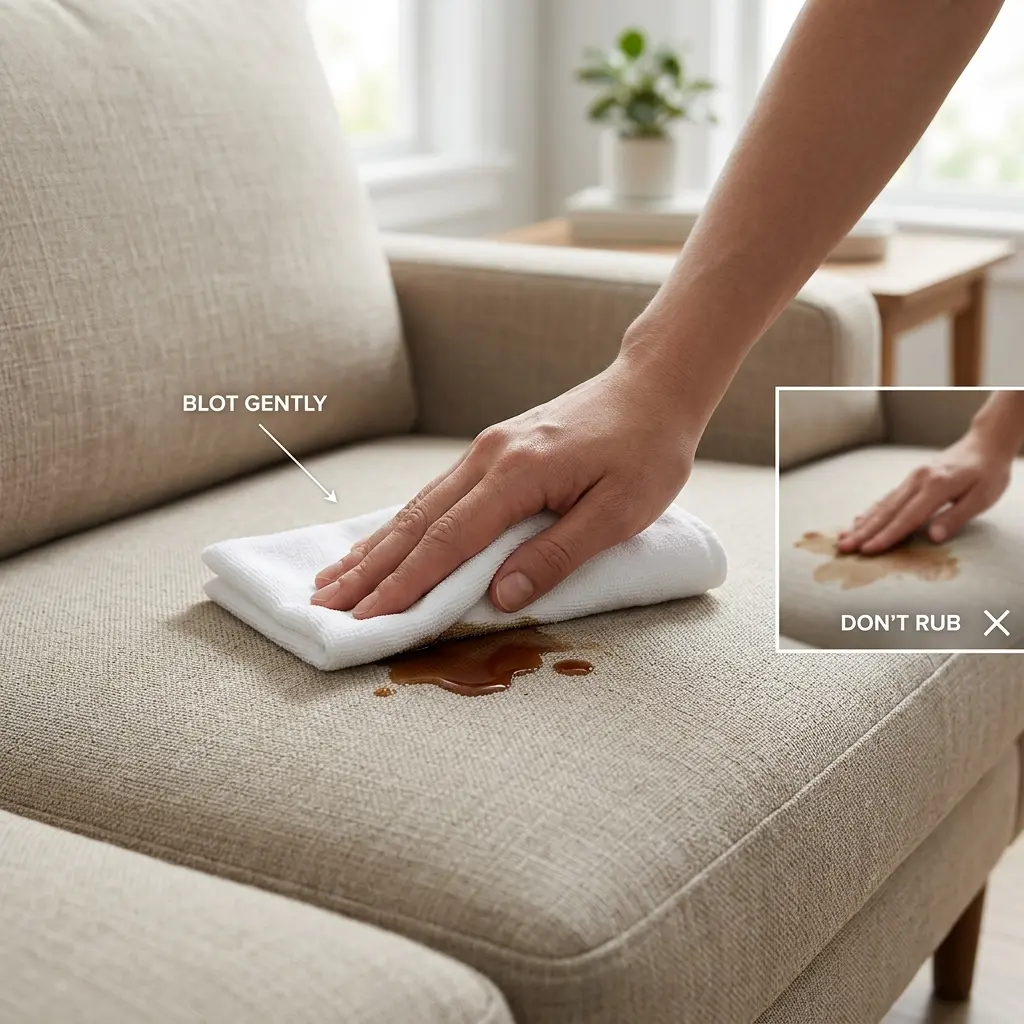
Deal with spills as soon as practical.
Use a clean, absorbent cloth to blot rather than aggressively rub the affected area. Rubbing can spread the stain and place additional stress on the fabric.
For larger stains, work carefully and avoid spreading the cleaning solution over a wider area.
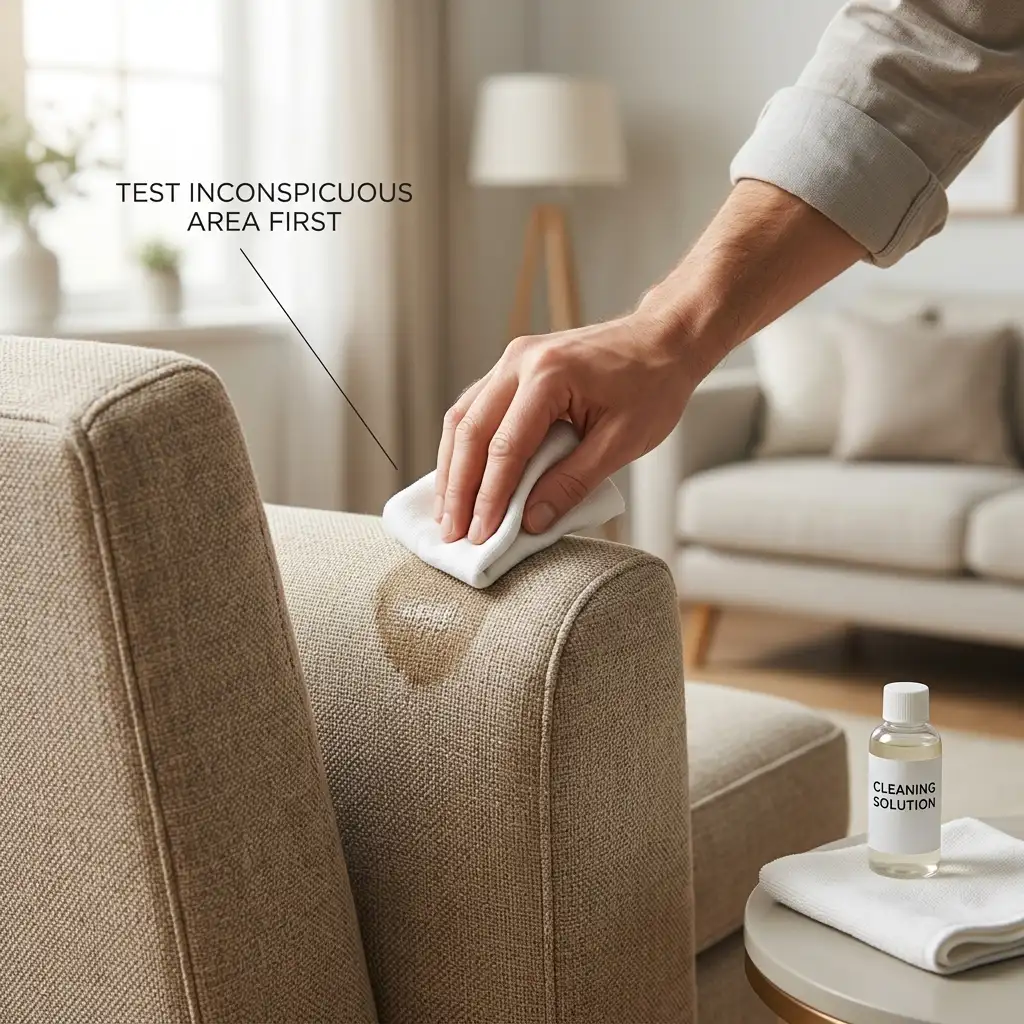
Before applying a cleaning solution to a visible area, test it on a small, inconspicuous section of the fabric.
This can help reveal unwanted changes in colour or appearance before the cleaning method is used on the whole cover. University of Georgia Extension guidance for upholstered furniture also recommends pretesting cleaning agents and warns that excessive wetting can leave visible rings or affect the upholstery finish. [2]
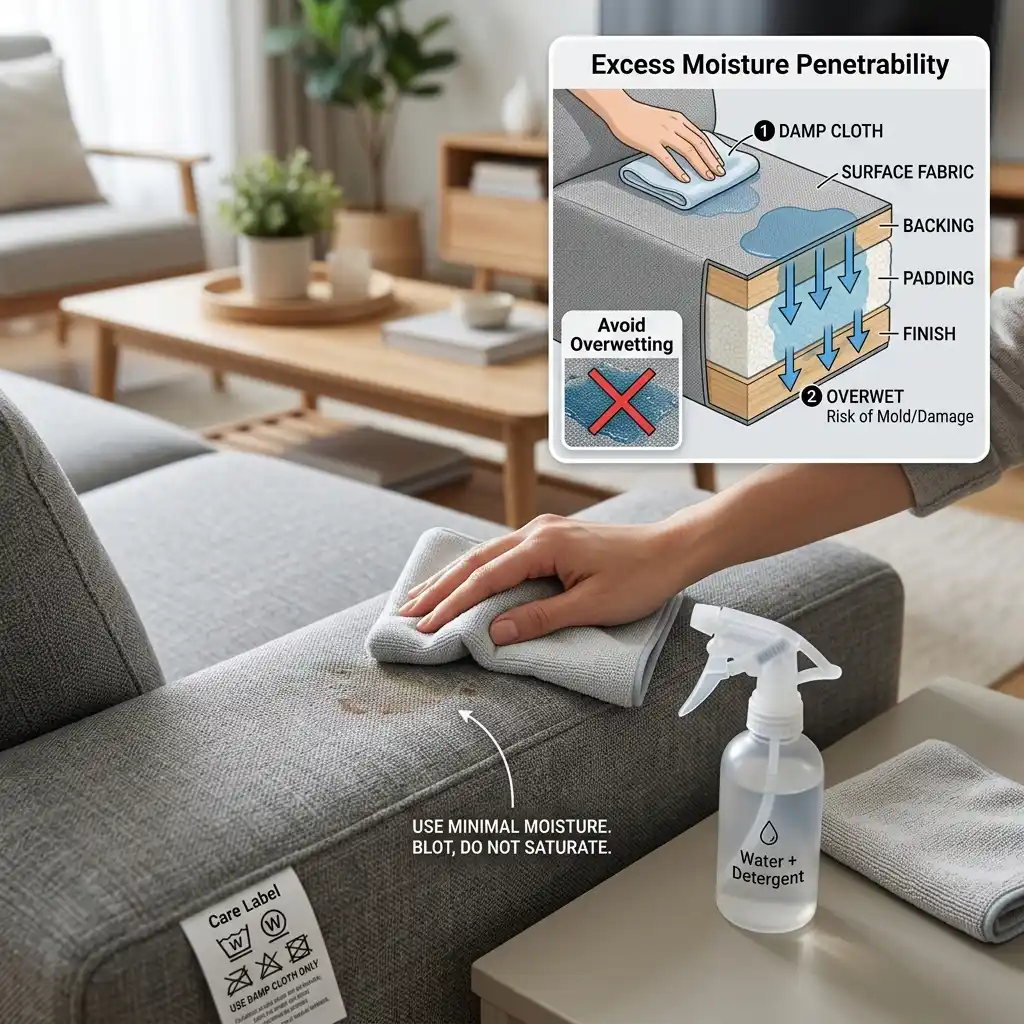
More cleaning solution does not necessarily mean better cleaning.
Excess moisture can penetrate beyond the fabric surface and may affect the backing, padding, finish, or drying process. Use only the amount of moisture permitted by the fabric’s care instructions.
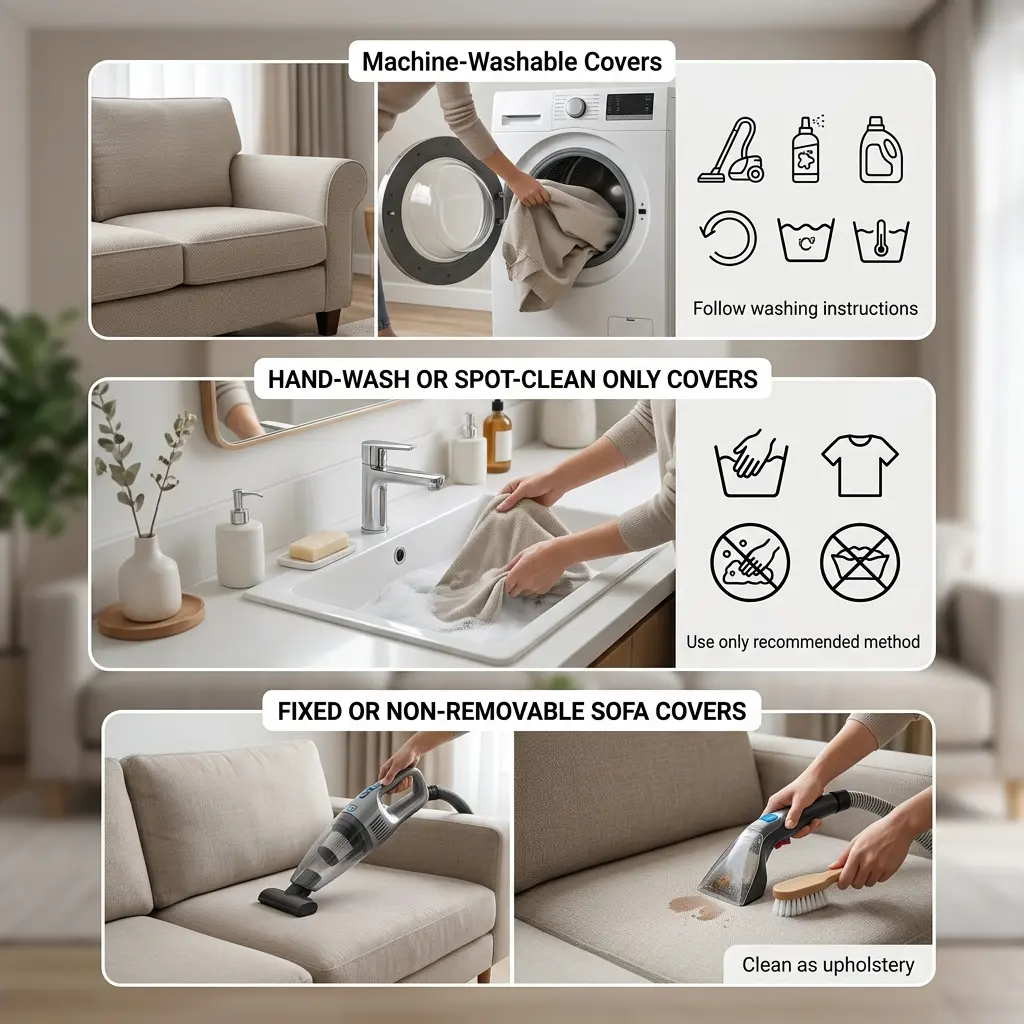
If the manufacturer specifically confirms that the sofa cover is machine washable, follow the recommended washing instructions.
A practical process is:
Do not assume that every machine-washable cover should be washed in cold water, on a gentle cycle, or at the same temperature. The correct settings depend on the particular cover.
Some covers may require hand washing or spot cleaning rather than machine washing.
In this situation:
If the care label does not permit water-based cleaning, do not experiment with a homemade water-and-detergent solution.
A fixed sofa cover should be cleaned as upholstery rather than treated like a removable piece of laundry.
Start by vacuuming the surface and then spot clean according to the fabric’s care instructions. Use minimal moisture where required and avoid saturating the upholstery.
For large stains, extensive soiling, or fabrics requiring specialist treatment, professional upholstery cleaning may be a safer option.
Fabric type can influence the appropriate cleaning method, but the manufacturer’s care instructions should always take priority.
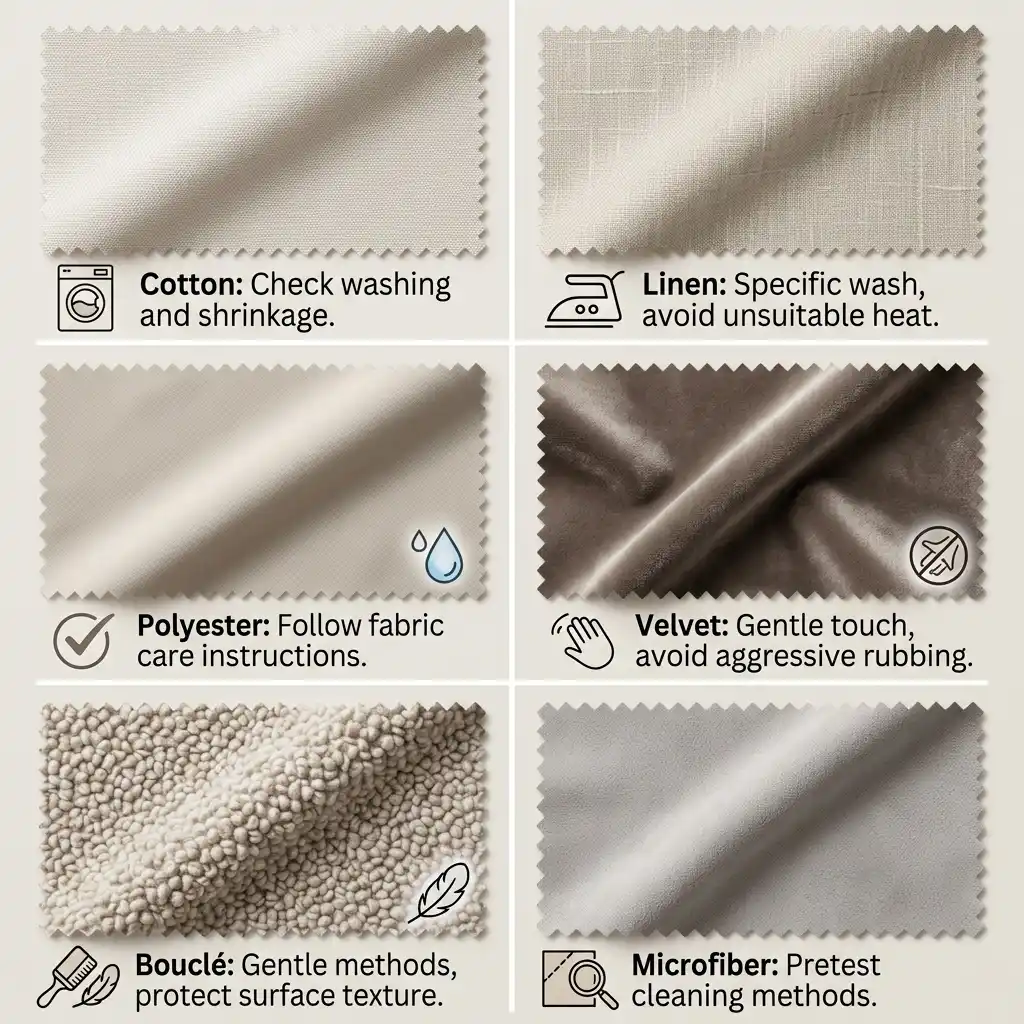
| Fabric or Cover Type | Main Cleaning Consideration |
|---|---|
| Cotton | Check washing and shrinkage instructions before laundering. |
| Linen | Follow the specified washing and drying method and avoid unsuitable heat. |
| Polyester / Performance Fabric | Follow the fabric’s specific care instructions rather than assuming all polyester covers can be treated the same way. |
| Velvet | Check the care instructions carefully and avoid aggressive rubbing or unsuitable moisture. |
| Bouclé / Textured Fabric | Use gentle cleaning methods that do not unnecessarily disturb the surface texture. |
| Microfiber | Follow the manufacturer’s cleaning instructions and test the chosen method before treating a visible area. |
The important point is that fabric name alone does not determine the cleaning method. The construction, finish, backing, and manufacturer’s instructions can all affect how the cover should be cleaned.
Cleaning does not end when the washing or spot treatment is finished. Incorrect drying can also affect the cover.
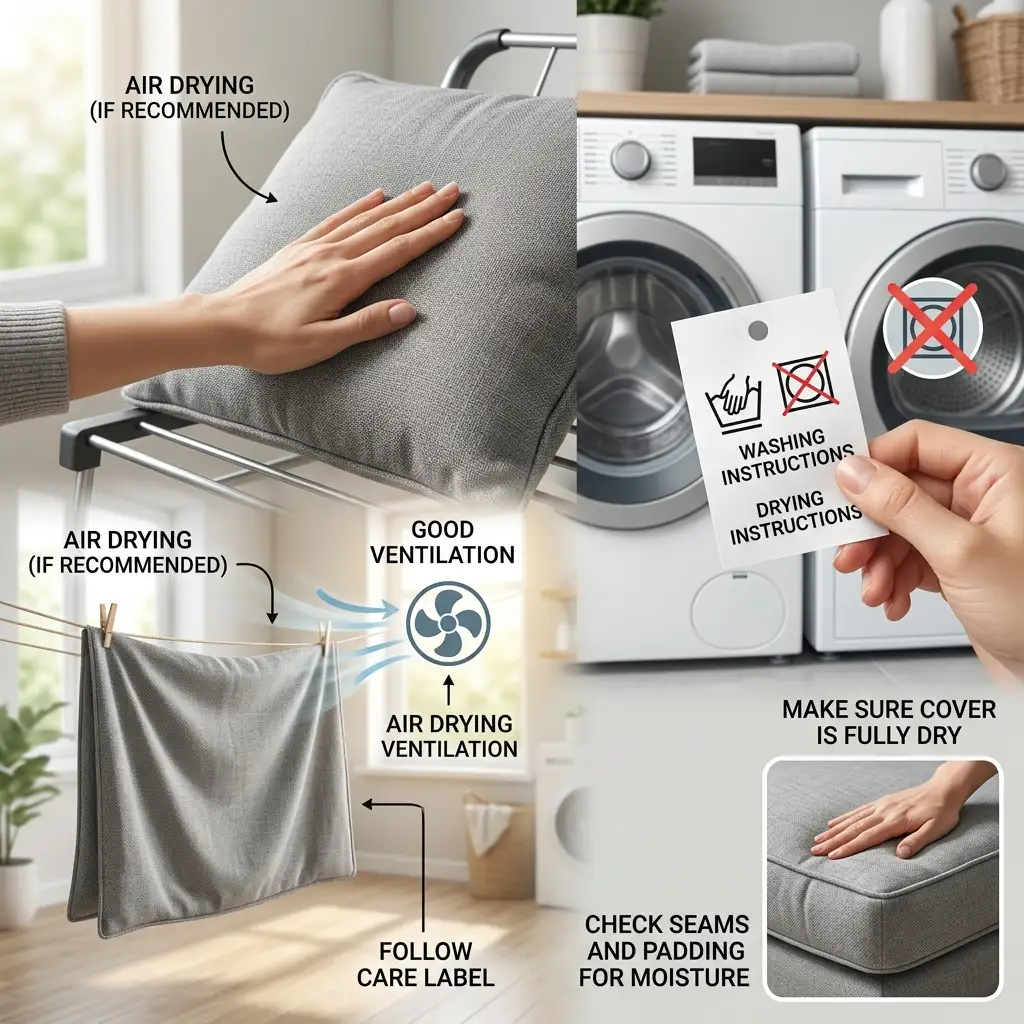
Do not automatically place a sofa cover in a tumble dryer after washing.
If the manufacturer does not permit tumble drying, use the recommended alternative. Excessive heat can contribute to problems such as shrinkage, shape changes, fading, or difficulty reinstalling the cover.
Air drying may be appropriate for some covers, while others may have specific machine-drying instructions.
The safest approach is to follow the care label rather than applying one drying method to every sofa cover.
Thicker fabrics and cushion covers can retain moisture longer than they appear to from the surface.
Make sure the cover has dried sufficiently before returning the sofa to normal use, particularly when moisture may have reached seams, backing materials, or cushion interiors.
After cleaning and drying, reinstall the cover without forcing it into position.
Before fitting it:
Some manufacturers may specifically recommend reinstalling a cover while it is slightly damp to make fitting easier. Do not treat this as a universal rule; use that method only when the manufacturer’s instructions support it.
If a cover has become noticeably smaller after washing, do not force it back onto the sofa. Check the care instructions and determine whether the cover requires further treatment or professional assistance.
There is no single cleaning schedule that works for every sofa.
Instead, adjust maintenance according to:
Regular vacuuming and prompt treatment of spills can help prevent dirt and stains from becoming more difficult to remove.
For heavily used sofas, especially those in homes with children or pets, more frequent maintenance may be appropriate.
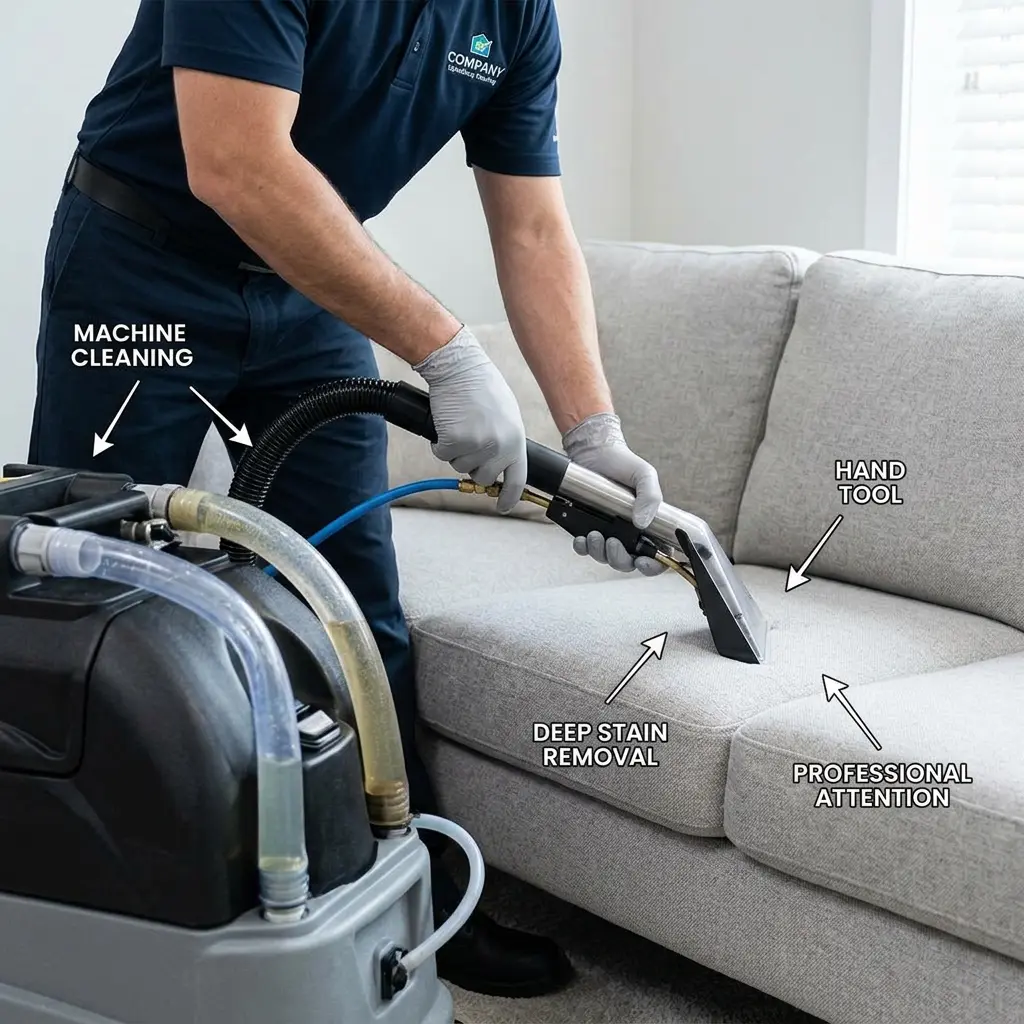
Professional cleaning may be appropriate when:
Professional cleaning is particularly worth considering when the potential cost of damaging the upholstery is greater than the benefit of trying an unverified DIY method.
If you use a professional cleaner, provide the fabric information and care instructions whenever possible.
Cleaning requirements can also become an important consideration when buying a sofa or replacement cover.
If easy washing is a priority, look for an explicit manufacturer statement confirming that the cover is machine washable.
Do not assume that a removable cover has this feature.
A removable cover can make routine cleaning more convenient because the fabric can be taken away from the sofa for cleaning.
However, removability alone does not confirm that the cover can be machine washed.
For homes with children or pets, verified features such as stain-resistant fabric, easy-clean construction, or pet-friendly materials may influence the buying decision.
Only include these claims when they are explicitly supported by the product information.
A sofa cover that is easy to wash is more useful when it can maintain its intended appearance and fit through repeated cleaning.
Where verified information is available, consider:
The goal is not simply to find a cover that can be cleaned once. It is to choose a cover whose maintenance requirements fit the way the sofa will actually be used.
The safest approach to sofa cover cleaning is to check the care instructions first, remove loose dirt, treat stains carefully, use a fabric-appropriate cleaning method, and control moisture and heat during drying.
A removable cover is not automatically machine washable, and a cleaning method that works for one fabric may damage another. When the cover is fixed, delicate, non-washable, or difficult to clean safely, professional cleaning may be the better option.
Only when the manufacturer’s care instructions allow machine washing. A removable sofa cover is not automatically machine washable.
Follow the recommended washing and drying instructions and avoid unsuitable heat. Do not use a dryer unless the care instructions permit it.
Vacuum the upholstery first, then use the cleaning method specified for the fabric. Avoid excessive moisture and consider professional cleaning for large or difficult stains.
Blot spills instead of rubbing them, test the cleaning method on an inconspicuous area, and use a treatment that is suitable for the fabric and its care instructions.
Useful features can include removable construction, verified machine-washability, suitable fabric, and durability through repeated cleaning. Always check the manufacturer’s specific care instructions.
[1] American Cleaning Institute — Fabric Care / Fabric Care Symbols
[2] University of Georgia Extension — Textiles Care: Upholstered Furniture and Stain Removal Guidance