
Shop Now
Institutional page for the HOMCOM brand hub.
Quick answer: Choosing a power lift recliner for an elderly user starts with the person’s mobility, body size, daily routine, and living space—not simply the chair’s features.
For older adults, pay particular attention to how easily the chair supports sitting down and standing up, whether the seat and armrests provide a comfortable fit, whether the remote is simple to operate, and whether there is enough clear space around the chair for everyday movement.
A practical selection process is:
User Needs → Size & Fit → Lift & Recline → Room Space → Comfort & Controls → Extra Features → Price & Support
The right power lift recliner should provide the functions an older adult actually needs without adding unnecessary features that make the chair harder to use.
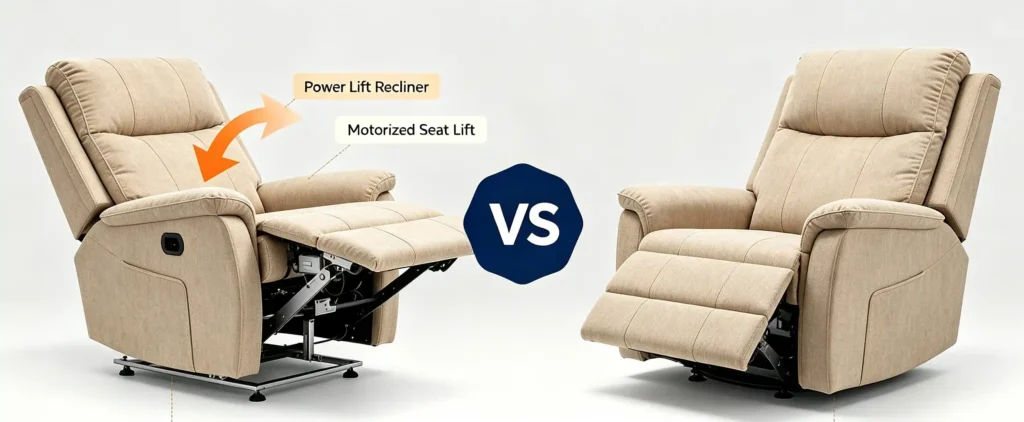
A power lift recliner combines two functions: powered reclining and a lifting mechanism that helps the user move from a seated position toward standing. Unlike a standard recliner, the chair uses a motorized lift function to raise and tilt the seat. The FDA has classified a power lift chair under the device category “Chair, Positioning, Electric.” [3]
This makes a power lift recliner different from a standard recliner, which may provide reclining but does not necessarily include a powered lifting function.
Before buying, however, it is important to distinguish between a commercially sold power lift recliner and a medically prescribed seat lift mechanism. Medicare has specific coverage rules for seat lift mechanisms, including medical-necessity requirements, so purchasing a power lift recliner does not automatically mean that the full chair will be covered. [1]
Before comparing chairs, consider how the older adult will actually use the recliner.
Think about:
For an older adult, the ability to move between sitting and standing can be more important than having a long list of extra features. If the user has specific medical or mobility needs, consider discussing the appropriate seating and transfer requirements with a qualified healthcare professional. the chair, consider how easily both the user and caregiver can access the controls and surrounding space.
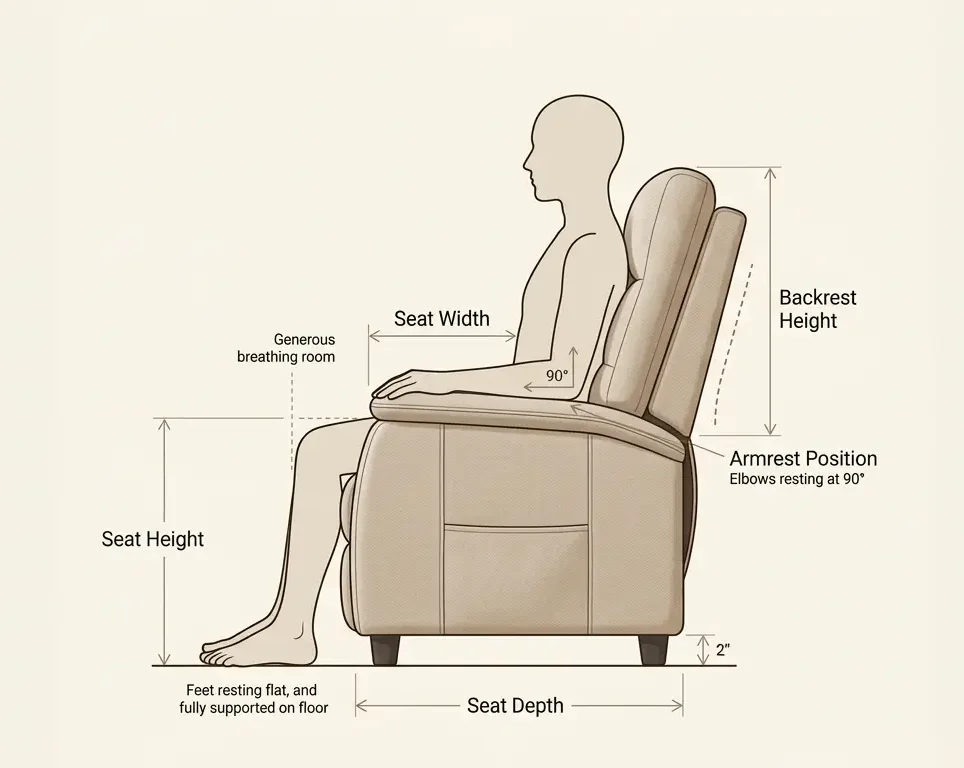
A power lift recliner should fit the person rather than simply fit the room.
Check the:
An older adult should be able to sit comfortably with their feet properly supported and have enough room to change position without feeling restricted. Seat height is particularly important because a chair that is too low may make getting up more difficult.
Armrests also matter because they can provide a stable place for the user to position their hands when sitting down or standing up.
Use the manufacturer’s measurements and recommended user height and weight rather than choosing a chair based only on its overall appearance.
Different users may need different sizes, such as petite, standard, large, or tall models. The goal is to match the chair to the user’s body proportions and daily movement.rge, or tall chair designs, so there is no single “best” size for every elderly user.
Once the basic fit is right, compare how the chair moves.
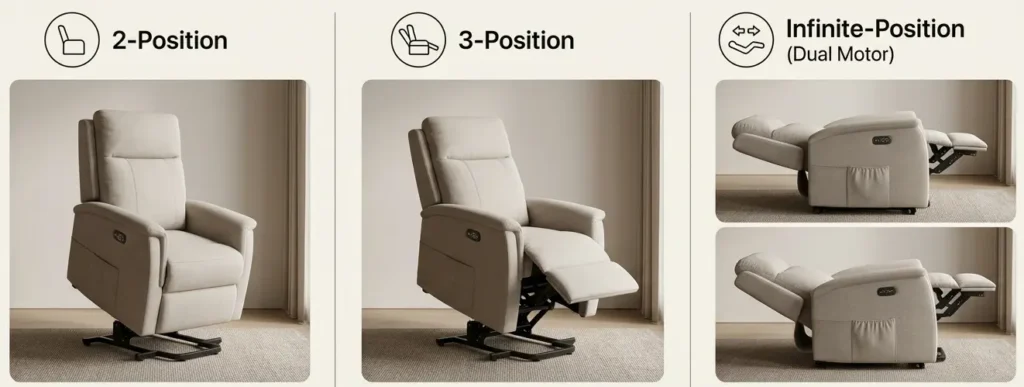
Common options include:
The best option depends on how much positioning flexibility the user actually needs.
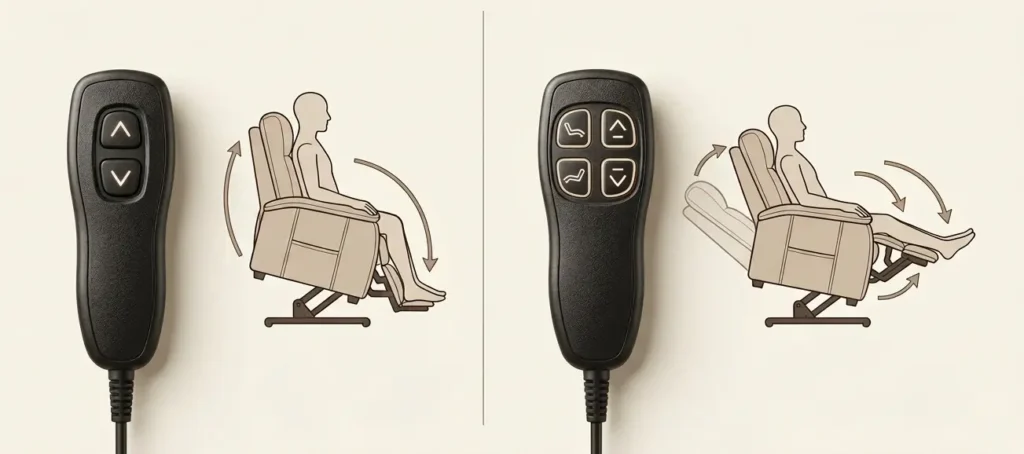
A single-motor design may provide simpler movement, while a dual-motor design can allow more independent adjustment of different sections of the chair.
Look at the manufacturer’s specifications for:
Do not compare these numbers in isolation. The more important question is whether the movement is appropriate for the intended user.
A lift recliner needs enough space not only to stand upright but also to operate when reclined.
Before purchasing, check:
Some recliners require space behind the chair when reclining, while wall-hugger designs are intended to reduce this requirement.
Also consider where the power outlet is located and whether the power cord can be positioned without creating an inconvenient or unsafe setup.
After fit and function, consider the user’s everyday experience.
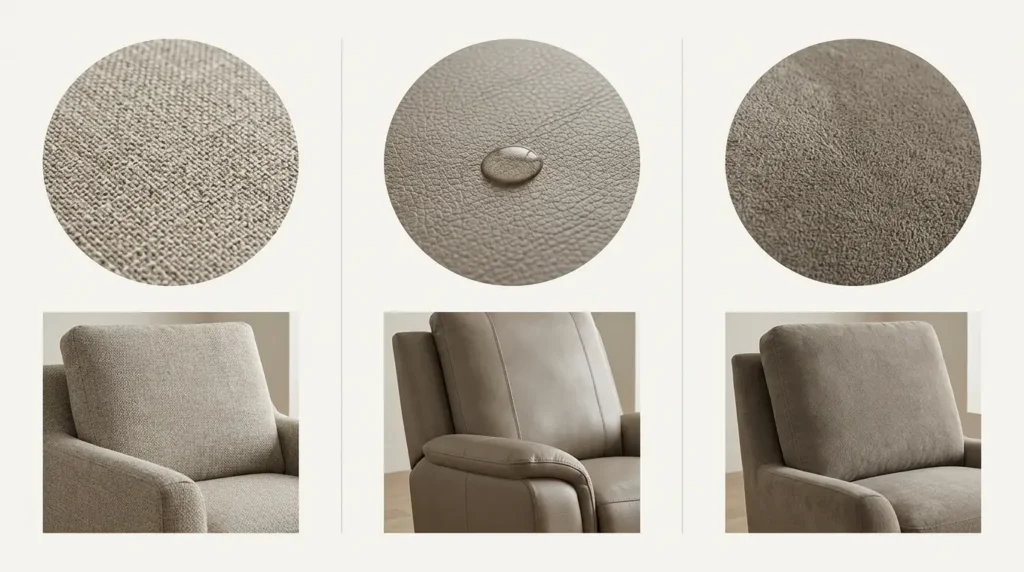
Common options include:
Consider comfort, cleaning requirements, appearance, and how frequently the chair will be used.
Look at:
These features should complement the user’s body size and preferred sitting position rather than simply adding more padding.
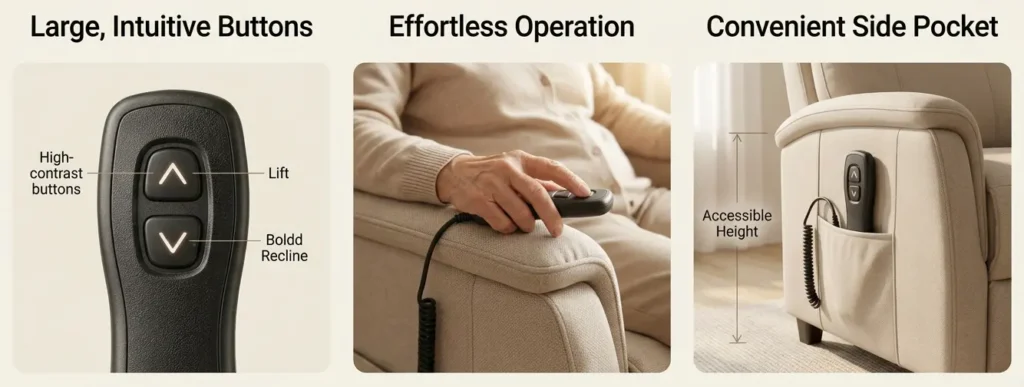
For an elderly user, the remote should be easy to understand and operate.
Look for:
Once the essential requirements are satisfied, compare optional features.
Depending on the model, these may include:
Other options may include:
A useful purchasing rule is:
Essential function first → comfort second → convenience features last.
This helps prevent paying extra for features that the user may rarely use.
The final decision should consider more than the initial price.
Instead of choosing the chair with the longest feature list, compare the features that matter most to the intended user:
Before purchasing, check:

If a showroom or local retailer is available, testing the chair can help confirm:
For short-term recovery, rental may also be worth considering if an appropriate option is available.
If Medicare coverage is part of the purchasing decision, verify the current requirements before assuming that the entire chair will be covered.
CMS states that Medicare coverage for a seat lift mechanism depends on specific medical-necessity criteria, and the coverage is directed at the seat lift mechanism rather than the chair itself. [1]
The right power lift recliner for an elderly user should match the person, not simply the product feature list.
Start with the user’s needs, then check:
Size & Fit → Lift & Recline → Room Space → Comfort & Controls → Optional Features → Price & Support
Prioritize the functions the user actually needs before paying for additional features. Most importantly, verify the chair’s dimensions, weight capacity, operating requirements, and other specifications against the manufacturer’s information before purchasing.
If safety is a concern, follow the manufacturer’s operating instructions and check for applicable product recalls or safety notices. The U.S. Consumer Product Safety Commission has previously recalled power reclining furniture because of a tip-over hazard when users exited while the furniture remained reclined, showing why correct operation and product-specific safety information matter. [2]
Focus first on the user’s mobility needs, body size, weight capacity, lift and reclining functions, room space, and ease of operation. Optional features such as massage, heat, or USB charging should come afterward.
Compare the user’s height and weight with the manufacturer’s recommendations, then check seat height, width, and depth. The user’s feet, thighs, back, and arms should be appropriately supported when seated.
They provide different levels of reclining flexibility. Two-position models offer basic adjustment, three-position models provide additional reclining options, while infinite-position models generally allow more independent positioning.
Measure the chair’s upright and reclined dimensions, the available floor space, wall clearance, doorways, and the location of the electrical outlet. Always check the manufacturer’s clearance requirements for the specific model.
Medicare coverage is not automatically provided for an entire lift recliner. CMS has specific coverage criteria for medically necessary seat lift mechanisms, so eligibility and coverage should be verified before purchase. [1]
[1] Centers for Medicare & Medicaid Services (CMS). — Seat Lift Mechanisms (LCD L33801).
[3] U.S. Food and Drug Administration (FDA). — 510(k) Premarket Notification: GOLDEN POWER LIFT CHAIR.