
Shop Now
Institutional page for the HOMCOM brand hub.
Quick Answer:
The right swivel counter stool should fit your kitchen island height, available seating space, comfort needs, and everyday use.
Before buying, check these six things:
The simplest way to make the right choice is to measure first, then compare stool features. A stool can look perfect online but still be too tall, too wide, or difficult to swivel once it is placed at your kitchen island.
The first mistake to avoid is choosing a stool based only on the label “counter stool.”
Measure the distance from the floor to the top of your kitchen island or counter. Then look underneath the counter to see how much room is available for your legs and knees.
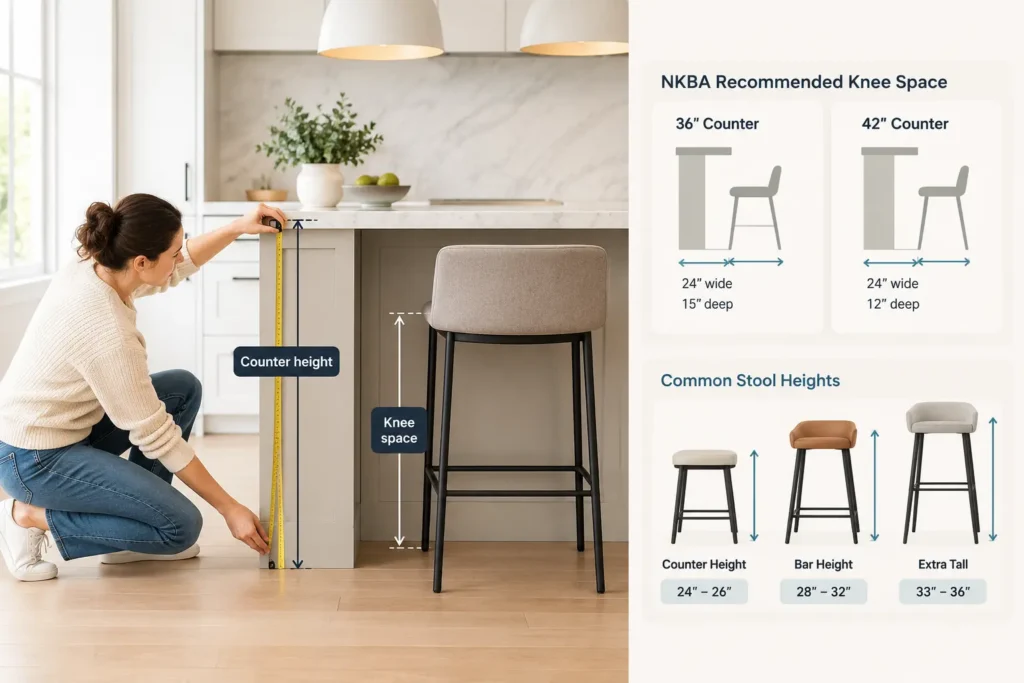
The National Kitchen & Bath Association (NKBA) provides useful kitchen seating-planning guidance. Its kitchen planning guideline recommends 24 inches of width of knee space per seated diner. For a 36-inch-high counter, it recommends 15 inches of knee-space depth; for a 42-inch-high counter, it recommends 12 inches of depth.[1]
These figures are useful for planning the seating area, but they should not be treated as a universal formula for every kitchen or stool. Cabinet construction, counter overhang, the user’s size, and the stool design can all affect the final fit.
Do not assume that every kitchen island uses the same stool height.
Counter-height seating is generally intended for standard kitchen counters and islands, while taller bar-height seating is designed for higher surfaces. Some products also offer adjustable height, which can be useful when the counter height is unusual or when one stool needs to work in different settings.
When comparing a product, check its actual specifications rather than relying only on the product category.
Look for:
A swivel mechanism is useful when you want to turn toward the kitchen, dining area, or another person without moving the entire stool.
This can be particularly practical when the kitchen island is used for:
However, a swivel stool also needs enough surrounding space to rotate comfortably.
Different swivel mechanisms suit different layouts.
180-degree swivel:
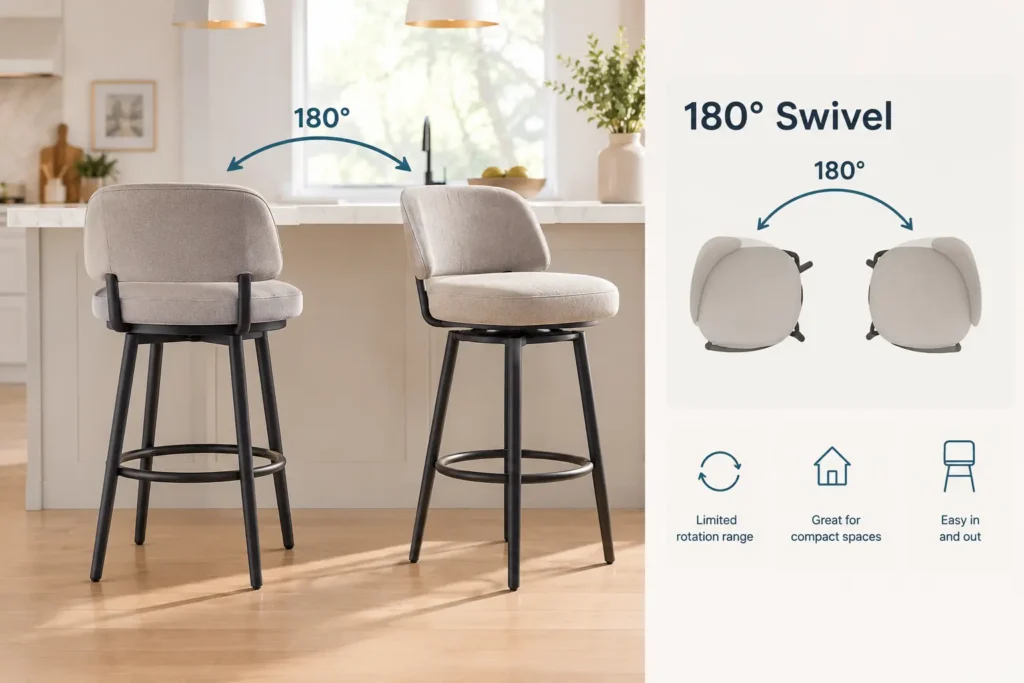
Provides a more limited range of movement and can work where you want some flexibility without continuous rotation.
360-degree swivel:
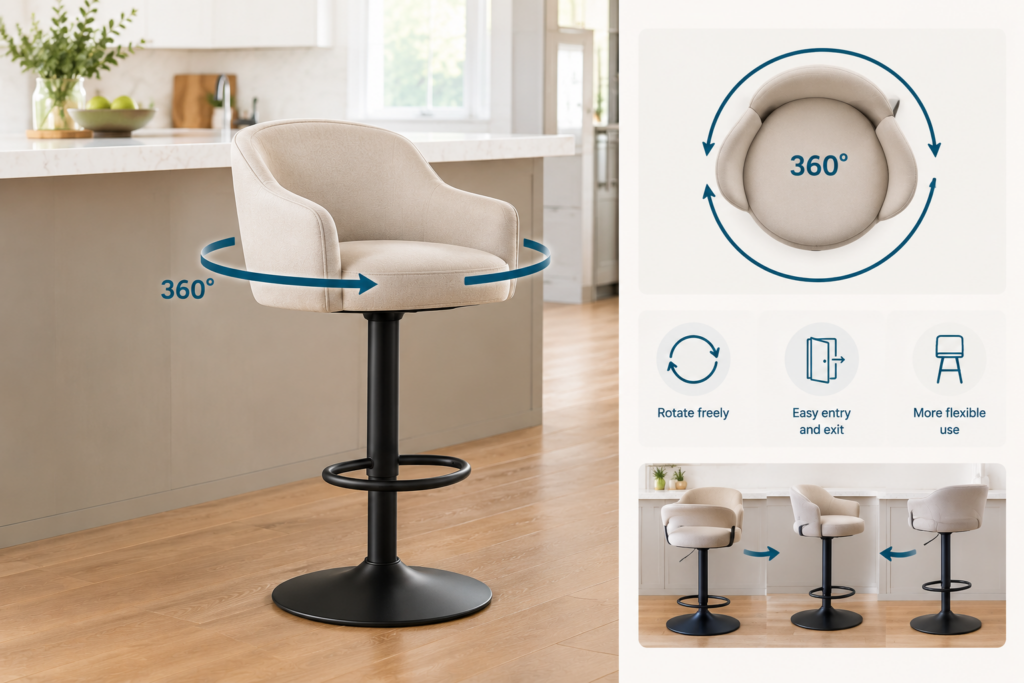
Allows the seat to rotate in either direction and can make entering and leaving the stool more convenient.
Return swivel:
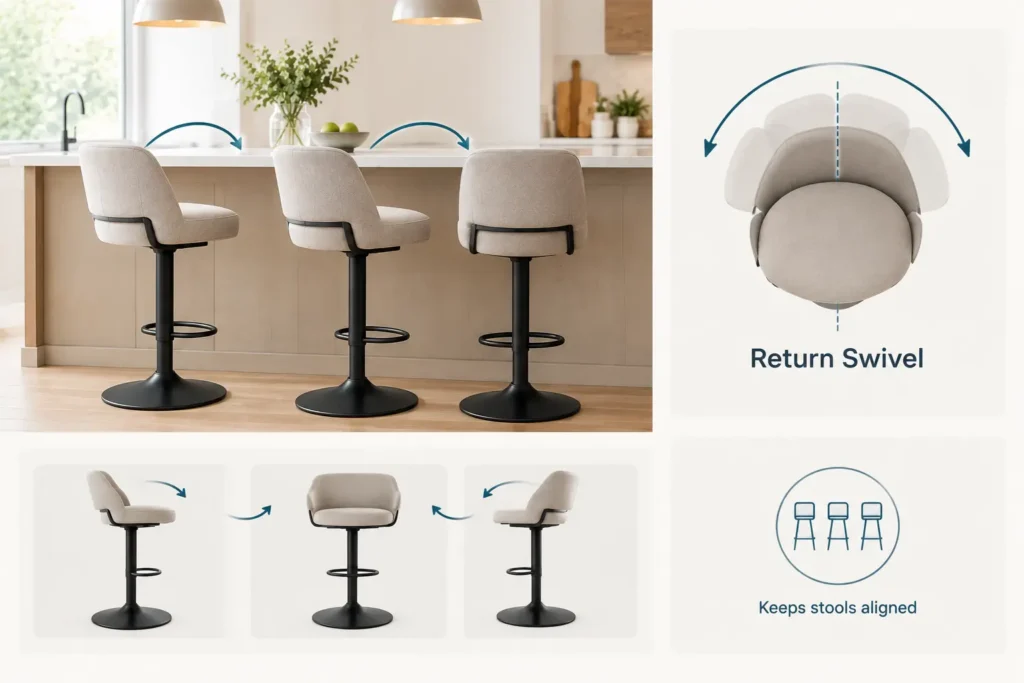
Designed to bring the seat back toward its original position after use, which can help keep several stools visually aligned.
Rather than asking which swivel type is “best,” consider how much space you have and how you use the island.
A 360-degree swivel may be convenient in an open kitchen, while a compact layout may require more attention to how far the seat can turn before contacting a cabinet, wall, another stool, or the counter.
Once the height works, look at the size of the stool.
One of the most useful distinctions when shopping is the difference between seat dimensions and overall dimensions.
A stool may have a relatively compact seat but still take up considerable space because of its backrest, arms, base, or frame.
A wider seat can provide more personal space, but several wide stools may not fit comfortably along the same island.
If you are buying multiple stools, calculate using the overall width of the complete stool, not just the cushion or seat.
Seat depth affects how supported you feel when sitting. A deeper seat may provide more room, while a shallower design can make it easier to move in and out of the stool.
Your choice should depend on the person using the stool and how long they typically sit.
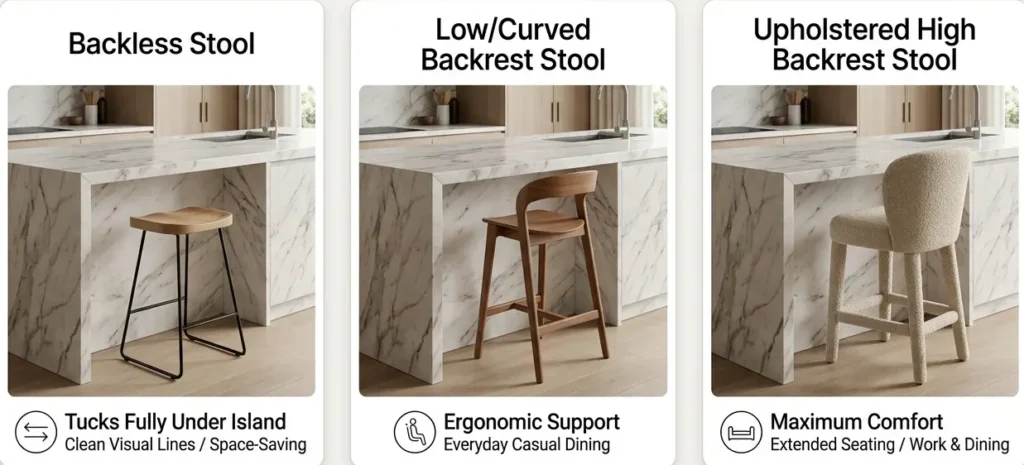
A backless counter stool can create a lighter appearance and may be easier to tuck under an island.
A counter stool with a backrest provides additional support and may be more appropriate when people sit at the island for meals, work, or longer conversations.
The category also includes upholstered bar stool designs with backrests, so shoppers can compare a more supportive seating style with simpler stool formats.
Small details can make a noticeable difference to everyday comfort.
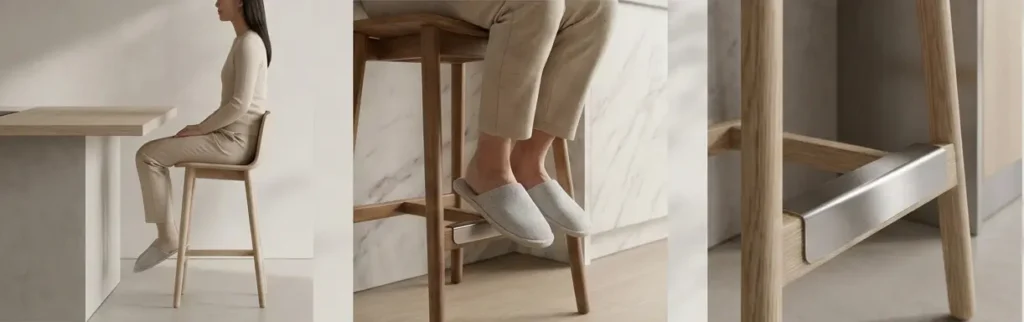
A footrest gives your feet somewhere to rest instead of leaving your legs unsupported.
When comparing stools, look at the position and construction of the footrest rather than simply checking whether one is included.
A footrest can be particularly useful for people who regularly spend a significant amount of time sitting at the kitchen island.
Armrests can add support, but they also increase the overall width of the stool.
This creates a trade-off:
More support → potentially more space required
If you have a long island and plenty of seating room, armrests may be practical. In a compact kitchen, an armless stool may make it easier to fit several seats.
Do not decide the number of stools by simply dividing the island length by the product width.
First identify the usable seating section of the island.
Then consider:
NKBA’s seating guidance uses 24 inches of width per seated diner as a kitchen-planning reference.[1] This provides a useful starting point for thinking about individual seating space, but the actual arrangement still needs to account for the specific stool design and kitchen layout.
For example, two compact armless stools may work where two wide swivel stools with arms would feel crowded.
Measure the usable seating length of your island.
Then compare:
Available seating length → overall stool width → personal seating space → swivel clearance
If the result feels tight on paper, it will probably feel even more restrictive once people are sitting, turning, and moving around the island.
The current bar stool category includes a range of materials and upholstery options, including PU Leather, Faux Leather, Linen, Polyester, Metal, Wood, Fabric, and Steel.
Rather than deciding that one material is universally better, think about how your kitchen is actually used.
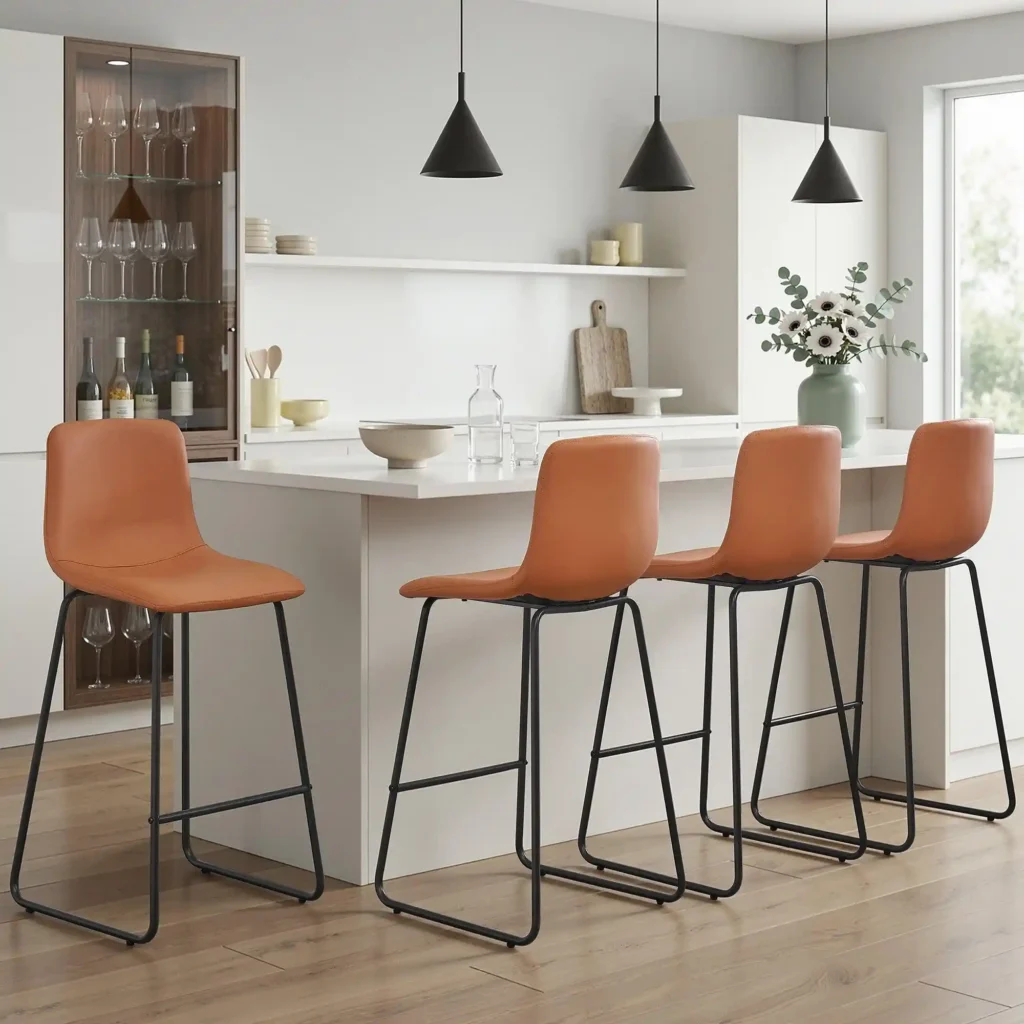
These options can create an upholstered, leather-look appearance and are available across different stool designs and colours in the current collection.
They can be worth considering when you want a softer-looking seat while keeping the overall design relatively easy to coordinate with a modern kitchen.
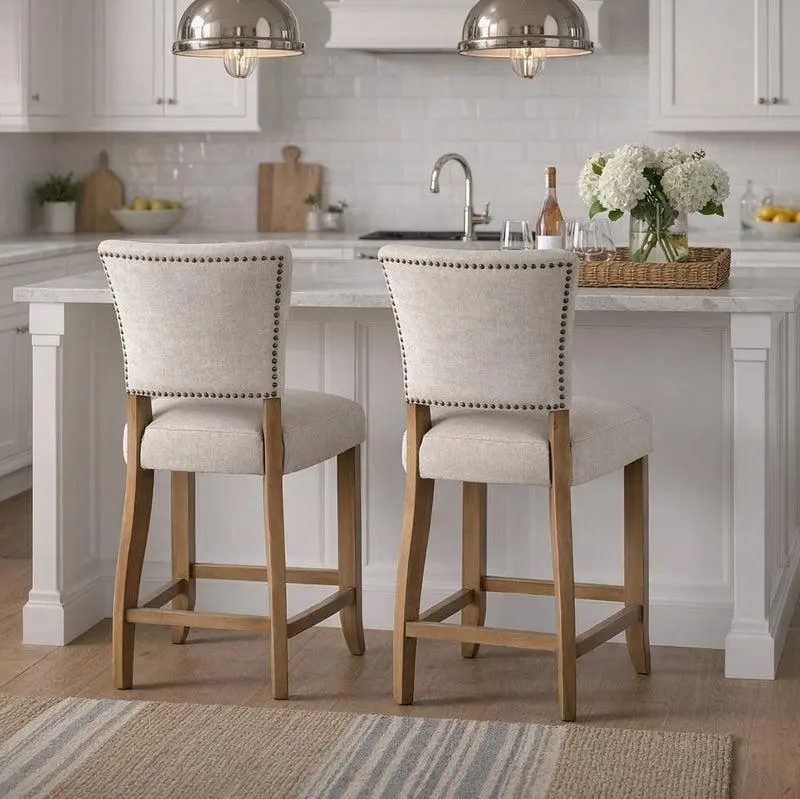
Fabric-based options can add a softer visual appearance and may work well with traditional, relaxed, or contemporary interiors.
Before buying, check the manufacturer’s cleaning and care information rather than assuming a fabric is stain-resistant or easy to clean.
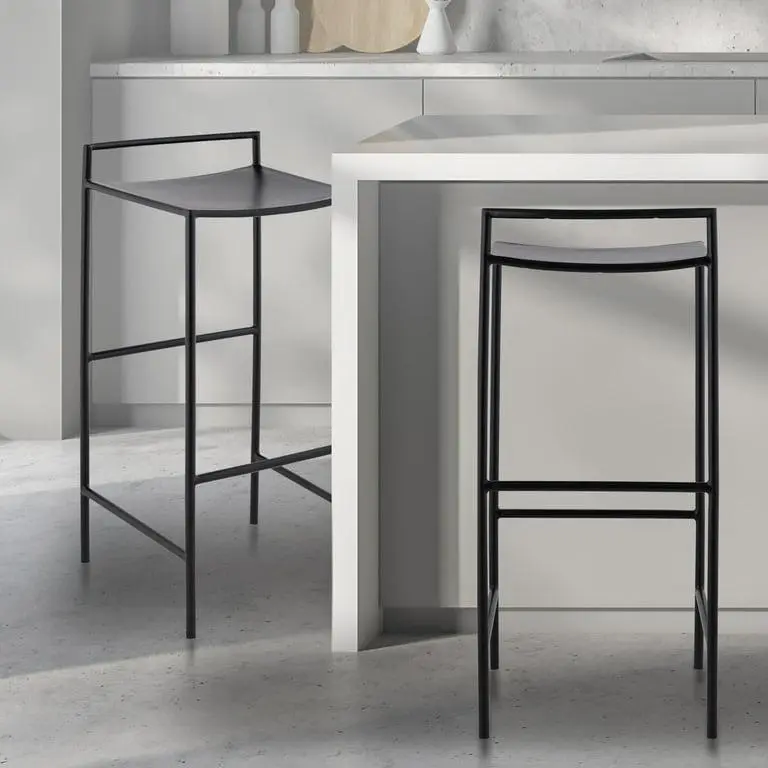
Metal-based stools can suit industrial or modern kitchens and can create a visually lighter frame depending on the design.
Look at the complete construction, including the base and footrest, rather than judging the material from the seat alone.
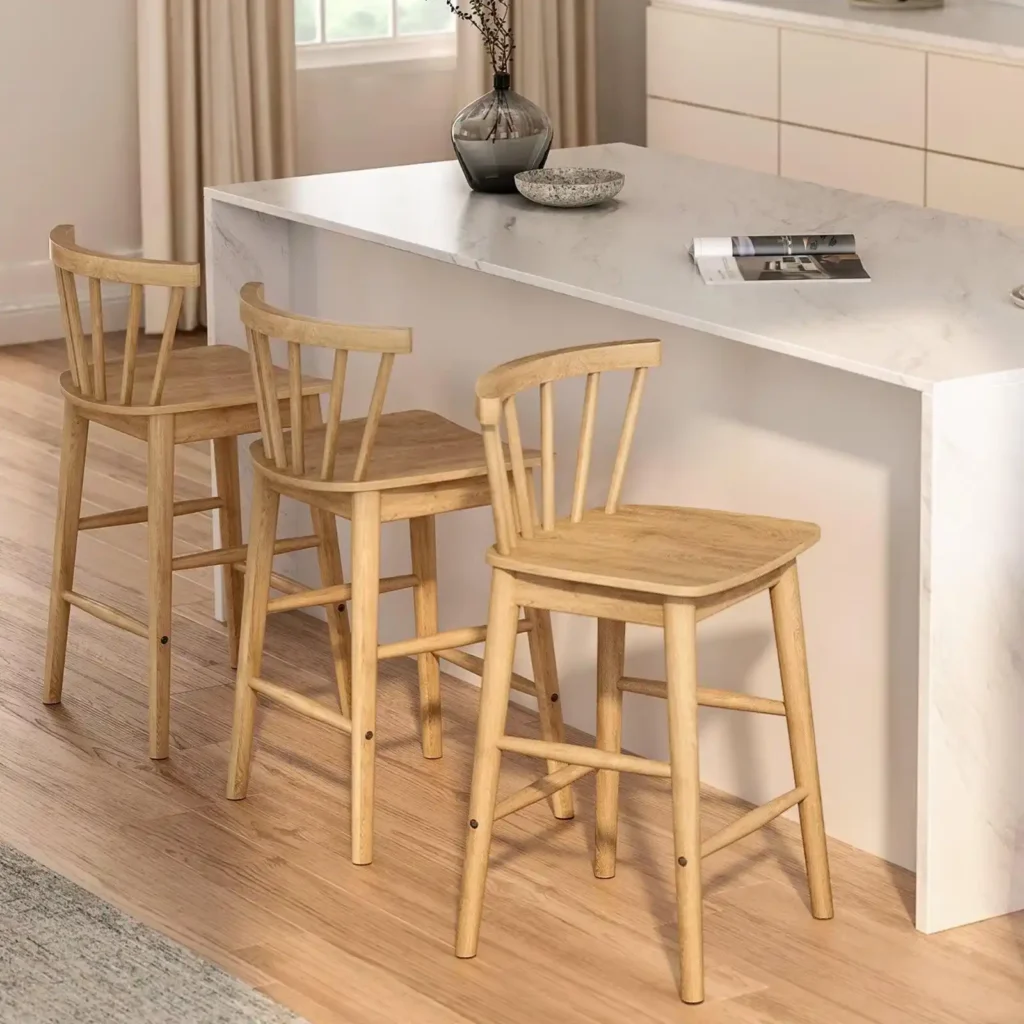
Wood can add warmth and work well with natural, farmhouse, or traditional kitchen interiors.
The finish, construction, and care instructions are more important than simply choosing “wood” as a material category.
The right swivel counter stool depends on the role your kitchen island plays.
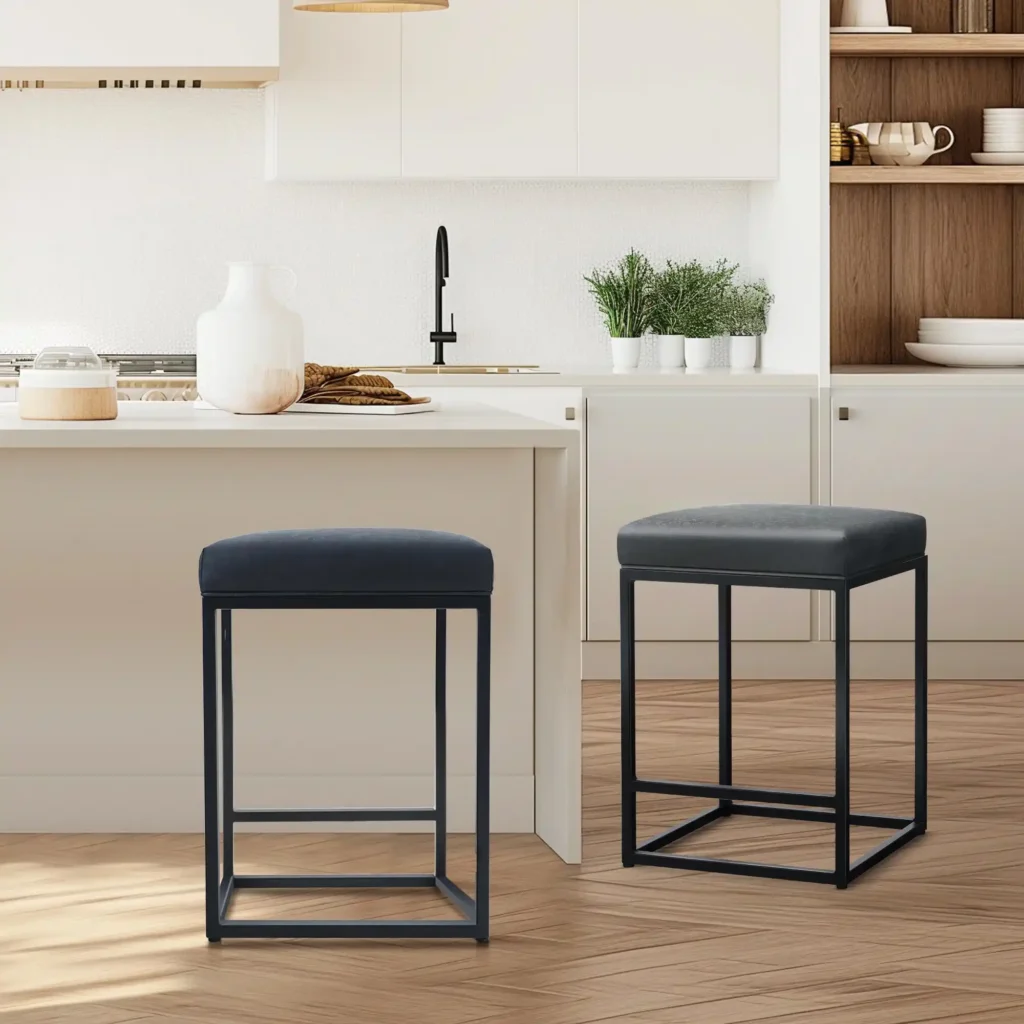
Prioritize:
A smaller stool does not necessarily mean a less comfortable stool. The goal is to avoid using more space than you actually need.
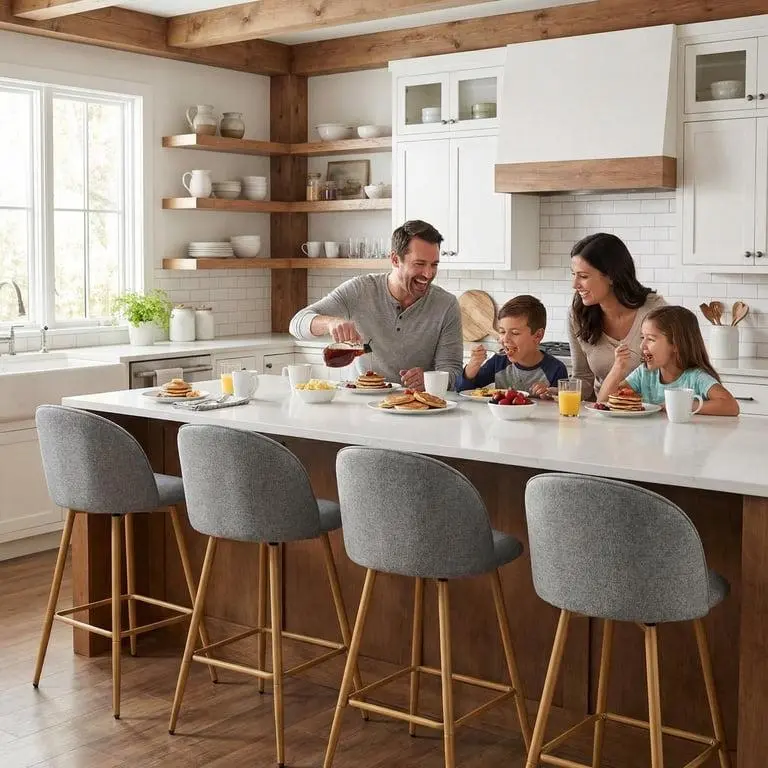
Look for:
If children regularly use the island, stability and the manufacturer’s safety information should be considered alongside appearance.
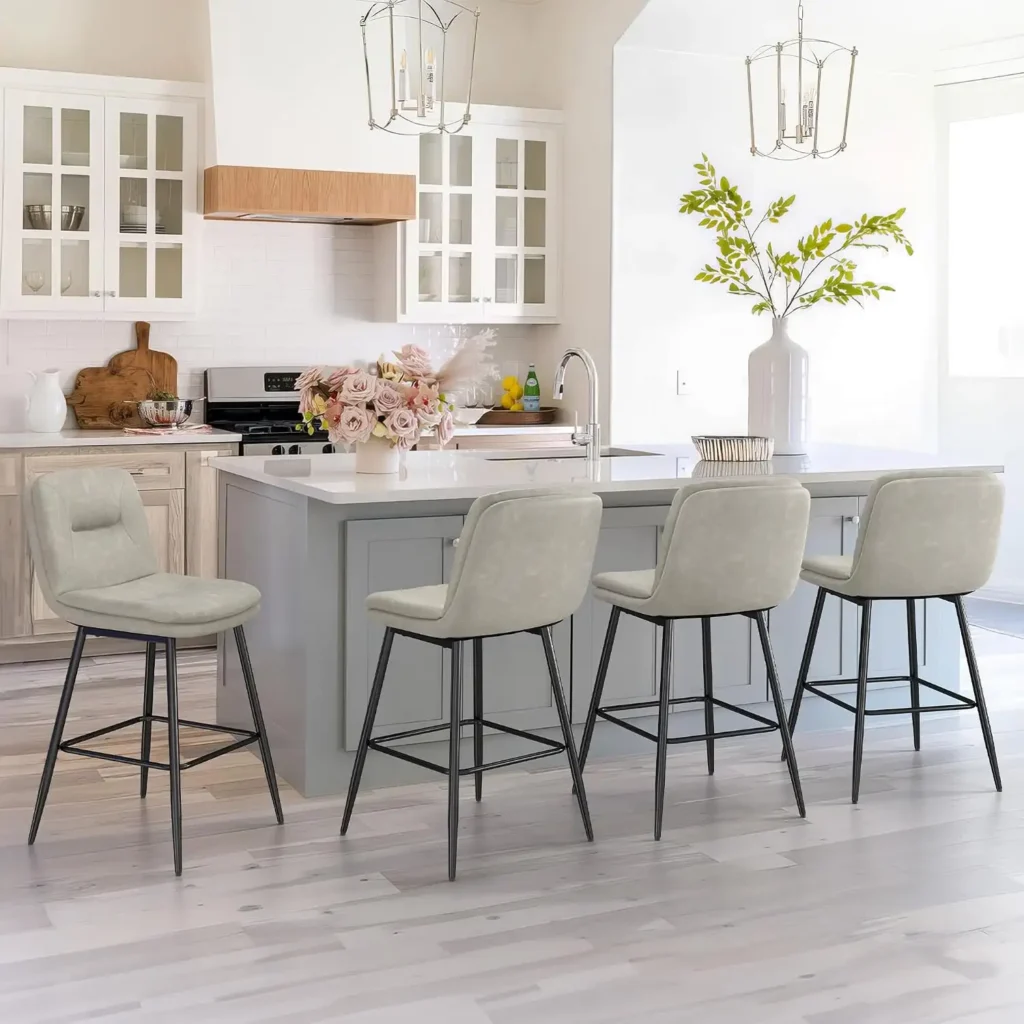
If the kitchen island doubles as a dining or work area, prioritize:
A minimalist backless stool may look attractive but may not be the best match for an island that is used for long meals or work sessions.
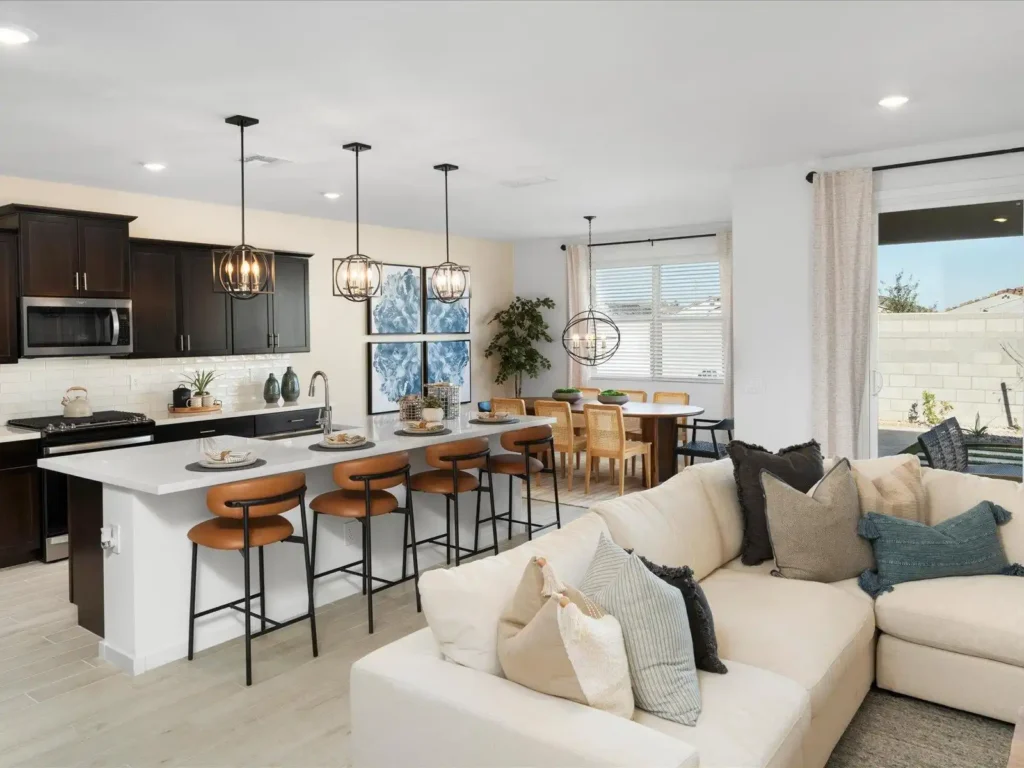
The stools are visible from several parts of the home, so consider the relationship between the stool and:
The finish does not need to match everything exactly. A coordinated colour, material, or visual style is often enough to make the seating feel intentional.
A product labelled “counter stool” can still be the wrong height for your specific counter.
The arms, backrest, base, and frame can make the complete stool wider than the seat itself.
A swivel stool needs enough room to rotate without hitting nearby surfaces or other stools.
A stool may look good in a kitchen photo but still have unsuitable seat dimensions or insufficient support for everyday use.
More stools are not automatically better. Crowding can make eating, turning, and moving around the island uncomfortable.
Check the connection between the seat, frame, base, and swivel mechanism.
This is not merely theoretical. The U.S. Consumer Product Safety Commission has issued recalls involving swivel bar stools and counter stools where components could break, collapse, or detach, creating fall or injury hazards.[2] These recalls concern specific products and should not be generalized to all swivel stools, but they show why construction and safety information deserve attention during the buying process.
Once you have narrowed down the options, compare the features that matter most rather than trying to find one stool that wins on every category.
A simple comparison checklist is:
| Feature | What to Check |
|---|---|
| Height | Counter height and stool seat height |
| Dimensions | Overall width and depth |
| Seating | Seat size and backrest |
| Movement | Fixed, swivel, or adjustable |
| Support | Footrest and armrests |
| Material | Upholstery, wood, metal, or other construction |
| Maintenance | Cleaning and care requirements |
| Space | Number of stools and swivel clearance |
| Style | Colour and visual relationship with the kitchen |
| Safety | Construction, instructions, warnings, and manufacturer information |
For the current HOMCOM bar stool range, this comparison approach is especially useful because the category includes adjustable and swivel designs, upholstered stools, backrests, footrests, different materials, multiple colours, and sets of two. Instead of comparing every product individually, narrow the collection by the features that matter to your kitchen first.
Before placing an order, review the individual product page for the exact model you are considering.
Check:
The UK’s Office for Product Safety and Standards advises consumers to check product safety markings, instructions, relevant warnings, manufacturer information, and whether the delivered product matches its online description.[3]
For a product with a swivel mechanism, also inspect how the base and seat are constructed and follow the supplied assembly and use instructions.
Choosing the right swivel counter stool starts with fit, not appearance.
Measure your kitchen island first. Then compare the stool’s seat height, overall dimensions, knee space, and number of seats you can realistically accommodate.
After that, choose the swivel function, backrest, footrest, material, and style based on how your household actually uses the kitchen.
A good decision sequence is:
Measure → Match the height → Check knee space → Compare dimensions → Choose swivel function → Consider comfort → Check stability → Select material → Match your kitchen style
The best stool is not necessarily the largest, most feature-rich, or most decorative option. It is the one that fits the space, supports the way you sit, and works naturally with your kitchen’s everyday routine.
Measure the height of your kitchen island or counter first, then compare it with the stool’s listed seat height. Do not rely only on the term “counter height,” especially if your island has a non-standard height.
Swivel stools can make it easier to turn, enter, and leave the seat without moving the entire stool. Fixed stools may be simpler when space is limited or when you prefer a more stationary seating arrangement.
NKBA’s kitchen seating guideline uses 24 inches of seating width per diner as a planning reference.[1] The actual amount of space you need also depends on stool width, arms, base design, counter overhang, and swivel movement.
Measure the usable seating length, then compare it with the overall width of the stools. Also allow for comfortable seating, knee space, and swivel movement rather than filling the entire counter length.
They can be, provided the stool has enough room to rotate. Compact and armless designs can help reduce the amount of space required, while adjustable models can provide additional flexibility when counter height is unusual.
[1] National Kitchen & Bath Association (NKBA), Kitchen Planning Guideline 9 — Seating Clearance.
[3] UK Office for Product Safety and Standards (OPSS), Consumer products: staying safe.