
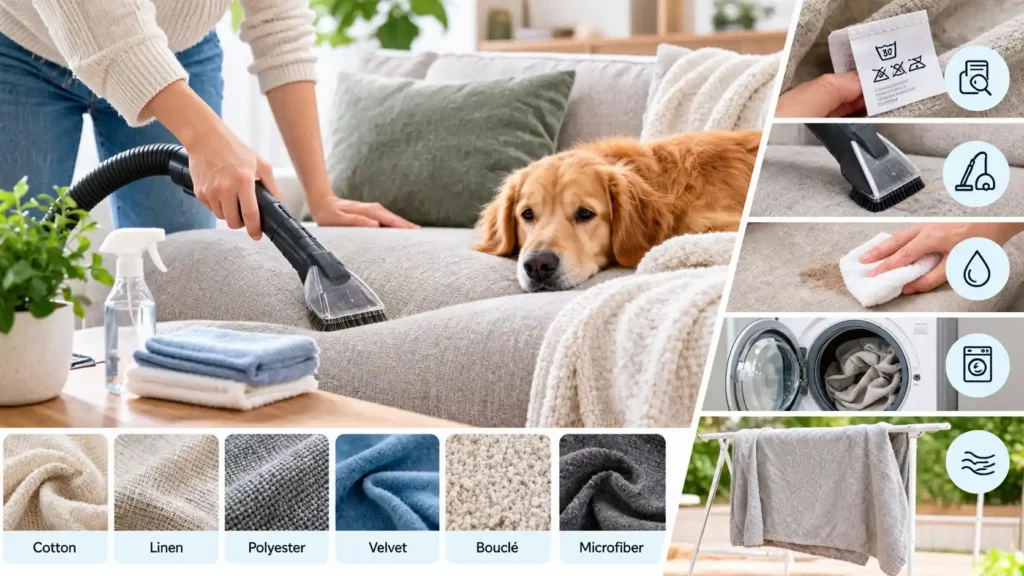
Quick Answer: How Do You Clean Sofa Covers?
The safest way to clean sofa covers is to match the cleaning method to the cover’s care instructions, fabric, and construction.
A practical cleaning process is:
- Check the care label and manufacturer’s cleaning instructions.
- Remove dust, crumbs, hair, and pet hair with a vacuum.
- Blot spills and pretreat visible stains before deeper cleaning.
- Use a cleaning method suitable for the specific fabric and cover.
- Avoid excessive moisture, aggressive scrubbing, and unsuitable heat.
- Follow the manufacturer’s drying instructions.
- Refit the cover carefully once it has reached the condition recommended by the manufacturer.
The key point is that a removable sofa cover is not automatically machine washable. Always check the care instructions before washing it.
1. Check the Sofa Cover Before Cleaning
Read the Care Label First
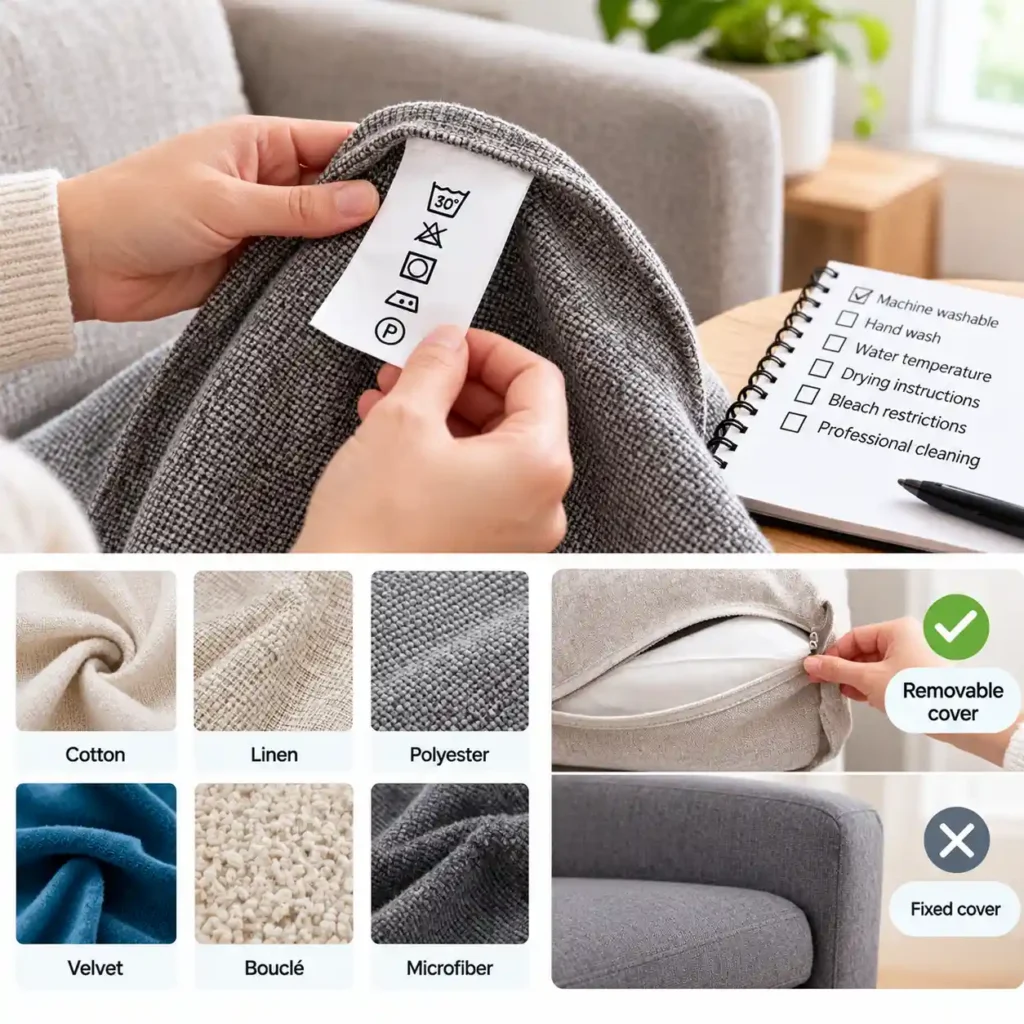
Before applying water, detergent, or another cleaning product, check the sofa cover’s care label and manufacturer’s instructions.
Look for information about:
- Whether the cover can be machine washed
- Hand washing or spot cleaning requirements
- Recommended water temperature
- Drying instructions
- Bleach or chemical restrictions
- Professional cleaning requirements
Care labels are there to help prevent damage caused by using the wrong washing or cleaning method. When instructions are available, follow them instead of relying on a general cleaning routine. [1]
Identify the Fabric and Cover Construction
The same cleaning method does not work for every sofa cover.
Common upholstery fabrics include cotton, linen, polyester, performance fabrics, velvet, bouclé, and microfiber. Covers can also be either removable or permanently attached to the sofa.
Before cleaning, determine:
- What is the cover made from?
- Can it be removed?
- Is machine washing permitted?
- Does the manufacturer specify a particular cleaning method?
If the information is unclear, choose the least aggressive method allowed by the care instructions rather than assuming that water or a washing machine is safe.
2. Remove Dust, Hair and Loose Debris First

Vacuum the Sofa Cover
Start with dry cleaning before introducing moisture.
Use an upholstery attachment to remove:
- Dust
- Crumbs
- Loose dirt
- Hair
- Pet hair
- Debris around seams and cushion edges
Vacuuming first prevents loose debris from becoming mixed with water or cleaning products during the next stage.
For removable cushions, also clean around the areas underneath them, where dust and hair can accumulate.
Remove Pet Hair Before Wet Cleaning
If pets use the sofa, remove as much loose hair as possible before spot cleaning or washing the cover.
A vacuum or lint roller can help with surface hair. For heavily used sofas, making hair removal part of regular maintenance can reduce the amount of deep cleaning needed later.
3. Treat Stains Before Deep Cleaning
Blot Spills Instead of Rubbing
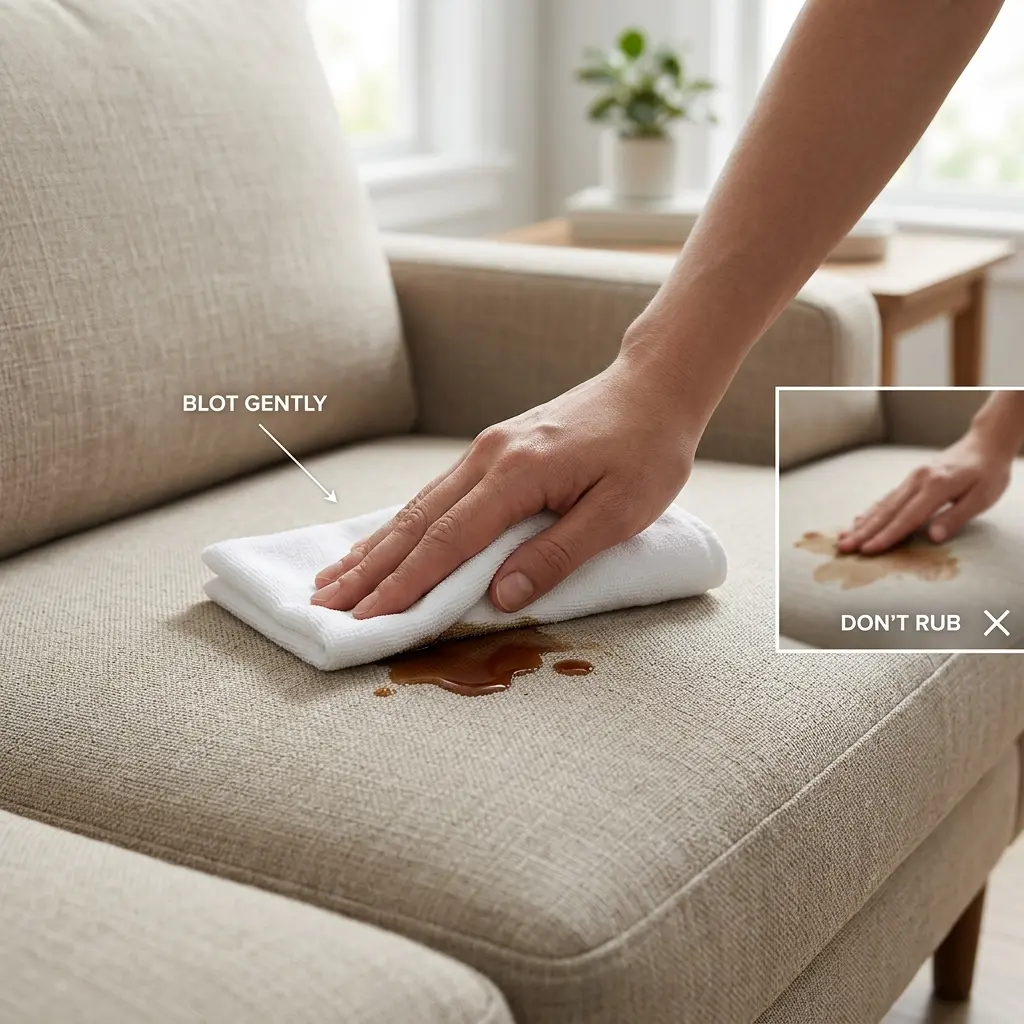
Deal with spills as soon as practical.
Use a clean, absorbent cloth to blot rather than aggressively rub the affected area. Rubbing can spread the stain and place additional stress on the fabric.
For larger stains, work carefully and avoid spreading the cleaning solution over a wider area.
Test the Cleaning Method First
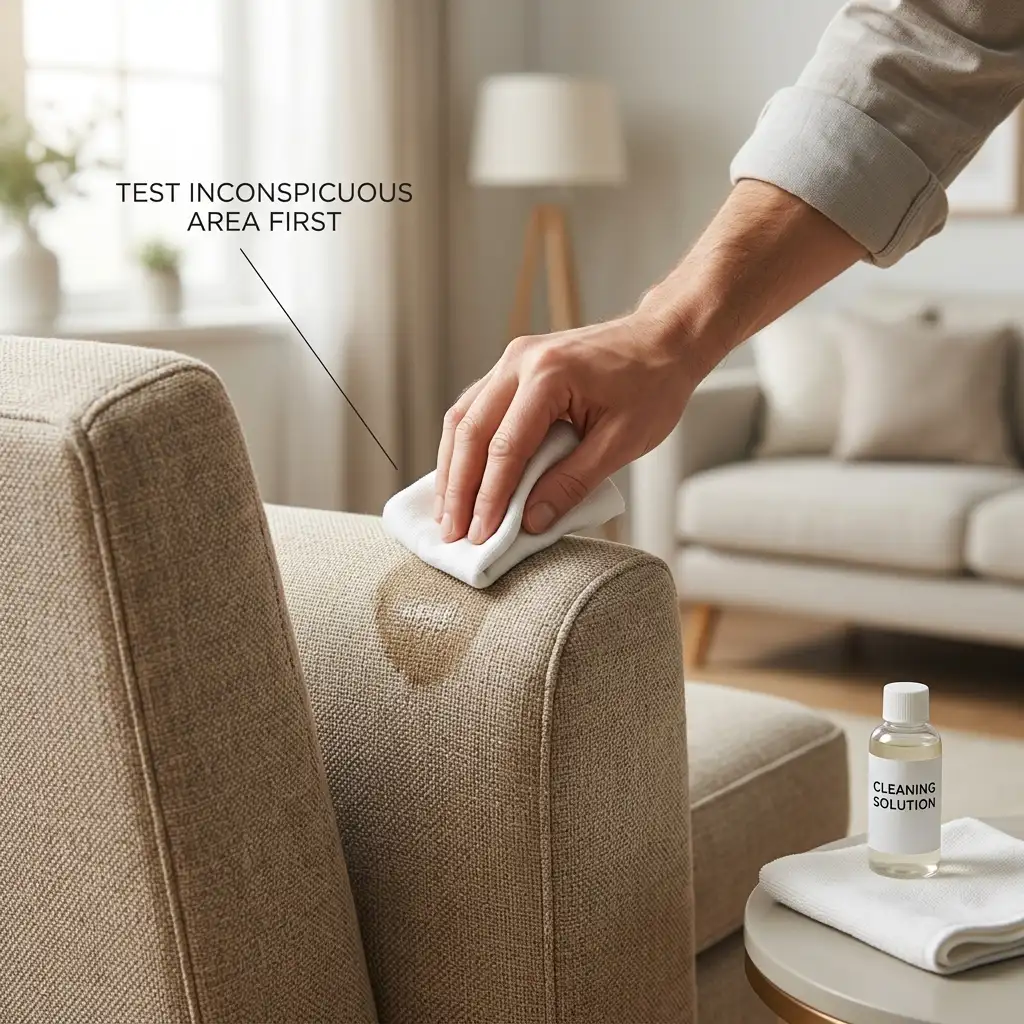
Before applying a cleaning solution to a visible area, test it on a small, inconspicuous section of the fabric.
This can help reveal unwanted changes in colour or appearance before the cleaning method is used on the whole cover. University of Georgia Extension guidance for upholstered furniture also recommends pretesting cleaning agents and warns that excessive wetting can leave visible rings or affect the upholstery finish. [2]
Avoid Overwetting
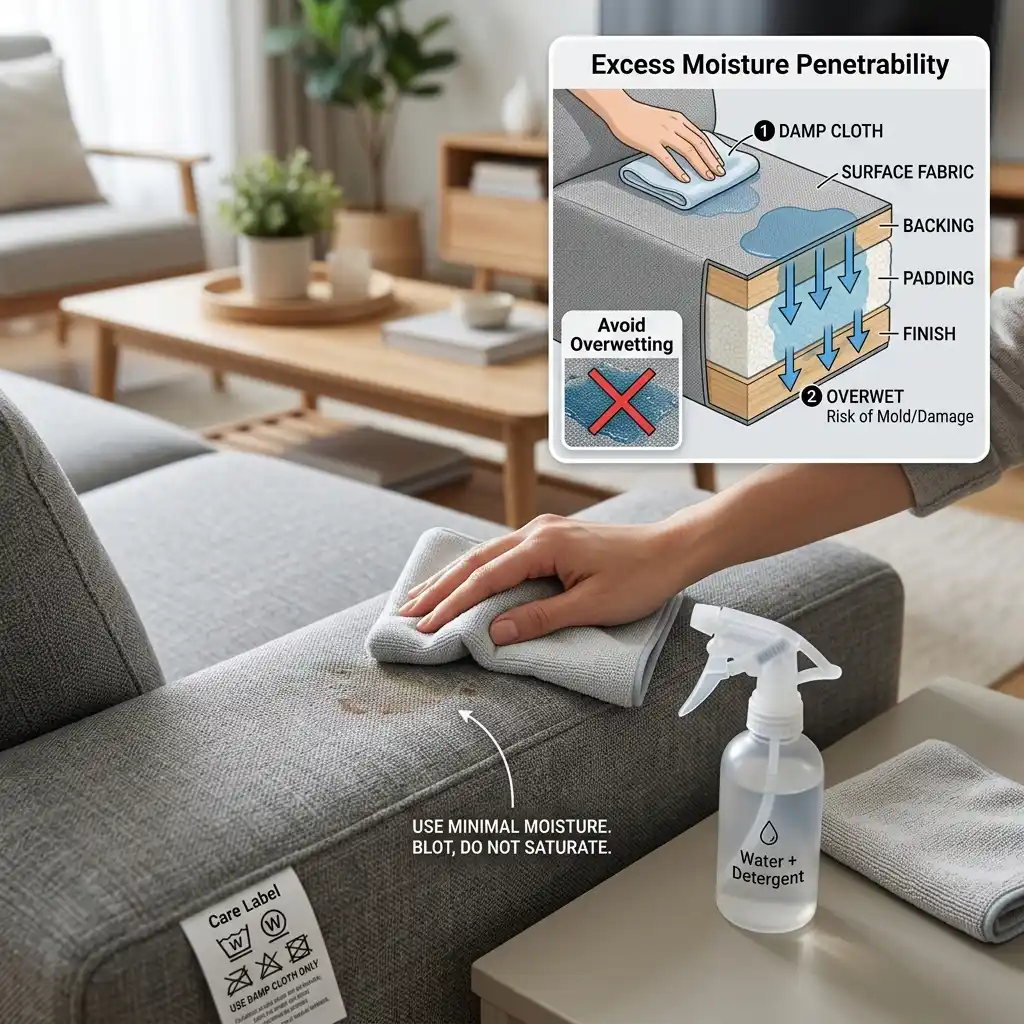
More cleaning solution does not necessarily mean better cleaning.
Excess moisture can penetrate beyond the fabric surface and may affect the backing, padding, finish, or drying process. Use only the amount of moisture permitted by the fabric’s care instructions.
4. Choose the Right Cleaning Method for Your Sofa Cover
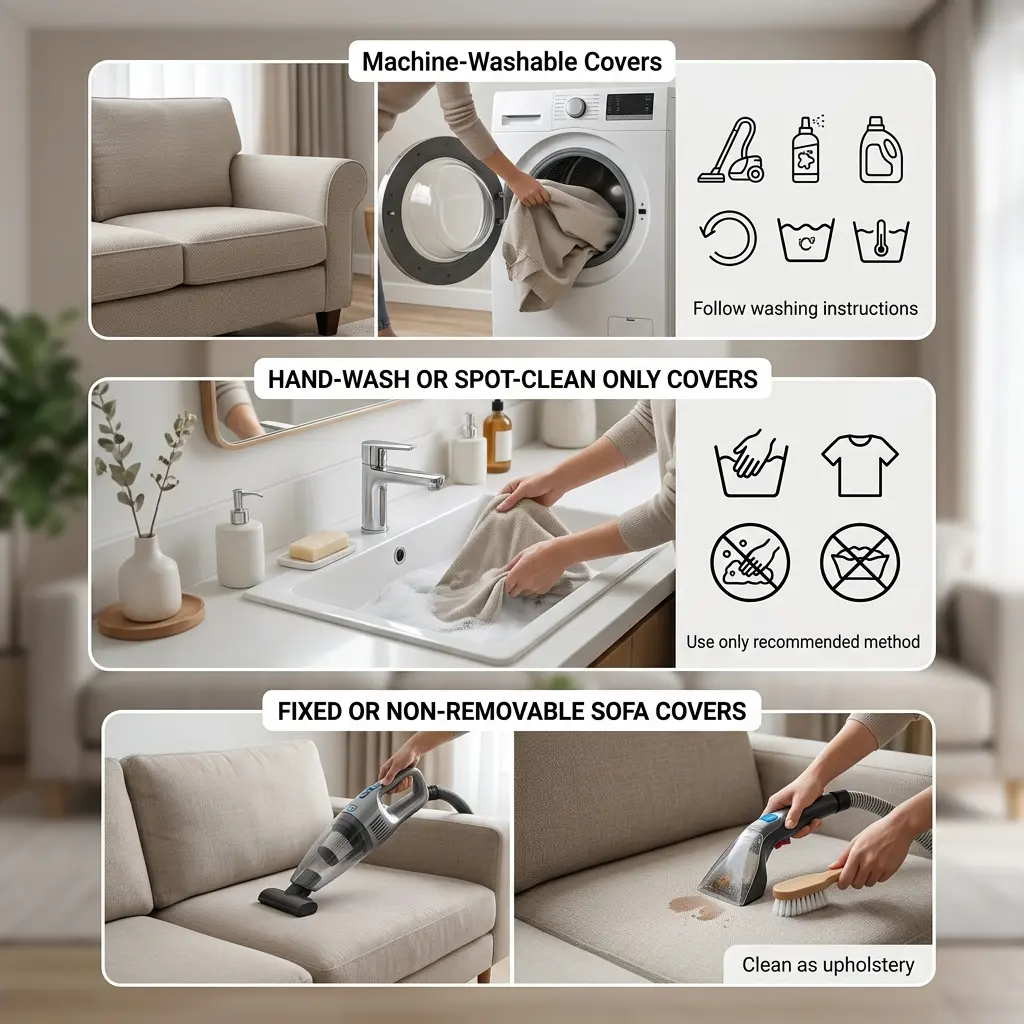
Machine-Washable Sofa Covers
If the manufacturer specifically confirms that the sofa cover is machine washable, follow the recommended washing instructions.
A practical process is:
- Vacuum the cover and remove loose hair.
- Remove the cover carefully.
- Pretreat visible stains if permitted.
- Use the recommended washing cycle and temperature.
- Use a suitable detergent.
- Follow the specified drying instructions.
Do not assume that every machine-washable cover should be washed in cold water, on a gentle cycle, or at the same temperature. The correct settings depend on the particular cover.
Hand-Wash or Spot-Clean Only Covers
Some covers may require hand washing or spot cleaning rather than machine washing.
In this situation:
- Follow the manufacturer’s cleaning instructions.
- Use only the recommended cleaning method.
- Avoid aggressive scrubbing.
- Avoid soaking the cover unless soaking is specifically permitted.
- Allow the cover to dry according to the instructions.
If the care label does not permit water-based cleaning, do not experiment with a homemade water-and-detergent solution.
Fixed or Non-Removable Sofa Covers
A fixed sofa cover should be cleaned as upholstery rather than treated like a removable piece of laundry.
Start by vacuuming the surface and then spot clean according to the fabric’s care instructions. Use minimal moisture where required and avoid saturating the upholstery.
For large stains, extensive soiling, or fabrics requiring specialist treatment, professional upholstery cleaning may be a safer option.
5. Clean Sofa Covers by Fabric Type
Fabric type can influence the appropriate cleaning method, but the manufacturer’s care instructions should always take priority.
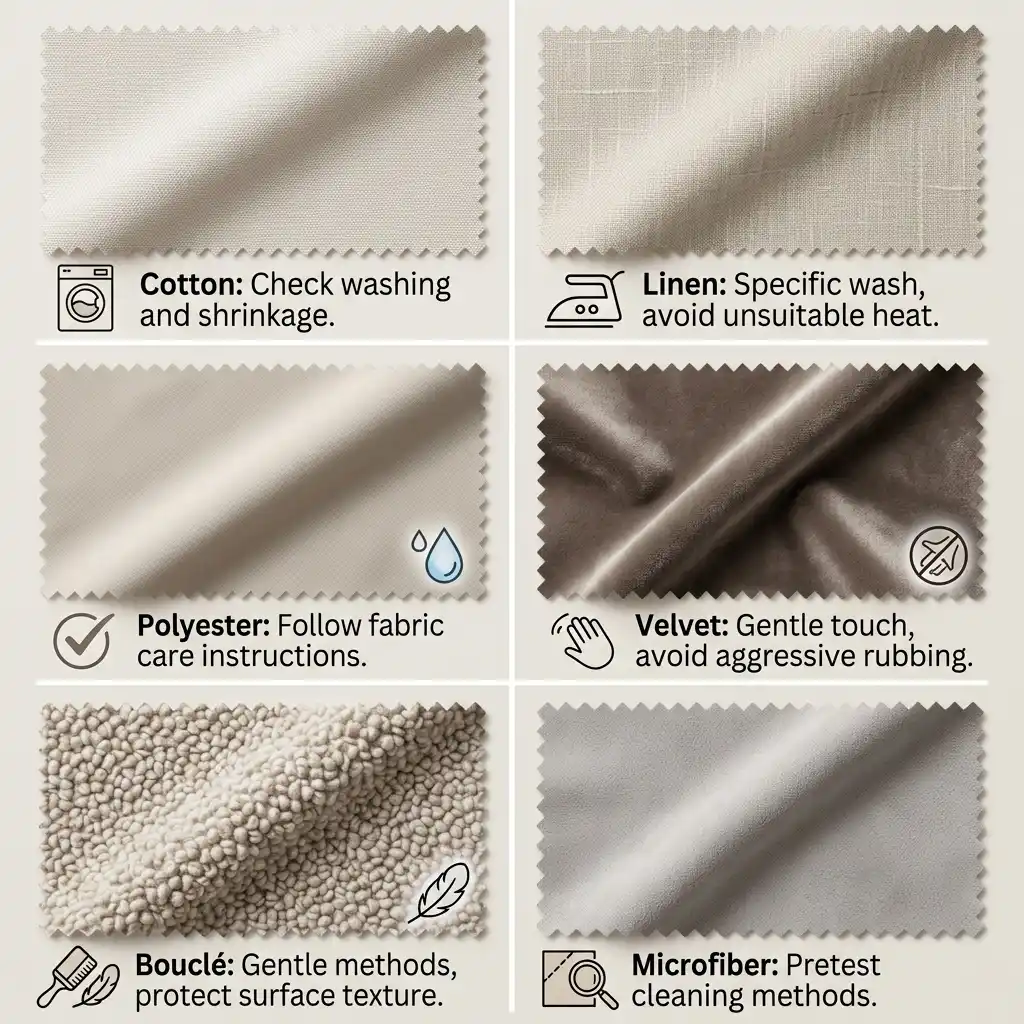
| Fabric or Cover Type | Main Cleaning Consideration |
|---|---|
| Cotton | Check washing and shrinkage instructions before laundering. |
| Linen | Follow the specified washing and drying method and avoid unsuitable heat. |
| Polyester / Performance Fabric | Follow the fabric’s specific care instructions rather than assuming all polyester covers can be treated the same way. |
| Velvet | Check the care instructions carefully and avoid aggressive rubbing or unsuitable moisture. |
| Bouclé / Textured Fabric | Use gentle cleaning methods that do not unnecessarily disturb the surface texture. |
| Microfiber | Follow the manufacturer’s cleaning instructions and test the chosen method before treating a visible area. |
The important point is that fabric name alone does not determine the cleaning method. The construction, finish, backing, and manufacturer’s instructions can all affect how the cover should be cleaned.
6. Dry Sofa Covers Correctly to Prevent Damage
Cleaning does not end when the washing or spot treatment is finished. Incorrect drying can also affect the cover.
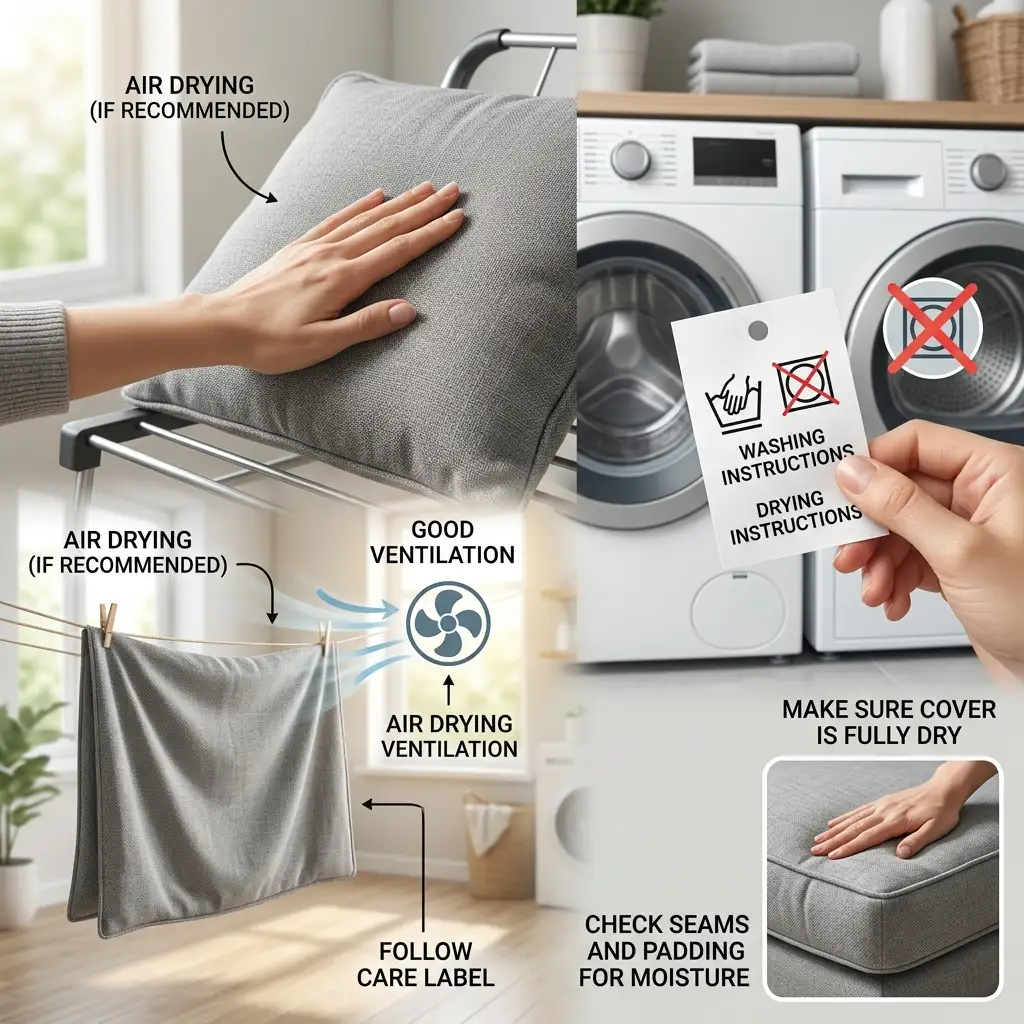
Avoid Unsuitable Heat
Do not automatically place a sofa cover in a tumble dryer after washing.
If the manufacturer does not permit tumble drying, use the recommended alternative. Excessive heat can contribute to problems such as shrinkage, shape changes, fading, or difficulty reinstalling the cover.
Follow the Recommended Drying Method
Air drying may be appropriate for some covers, while others may have specific machine-drying instructions.
The safest approach is to follow the care label rather than applying one drying method to every sofa cover.
Make Sure the Cover Is Dry Before Normal Use
Thicker fabrics and cushion covers can retain moisture longer than they appear to from the surface.
Make sure the cover has dried sufficiently before returning the sofa to normal use, particularly when moisture may have reached seams, backing materials, or cushion interiors.
7. Refit the Sofa Cover Carefully
After cleaning and drying, reinstall the cover without forcing it into position.
Before fitting it:
- Check the correct orientation.
- Align seams and corners.
- Locate zippers, fasteners, or attachment points.
- Work gradually rather than pulling aggressively on one section.
- Check that the cover sits evenly once installed.
Some manufacturers may specifically recommend reinstalling a cover while it is slightly damp to make fitting easier. Do not treat this as a universal rule; use that method only when the manufacturer’s instructions support it.
If a cover has become noticeably smaller after washing, do not force it back onto the sofa. Check the care instructions and determine whether the cover requires further treatment or professional assistance.
8. How Often Should You Clean Sofa Covers?
There is no single cleaning schedule that works for every sofa.
Instead, adjust maintenance according to:
- How frequently the sofa is used
- Whether children use it
- Whether pets use it
- Visible dirt or stains
- Odours
- The fabric type
- The manufacturer’s care instructions
Regular vacuuming and prompt treatment of spills can help prevent dirt and stains from becoming more difficult to remove.
For heavily used sofas, especially those in homes with children or pets, more frequent maintenance may be appropriate.
9. When Should You Use Professional Sofa Cleaning?
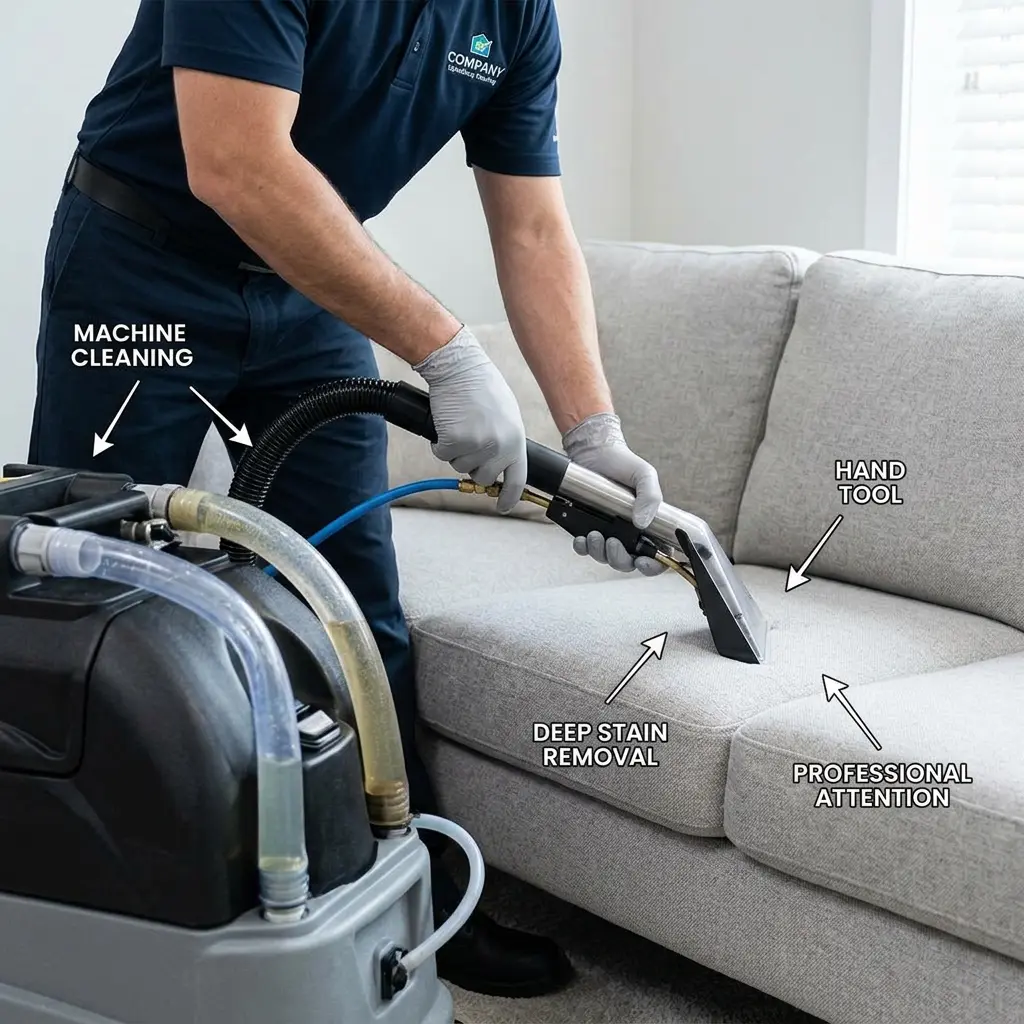
Professional cleaning may be appropriate when:
- The fabric is not suitable for home washing.
- The cover cannot be removed.
- The manufacturer recommends professional cleaning.
- A stain is large, old, or persistent.
- You are unsure which cleaning method is safe.
- Previous cleaning has changed the fabric’s colour, texture, or appearance.
Professional cleaning is particularly worth considering when the potential cost of damaging the upholstery is greater than the benefit of trying an unverified DIY method.
If you use a professional cleaner, provide the fabric information and care instructions whenever possible.
10. What to Look for When Buying Easy-to-Clean Sofa Covers
Cleaning requirements can also become an important consideration when buying a sofa or replacement cover.
Look for Verified Machine-Washable Construction
If easy washing is a priority, look for an explicit manufacturer statement confirming that the cover is machine washable.
Do not assume that a removable cover has this feature.
Consider Removable Covers
A removable cover can make routine cleaning more convenient because the fabric can be taken away from the sofa for cleaning.
However, removability alone does not confirm that the cover can be machine washed.
Consider Stain- or Pet-Friendly Features
For homes with children or pets, verified features such as stain-resistant fabric, easy-clean construction, or pet-friendly materials may influence the buying decision.
Only include these claims when they are explicitly supported by the product information.
Consider Repeated-Cleaning Durability
A sofa cover that is easy to wash is more useful when it can maintain its intended appearance and fit through repeated cleaning.
Where verified information is available, consider:
- Washing requirements
- Fabric durability
- Colour retention
- Shape retention
- Ease of removing and reinstalling the cover
The goal is not simply to find a cover that can be cleaned once. It is to choose a cover whose maintenance requirements fit the way the sofa will actually be used.
11. Final Takeaway
The safest approach to sofa cover cleaning is to check the care instructions first, remove loose dirt, treat stains carefully, use a fabric-appropriate cleaning method, and control moisture and heat during drying.
A removable cover is not automatically machine washable, and a cleaning method that works for one fabric may damage another. When the cover is fixed, delicate, non-washable, or difficult to clean safely, professional cleaning may be the better option.
FAQs
1. Can I put sofa covers in the washing machine?
Only when the manufacturer’s care instructions allow machine washing. A removable sofa cover is not automatically machine washable.
2. How do I clean sofa covers without shrinking them?
Follow the recommended washing and drying instructions and avoid unsuitable heat. Do not use a dryer unless the care instructions permit it.
3. How do I clean a sofa cover that cannot be removed?
Vacuum the upholstery first, then use the cleaning method specified for the fabric. Avoid excessive moisture and consider professional cleaning for large or difficult stains.
4. How do you remove stains from sofa covers?
Blot spills instead of rubbing them, test the cleaning method on an inconspicuous area, and use a treatment that is suitable for the fabric and its care instructions.
5. What makes a sofa cover easy to clean?
Useful features can include removable construction, verified machine-washability, suitable fabric, and durability through repeated cleaning. Always check the manufacturer’s specific care instructions.
References
[1] American Cleaning Institute — Fabric Care / Fabric Care Symbols
[2] University of Georgia Extension — Textiles Care: Upholstered Furniture and Stain Removal Guidance