
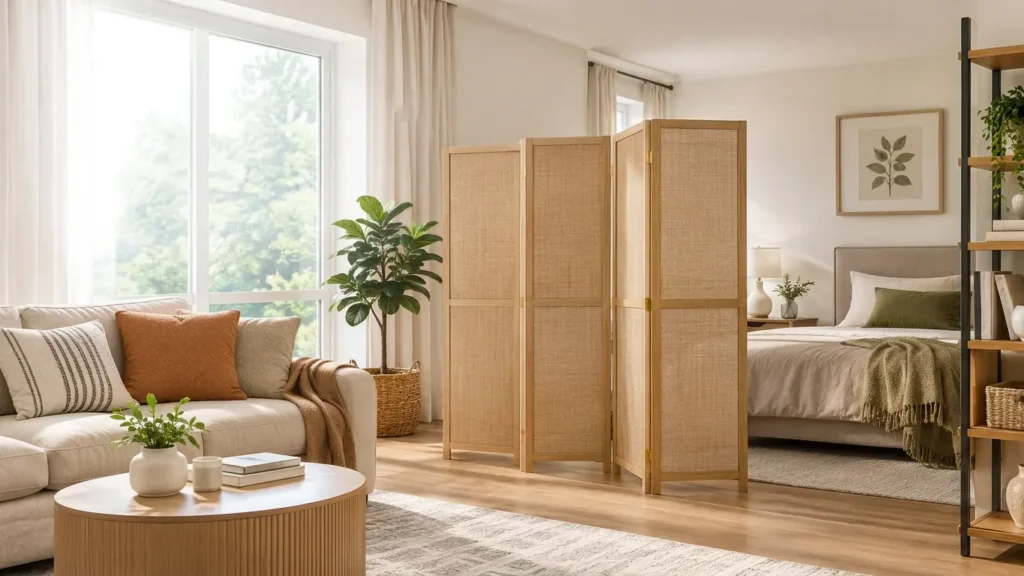
Quick Answer:The best room divider depends on three main factors:
- How much privacy do you need?
- How much space is available when the divider is fully opened?
- Do you need flexible separation, decorative appeal, or additional storage?
For changing layouts, a folding room divider is a practical option because it can be repositioned when needed. A wood room divider can create a more structured and warm appearance. A woven or fiber-style screen may offer lighter visual separation, while a room divider with shelves can combine space planning with everyday organization.
Before choosing, check the product’s dimensions, privacy level, stability, folding design, assembly requirements, and suitability for the intended room.
1. Why Use a Room Divider?
A room divider can help define different areas without building a permanent wall. This makes it useful for apartments, bedrooms, shared rooms, home offices, and open-plan living spaces.
Depending on the design, a room divider can help you:
- Create a sleeping area in a studio apartment
- Separate a home office from a living space
- Define a dressing or changing area
- Divide a shared bedroom
- Create a reading or relaxation corner
- Add structure to an open-plan room
- Provide additional display or storage space
A freestanding room divider is primarily intended to create a visual boundary. It should not automatically be treated as a soundproof wall, structural partition, or child-safety barrier.
2. How to Choose the Right Room Divider
Decide How Much Privacy You Need
Room dividers provide different levels of visual separation. Consider whether you want to block visibility completely or simply create a clear boundary between two areas.
| Privacy level | Typical design | Example materials | Suitable for |
|---|---|---|---|
| Higher visual privacy | Solid or closely spaced panels | Wood, MDF, opaque fabric | Sleeping or changing areas |
| Moderate privacy | Woven, fiber, or partly open panels | Woven fiber, bamboo-style materials, partly open wood | Bedrooms, home offices, living rooms |
| Flexible privacy | Folding panels that can be repositioned | Wood, fiber, fabric, or mixed materials | Multipurpose rooms |
| Lower privacy | Open, slatted, or display-style designs | Slatted wood, open shelving, decorative panels | Visual zoning and room styling |
The actual privacy level depends on the material, panel spacing, height, lighting, and viewing angle. A screen that appears private from the front may provide more visibility from the side.
Measure the Available Space
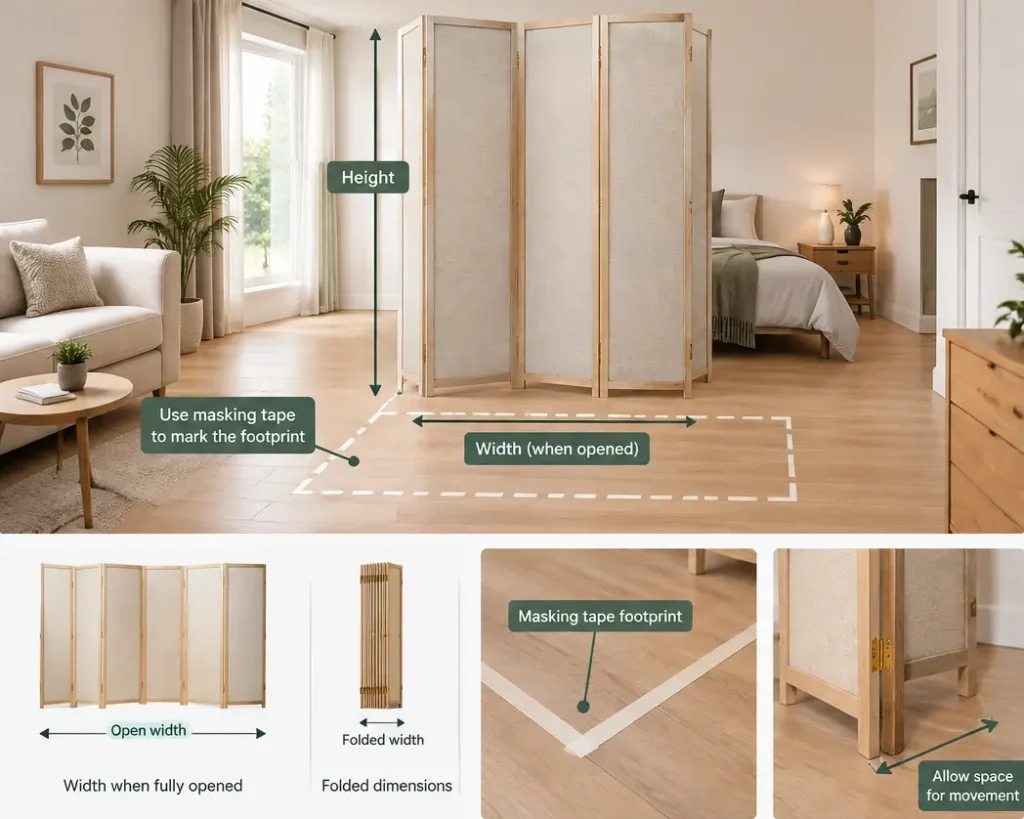
Measure the area where the divider will be placed, including the width, height, and depth. Remember that a folding divider may occupy a different amount of space when opened and folded.
Before choosing, check:
- Overall width and height
- Width when fully opened
- Folded dimensions
- Space needed for movement and storage
- Door and window positions
- Furniture placement
- Walkways and circulation
- Nearby radiators, vents, and power outlets
You can use masking tape to mark the proposed footprint on the floor. This makes it easier to see whether the divider will block a walkway or make the room feel crowded.
Check Stability and Base Design
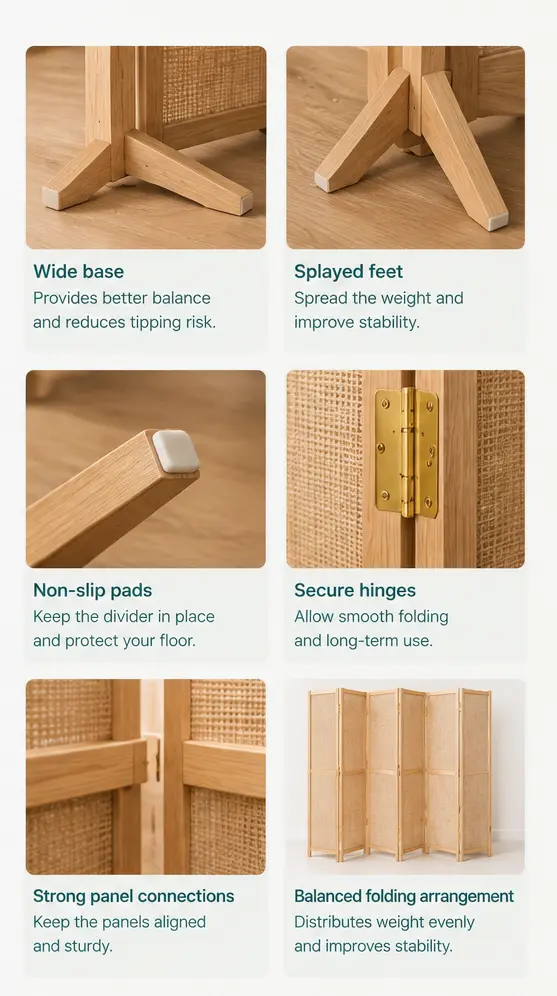
A freestanding divider should be stable on a level surface. Look at more than the appearance of the panels. The frame, feet, hinges, and panel arrangement can all affect stability.
Depending on the design, useful features may include:
- A wide base
- Splayed feet
- Non-slip pads
- Strong panel connections
- Secure hinges
- A balanced folding arrangement
A divider with more panels may provide broader coverage, but it may also need more floor space. Follow the manufacturer’s assembly and placement instructions, and avoid placing the divider where it may be pulled, climbed on, or knocked over.
Consider Freestanding or Fixed Installation
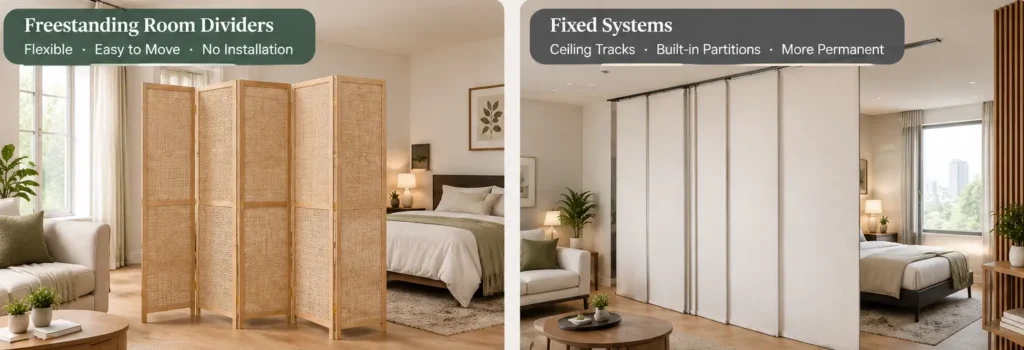
There are two common approaches to dividing a room:
- Freestanding room dividers: Flexible and easier to reposition, making them suitable for temporary layouts or rental homes.
- Fixed systems: Such as ceiling-mounted tracks or built-in partitions, which may create a more permanent division but generally require installation.
HOMCOM’s room divider range focuses on freestanding solutions, making it suitable for shoppers who want to reorganize a room without making major structural changes.
3. HOMCOM Room Divider Options for Different Needs
HOMCOM’s room divider category includes folding screens, wood designs, decorative fiber-style options, and storage-focused partitions. Instead of choosing only by appearance, compare each type according to your space, privacy needs, and daily routine.
Folding Room Dividers: Best for Flexible Layouts
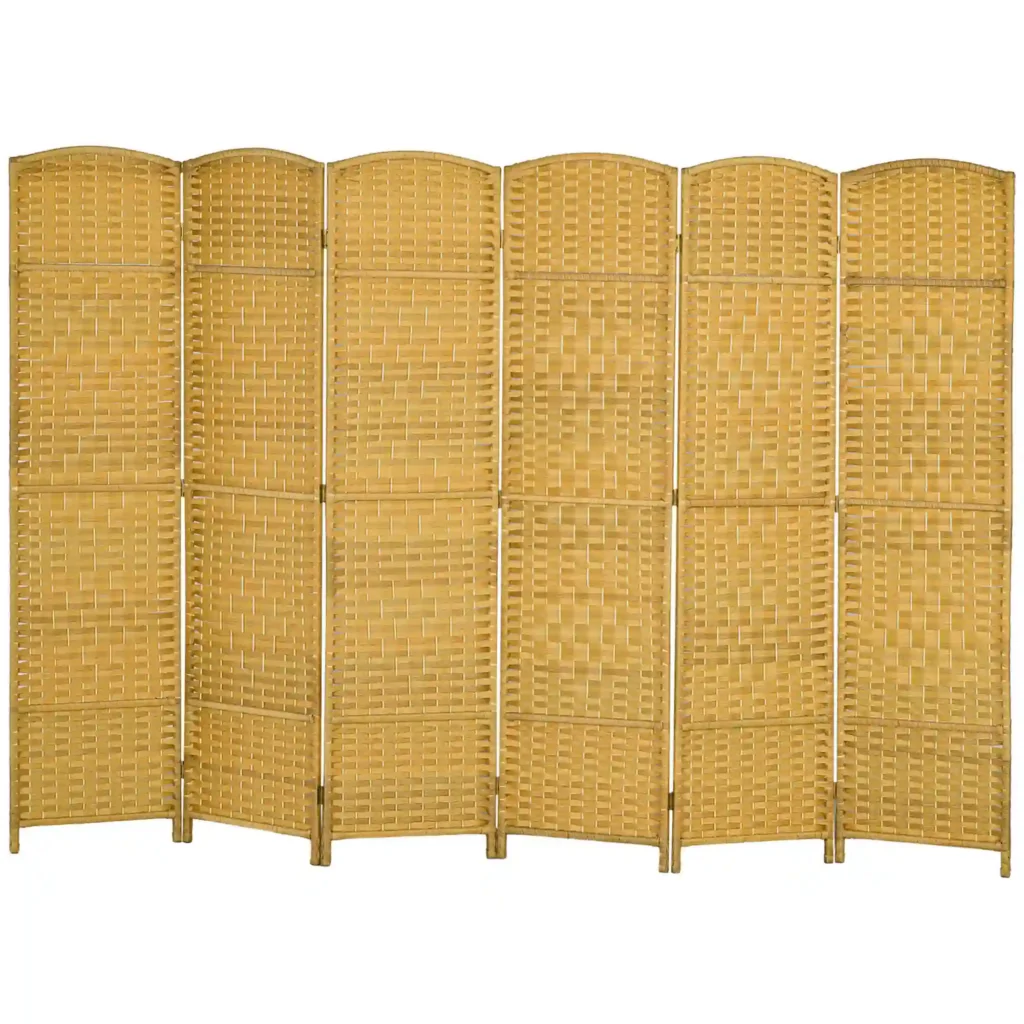
Folding room dividers are useful when a room needs to serve different purposes. You can use one to separate a workspace during the day, create a temporary sleeping area, or open up the room when more space is needed.
When comparing folding models, check:
- Panel count
- Overall height and width
- Folded dimensions
- Hinge and frame construction
- Ease of movement
- Storage requirements
- Privacy provided by the panels
Wood Room Dividers: Best for Structure and Warmth
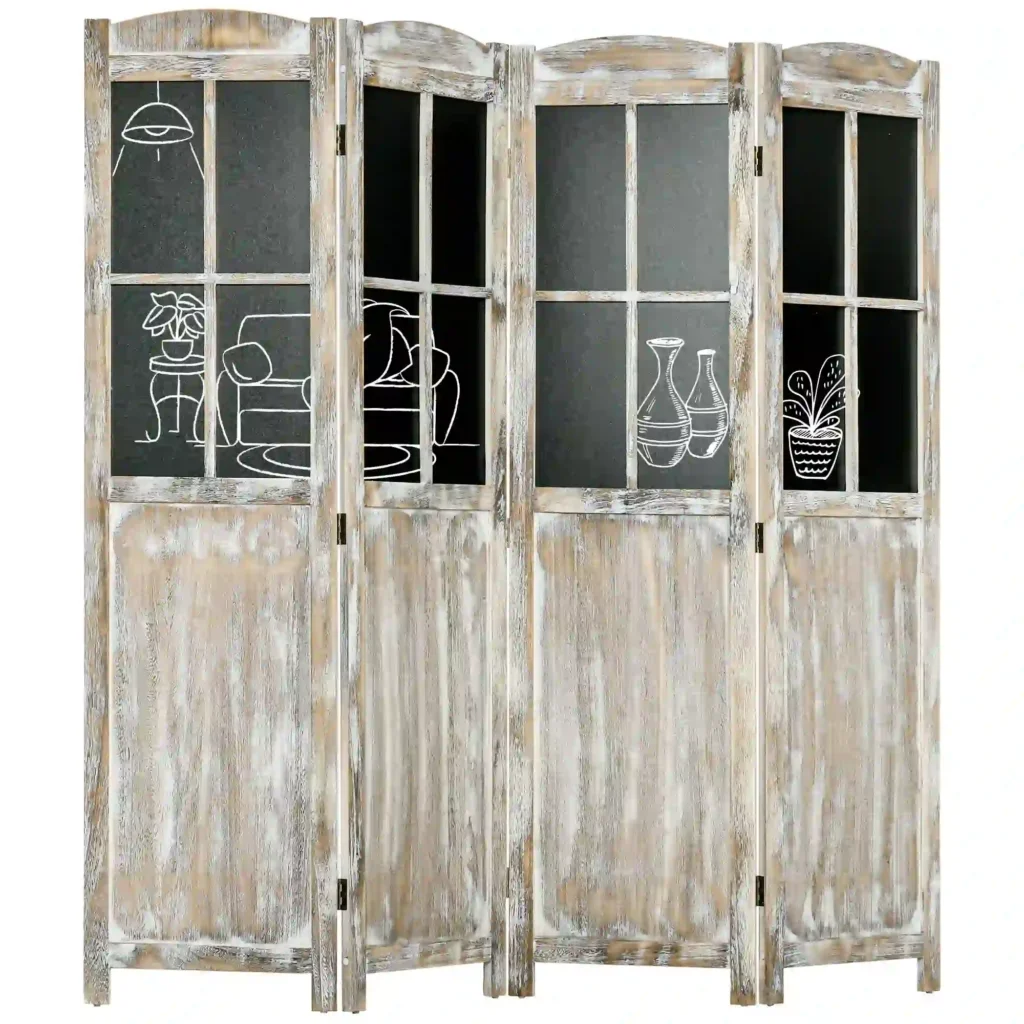
Wood room dividers can create a more defined boundary while adding a warm, furniture-like appearance. They may work well in bedrooms, living rooms, home offices, and open-plan interiors.
Compare:
- Wood or wood-based material
- Surface finish and colour
- Panel construction
- Overall height
- Visual weight
- Stability features
- Assembly requirements
A more solid design may create stronger visual separation, while a more open design may help preserve light and spaciousness.
Woven or Fiber-Style Room Dividers: Best for Decorative Separation
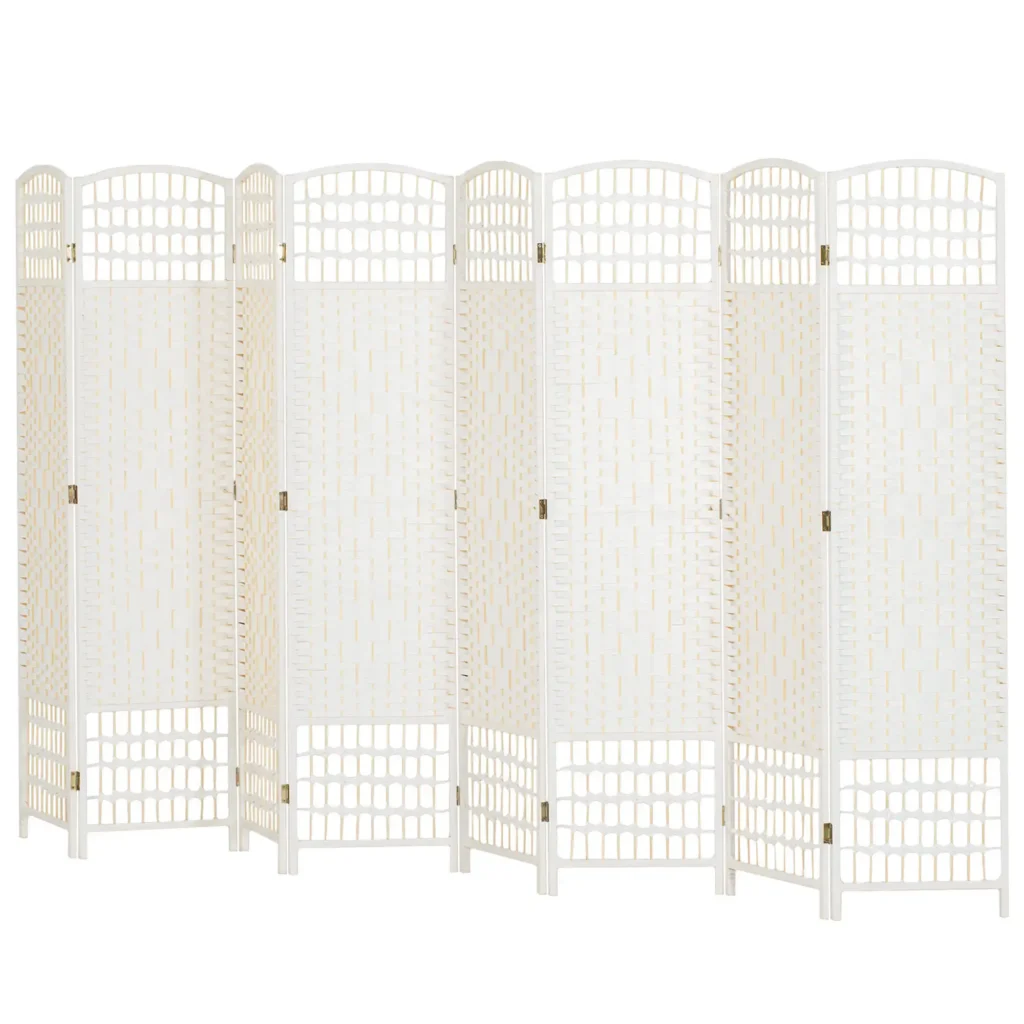
Woven or fiber-style panels can introduce texture while creating a lighter visual boundary. They may suit living rooms, bedrooms, or home offices where you want to divide the space without making it feel completely enclosed.
Before choosing this type, verify:
- The actual panel material
- Visibility through the screen
- The level of privacy provided
- Frame construction
- Cleaning requirements
- The possibility of snagging or surface damage
A woven or fiber-style screen should not automatically be described as fully private or soundproof. Its performance depends on the panel design and the surrounding environment.
Room Dividers with Shelves: Best for Separation and Organization
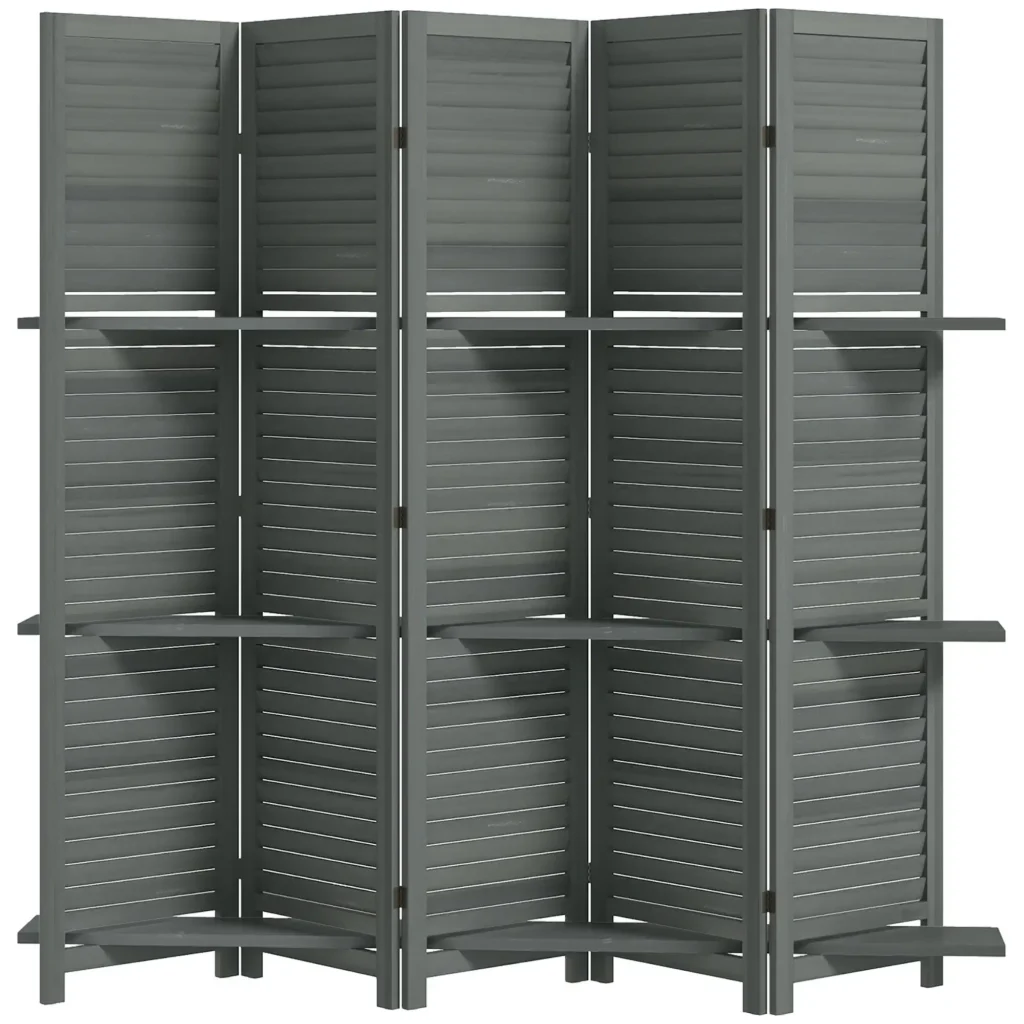
A room divider with shelves can define an area while providing space for books, baskets, plants, or decorative objects. This can be especially useful in smaller homes where one item needs to perform multiple functions.
Before using the shelves, check:
- Shelf dimensions
- Recommended load capacity
- Overall stability
- Weight distribution
- Whether stored items obstruct movement
- Whether additional support is required
Keep heavier items appropriately positioned and follow the manufacturer’s instructions for safe use.
4. Room Divider Layout Ideas
Studio Apartments
Use a folding divider to create a visual boundary between the sleeping and living areas. Leave enough room around the bed for comfortable movement, and avoid blocking the main entrance or important natural light.
Bedrooms
A room divider can define a dressing area, changing corner, or shared sleeping space. Choose the privacy level according to how the area will be used, and consider how often the layout may need to change.
Home Offices
Position the divider beside or behind the work area to create a clearer separation from the rest of the room. Make sure it does not block access to the desk, windows, or electrical outlets.
Living Rooms
Use a divider to create a reading nook, hobby area, or children’s activity zone. A shelf-style divider may also provide display space, but it should not obstruct the main circulation route.
5. Maintenance and Everyday Care
Care requirements depend on the material and construction.
- Wood surfaces: Dust regularly and avoid excessive moisture. Follow the manufacturer’s cleaning instructions.
- Woven or fiber panels: Use gentle dusting methods and avoid pulling or snagging the material.
- Shelves: Keep stored items within the recommended load limit and distribute weight appropriately.
- Folding hardware: Check hinges, joints, and feet periodically, especially if the divider is moved frequently.
- Freestanding frames: Recheck stability after moving the divider or changing the panel angle.
Use the divider only in the environment and for the purpose specified by the manufacturer.
Final Takeaway
The best room divider is the one that fits your available space and supports the way you use your home. Folding screens are useful for flexible layouts, wood designs can add structure and warmth, woven or fiber-style panels can provide decorative separation, and shelf-style dividers can combine zoning with organization.
Before choosing a HOMCOM room divider, measure the space, check the open and folded dimensions, consider privacy and circulation, and review the product’s material, stability, assembly, and care requirements.
FAQs
1. Can a room divider block sound?
Most freestanding room dividers are designed for visual separation rather than soundproofing. They may affect how sound moves through a room, but they should not be treated as a substitute for an acoustically rated wall or partition.
2. Are room dividers suitable for rental homes?
Freestanding room dividers can be suitable for rental homes because they generally do not require permanent wall changes. Always check the product’s assembly and placement requirements.
3. Are room dividers safe around children or pets?
Safety depends on the product’s construction, placement, and the surrounding environment. Position the divider on a stable, level surface, keep walkways clear, and do not use a freestanding screen as a protective barrier unless it is specifically designed for that purpose.
4. Can a room divider be used as a headboard?
A room divider should not automatically be used as a headboard. Only use it for this purpose if the manufacturer specifically permits it and the design provides suitable stability and support.
5. Can room dividers be used outdoors?
Do not assume that an indoor room divider is suitable for outdoor use. Check the manufacturer’s approved usage environment, material requirements, and care instructions before placing it outside.