
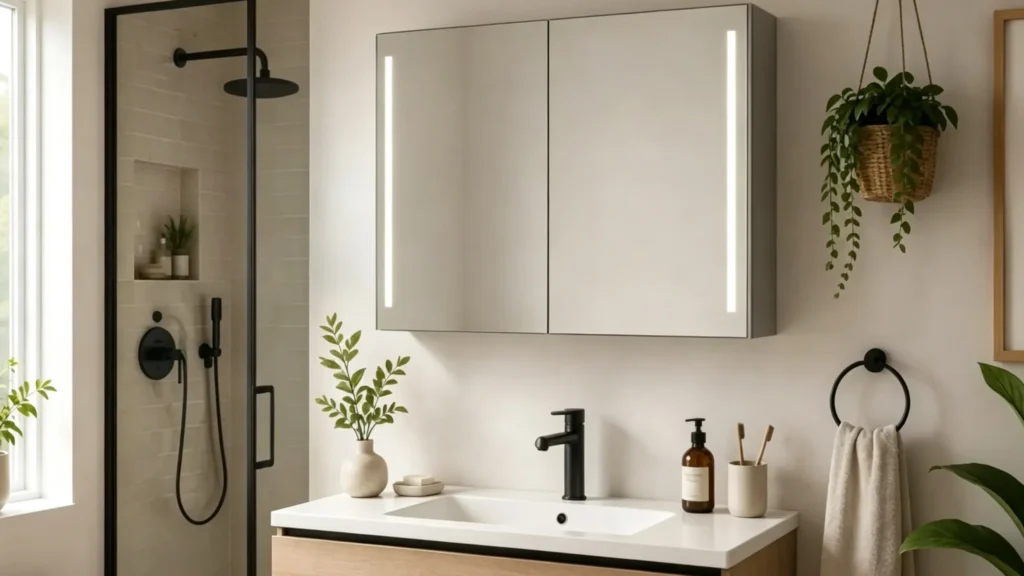
Small bathrooms often have to balance several needs at once: a clear reflection for everyday grooming, enough storage for toiletries, and a layout that does not make the room feel cramped. A well-chosen mirror cabinet can combine these functions in one wall-mounted solution, helping you make better use of limited space without adding another bulky piece of furniture.
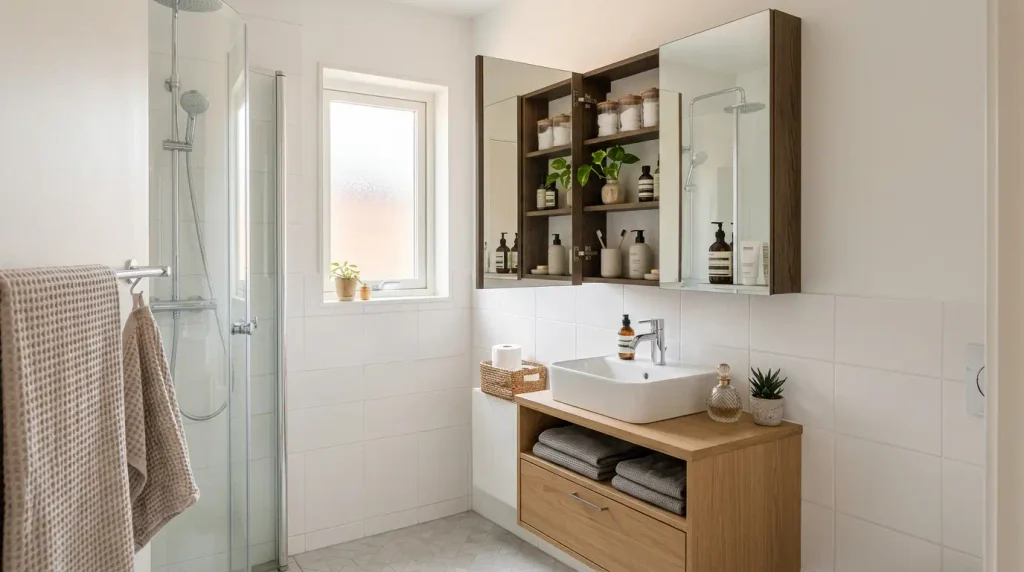
If you are looking for bathroom mirror cabinet ideas for small bathrooms, the best approach is to consider the available wall space, vanity size, storage needs, installation method, and overall bathroom style together. The following ideas can help you choose a mirror cabinet that is both practical and visually appropriate for a compact bathroom.
1. Start With Space: Measure and Plan Around Your Vanity
Before choosing a mirror cabinet, measure the wall where it will be installed and consider how it relates to the vanity underneath.
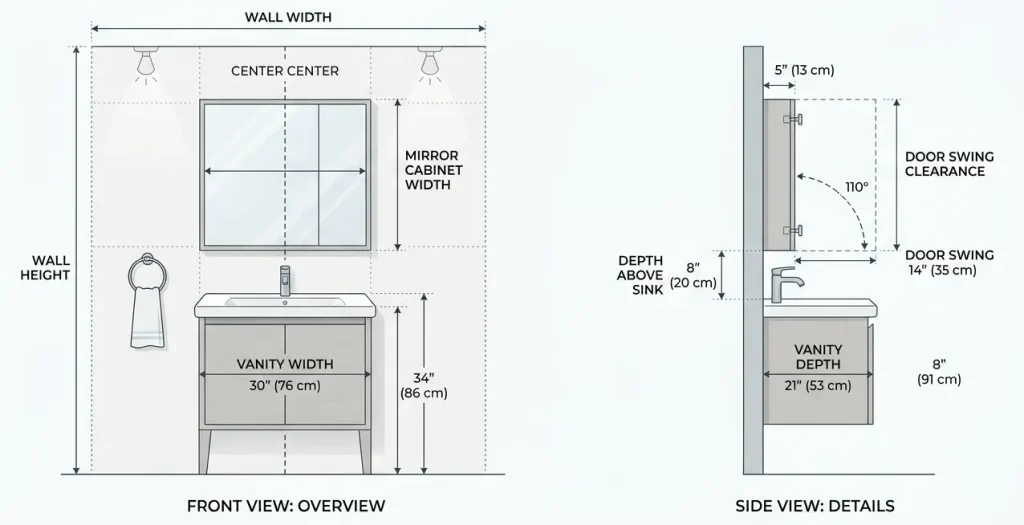
The cabinet should be proportionate to the vanity rather than simply being as large as possible. A mirror that is too narrow can look disconnected from the sink, while an oversized cabinet may dominate a small wall.
Measure:
- Available wall width and height
- Vanity width
- Available depth above the sink
- Position of nearby lights, switches, doors, and other fixtures
- Clearance required for the cabinet door to open comfortably
For particularly small bathrooms, prioritize a configuration that provides useful storage without extending too far into the room. The goal is not to fill every available section of wall, but to use the space above the vanity efficiently.
2. How Mirror Cabinets Save Space in Small Bathrooms
A mirror cabinet combines a bathroom mirror with concealed storage, making it a practical choice for small bathrooms. Wall-mounted designs use vertical wall space without taking up valuable floor space.
By keeping everyday toiletries behind the mirror, a mirror cabinet can also reduce visible clutter around the vanity and create a cleaner, more organized bathroom.
3. Use Mirror Size, Shape, and Placement to Create a Bigger Feel
The mirror itself can influence how spacious a small bathroom feels. Mirrors reflect both natural and artificial light, helping the room appear brighter and more open.
Choose a Size That Works With the Vanity
A mirror cabinet generally looks most balanced when its width relates closely to the vanity below it. Instead of automatically choosing the largest available mirror, consider the proportions of the entire wall.
A wider mirror can provide more reflection and help visually expand the room, while a narrower design may work better where wall space is restricted.
Use Vertical Proportions in Narrow Bathrooms
If the bathroom has limited horizontal wall space, a vertically oriented mirror cabinet can make better use of the available area.
A taller cabinet can provide additional storage without requiring a wider footprint. This approach is particularly useful above narrow vanities or in bathrooms where the sink is positioned close to another wall or doorway.
Keep the Visual Design Light
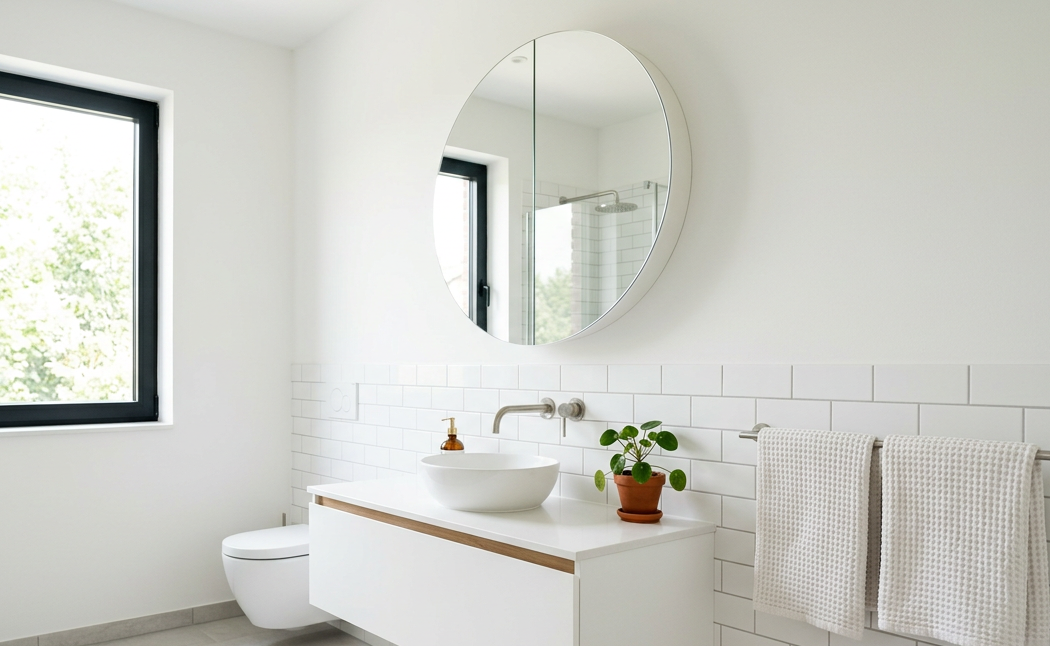
Frameless mirrors, slim frames, and simple finishes can help prevent a compact bathroom from feeling visually crowded.
For example, a simple rectangular mirror cabinet above a small vanity can provide a clean, modern look while keeping the storage function discreet.
You can also create more visual interest through the shape and surrounding décor:
- Round mirror cabinets: soften the straight lines of sinks, tiles, and cabinets.
- Rectangular cabinets: maximize usable reflection and work well with most vanities.
- Slim-framed designs: provide definition without adding much visual weight.
- Minimalist mirrored surfaces: help reflect light and maintain an uncluttered appearance.
Add Lighting Where Natural Light Is Limited
If your bathroom has a small window or little natural light, an illuminated mirror cabinet can combine storage, reflection, and additional lighting.
LED lighting around or behind the mirror can make grooming easier while adding a brighter, more contemporary atmosphere.
4. Choose the Right Storage Configuration for Your Routine
Choose a mirror cabinet based on what you actually need to store. Adjustable shelves, multiple compartments, and concealed storage can help keep everyday toiletries organized without taking up additional floor space.
For small bathrooms, placing the cabinet above the vanity creates a convenient grooming zone while keeping the sink area clean and uncluttered.
This creates a simple visual hierarchy:
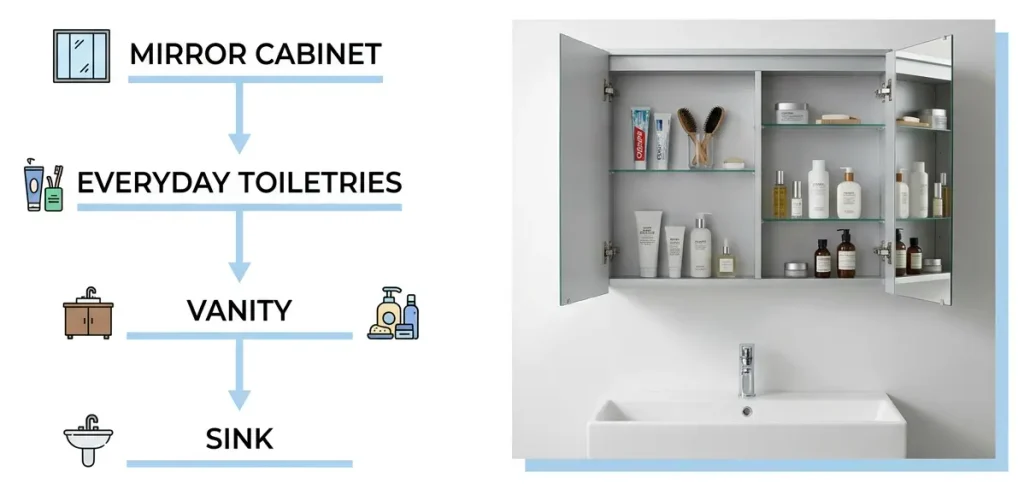
Keeping these functions together reduces the need for additional storage furniture and leaves more floor area available.
5. Consider Materials, Installation, and Bathroom Suitability
Bathroom cabinets need to suit humid conditions, water splashes, and frequent cleaning. Before buying, check the manufacturer’s information on:
- Material and surface finish
- Moisture resistance and cleaning requirements
- Mounting method and installation requirements
Installation type also affects how much space the cabinet uses.
- Surface-mounted cabinets: Attach directly to the wall and are generally straightforward to install, but they project into the room and require sufficient clearance.
- Recessed cabinets: Sit partly or fully inside the wall for a more streamlined profile, but installation may be more involved because the wall must accommodate the cabinet.
Choose the option that suits your wall structure, available space, and installation requirements. the existing wall, available space, and your willingness to undertake more involved installation work.
6. Bathroom Mirror Cabinet Ideas by Layout and Style
Once the basic size and storage requirements are established, you can adapt the mirror cabinet to the layout and style of the bathroom.
For a Narrow Bathroom
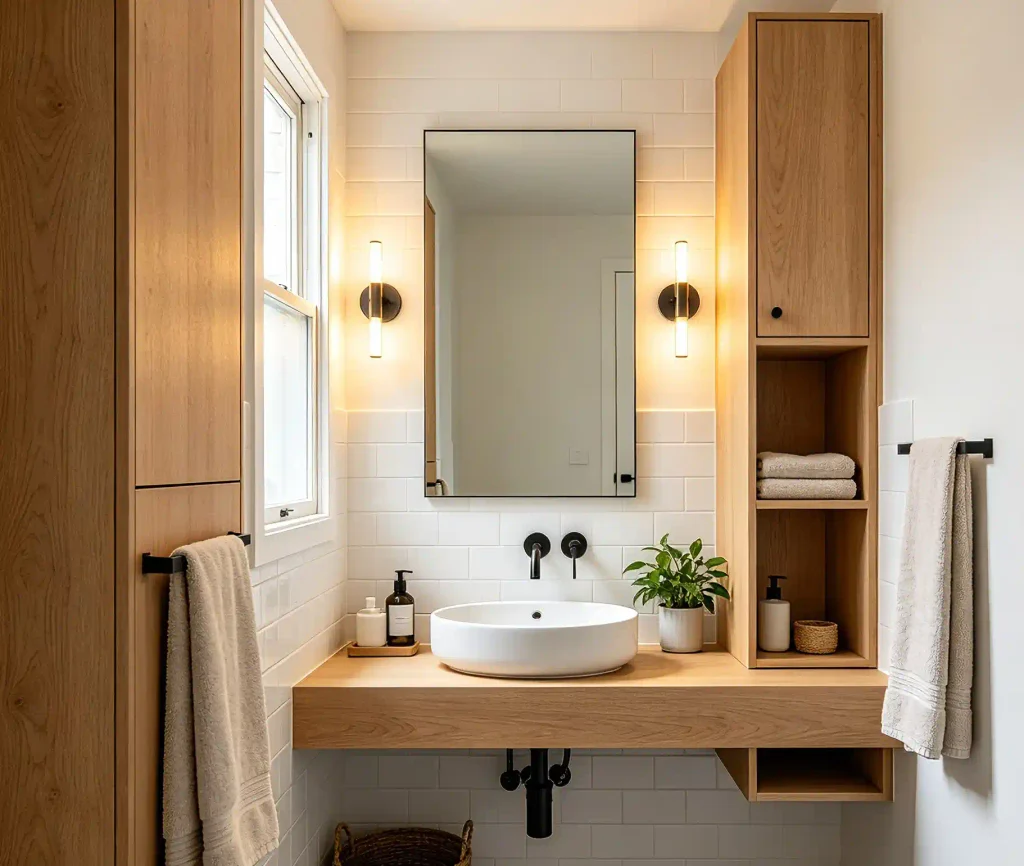
Choose a vertically oriented cabinet with a relatively slim projection. Pair it with a compact vanity and keep surrounding wall décor minimal.
This combination makes use of vertical space without visually filling the entire wall.
For a Bathroom With Limited Natural Light
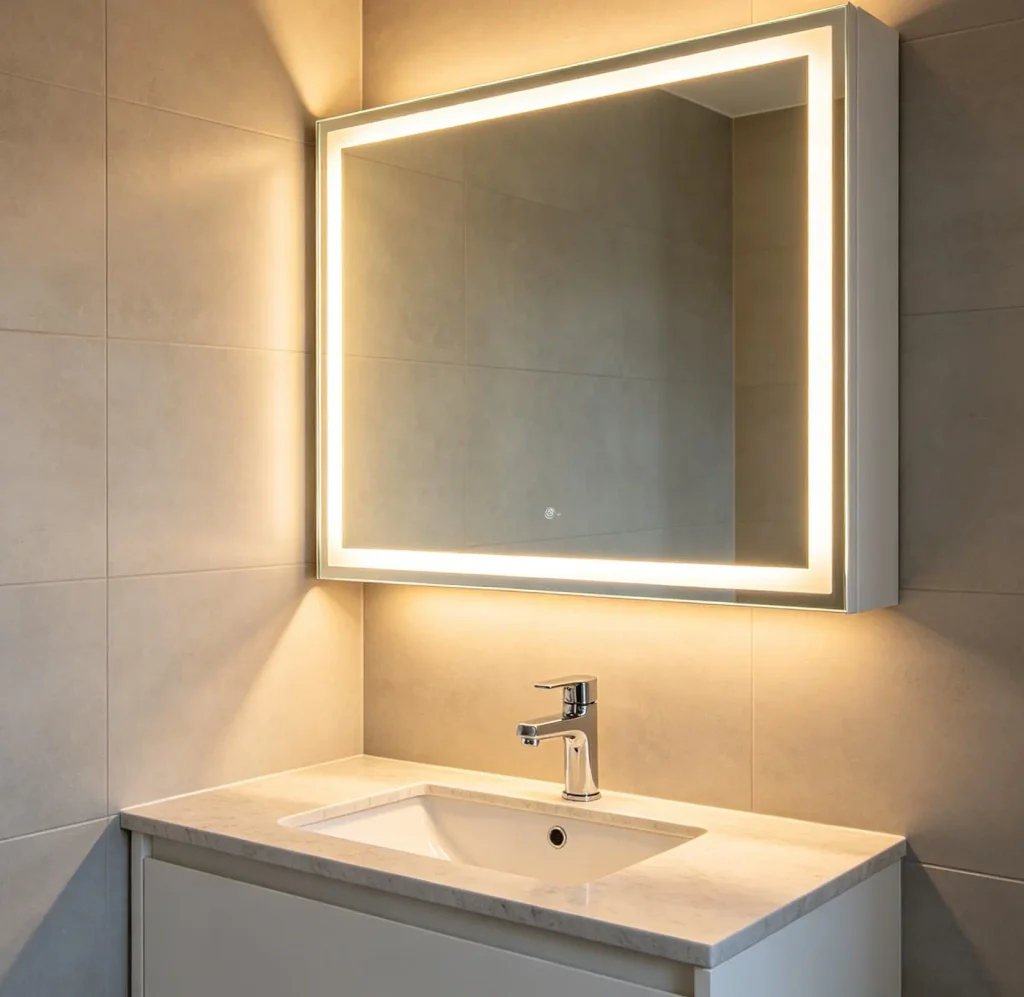
A mirror cabinet with integrated lighting can provide additional illumination while maintaining the storage function.
Keep the surrounding finishes relatively light to make better use of reflected light.
For a Minimalist Bathroom
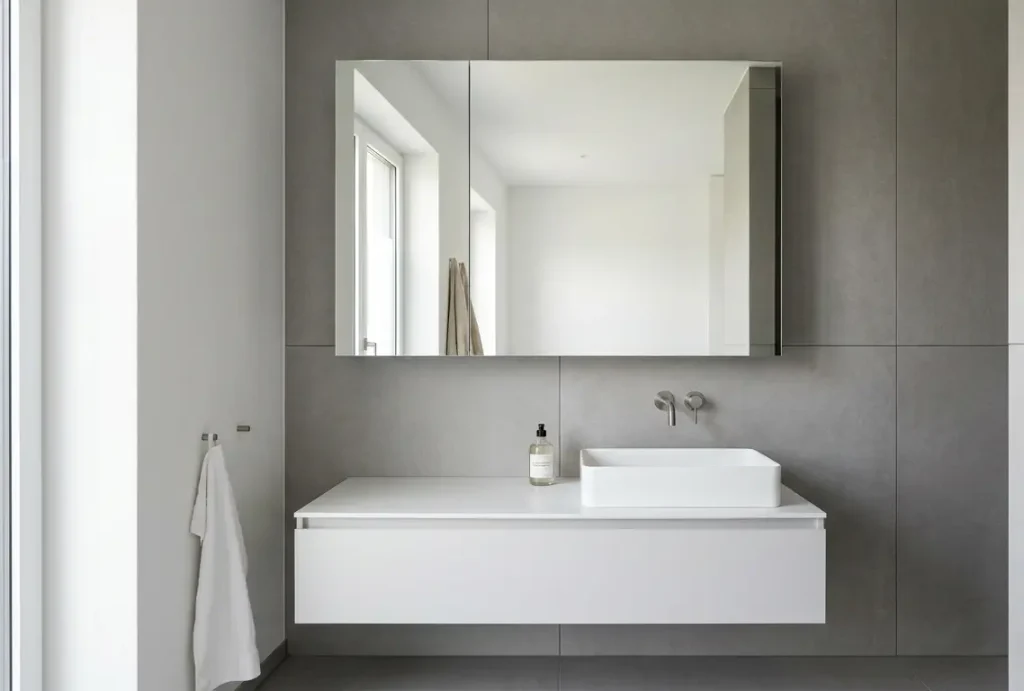
A frameless or simply framed rectangular mirror cabinet can blend naturally with clean-lined vanities and neutral tiles.
Avoid excessive decorative elements around the mirror so that the reflective surface remains the main visual feature.
For a Modern Bathroom
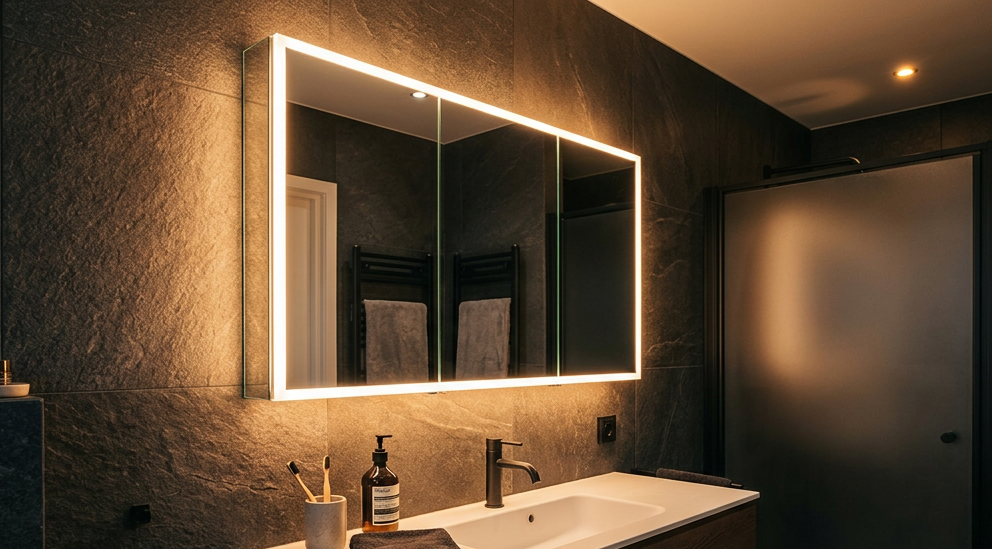
A black, dark, metallic, or other contemporary finish can create contrast against lighter walls and tiles. Choose a frame or finish that coordinates with existing faucets, cabinet hardware, or lighting.
For a Warm or Traditional Bathroom
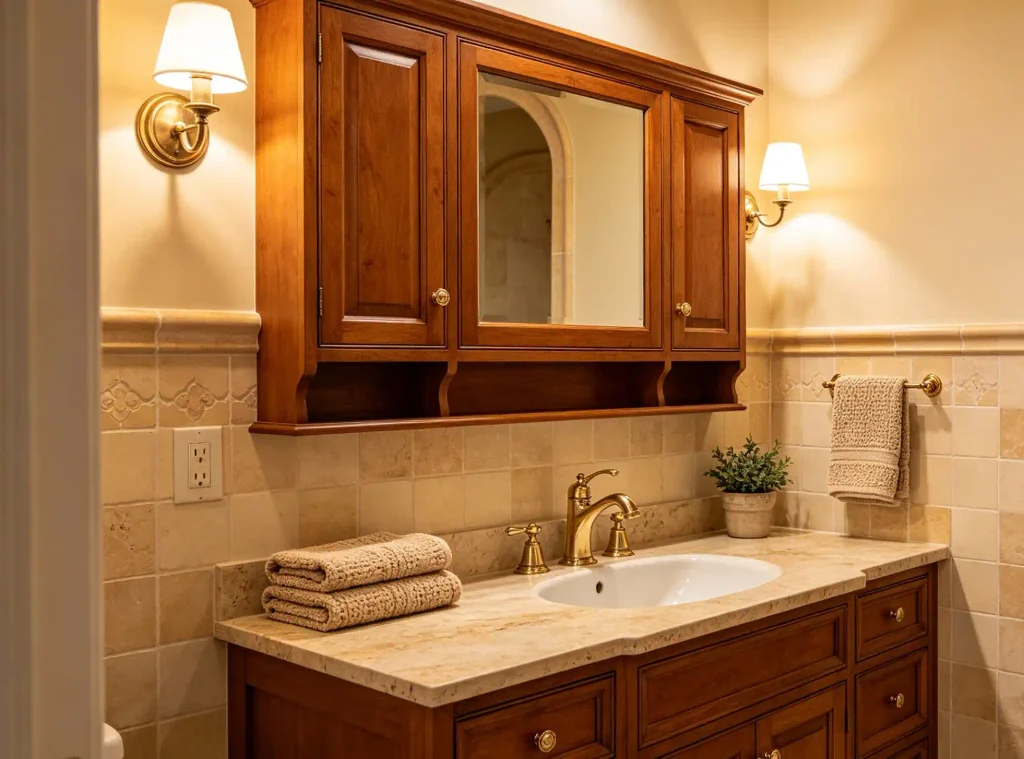
Warmer finishes, softer shapes, or framed mirror cabinets can complement wood-look vanities, warm-toned tiles, and brass or gold-colored hardware.
The important point is to coordinate the mirror cabinet with elements already present in the room rather than treating it as an isolated feature.
7. Final Thoughts
The best bathroom mirror cabinet ideas for small bathrooms are not necessarily about choosing the largest mirror or the cabinet with the most storage. They are about making one piece of furniture perform several useful functions without overwhelming the room.
Start by measuring your available space and vanity, then consider how much storage you actually need. From there, choose a suitable cabinet configuration, mirror size and shape, installation method, and finish. For particularly compact bathrooms, vertical designs, concealed storage, slim profiles, and reflective surfaces can help you make better use of limited space while maintaining a clean and comfortable environment.
FAQs
1. What size mirror cabinet is best for a small bathroom?
The best size depends on your available wall space, vanity width, and the position of nearby fixtures. Measure the wall and vanity first, then choose a mirror cabinet that provides sufficient reflection and storage without making the bathroom feel crowded.
2. Should I choose a recessed or surface-mounted mirror cabinet?
A recessed mirror cabinet sits partly or fully inside the wall, creating a streamlined appearance and reducing how far it projects into the bathroom. A surface-mounted cabinet attaches directly to the wall and can be more practical when modifying the wall is not desirable. Your wall structure, available depth, and installation requirements should guide the choice.
3. Are LED mirror cabinets a good choice for small bathrooms?
LED mirror cabinets can be useful in small bathrooms with limited natural or overhead lighting. Integrated lighting can improve visibility for everyday grooming while combining illumination, reflection, and storage in one space-saving solution. Check the product’s actual lighting features and installation requirements before buying.