
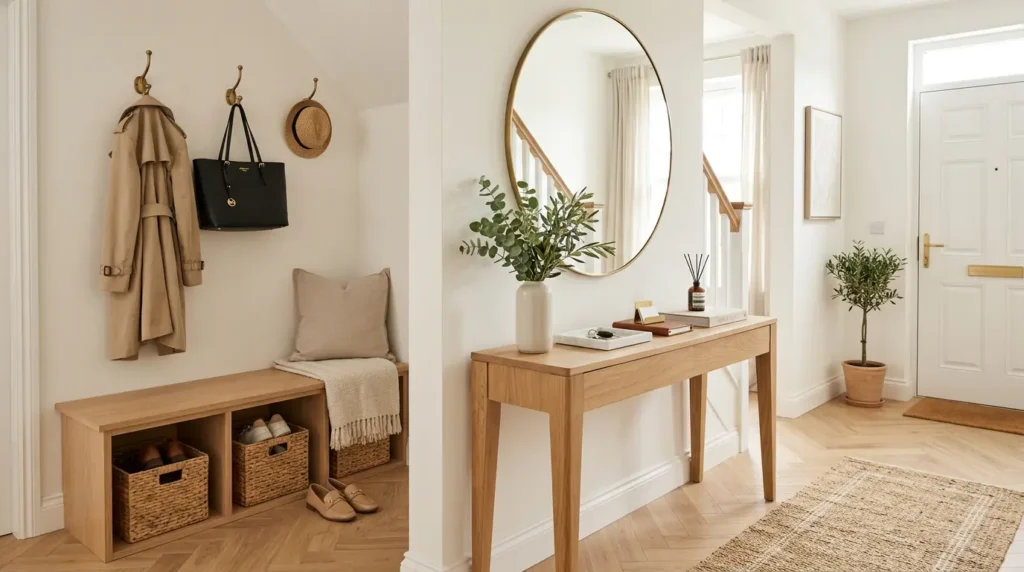
Shoes, coats, bags, and everyday essentials can quickly make an entryway feel cluttered, especially when the space is small or there is no dedicated closet. The key is not simply adding more furniture, but choosing storage that fits the space and the way your household uses it.
In this guide, you’ll learn how to organize an entryway with practical storage ideas for narrow hallways, small foyers, homes without closets, and awkward spaces.
1. Identify What Your Entryway Needs to Store
Before choosing entryway storage furniture, identify what actually needs to be stored and how the space is used every day. The goal is to create a storage system around your household’s routines rather than filling the entryway with furniture simply because there is available space.
1.1 Identify Everyday and Occasional Items
Start by grouping belongings according to how often you use them.
Everyday items may include:
- Shoes
- Coats and jackets
- Handbags and backpacks
- Keys and wallets
- Umbrellas
Seasonal or occasional belongings may include winter accessories, less frequently worn shoes, seasonal bags, and other items that do not need to be immediately accessible.
Keep frequently used belongings within easy reach, while seasonal and occasional items can be stored in cabinets, baskets, or higher storage areas.
1.2 Consider Your Household’s Habits
Your entryway storage should also reflect who uses the space and what they need to access every day.
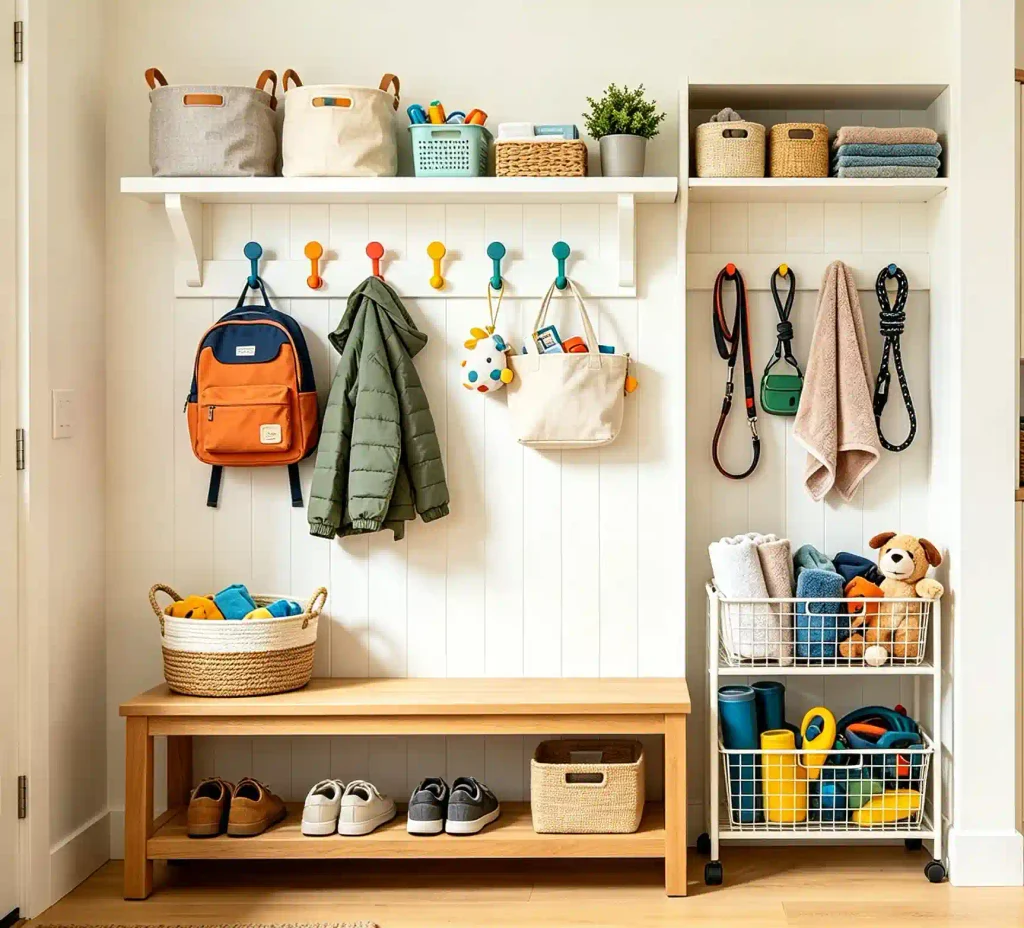
A family with children may benefit from accessible hooks, easy-to-reach shoe storage, and baskets for individual belongings. If pets regularly enter and leave through the same area, a small storage zone for leashes, towels, and outdoor accessories can keep these items together.
A single person or couple may prefer a more compact setup with fewer storage zones, while renters may benefit from freestanding furniture such as storage cabinets, benches, shelving, and coat racks that can be rearranged without permanent modifications.
Think about what happens when you enter and leave your home each day. The best entryway storage reflects who uses the space and how they use it, rather than simply how much furniture the entryway can accommodate.
2. Measure the Space and Plan Around the Layout
Once you understand what needs to be stored, measure the entryway before choosing furniture. The available width, depth, height, and walking route will determine which storage solutions are practical.
Check:
- Available width and depth
- Ceiling height
- Door swing
- Walking routes
- Stairs and other obstacles
- Existing furniture and fixtures
Do not rely only on labels such as “slim” or “compact.” Compare the actual dimensions of the furniture with the available space.
2.1 Keep High-Traffic Areas Clear
Storage should make the entrance easier to use, not create another obstacle.
A cabinet may technically fit into a narrow hallway but still project too far into the walkway. Before finalizing the arrangement, make sure doors can open normally, people can pass comfortably, and routes between rooms remain accessible.
Furniture depth is especially important in narrow entryways, so consider how far each piece extends into the walking area rather than looking only at its overall width.
2.2 Make Use of Vertical Space
When floor space is limited, look upward. Walls and unused vertical areas can provide additional storage without taking up valuable walking space.
Consider:
- Wall hooks for coats, bags, and hats
- Floating shelves for smaller items
- Tall, narrow cabinets for additional capacity
- High shelves for seasonal belongings
- Above-door storage for rarely used items
Use lower and easily accessible areas for everyday belongings and reserve higher areas for items you use less frequently.
Wall-mounted storage can work particularly well in narrow hallways, while tall and narrow furniture can increase storage capacity without requiring as much floor width as a larger, lower unit.
3. Choose Storage According to Your Entryway Layout
Different entryways require different storage strategies. Instead of trying to fit the same furniture arrangement into every space, choose storage based on the shape and limitations of your entryway.
3.1 Narrow Hallways
In a narrow hallway, prioritize shallow and vertical storage.
Slim shoe storage, shallow cabinets, wall hooks, floating shelves, and tall narrow units can add storage while preserving the main walking route.
Avoid deep furniture that projects unnecessarily into the hallway, particularly near doorways or other high-traffic areas.
3.2 Small Entryways
In a small entryway, prioritize the storage functions you use most often rather than trying to provide a separate piece of furniture for every category.
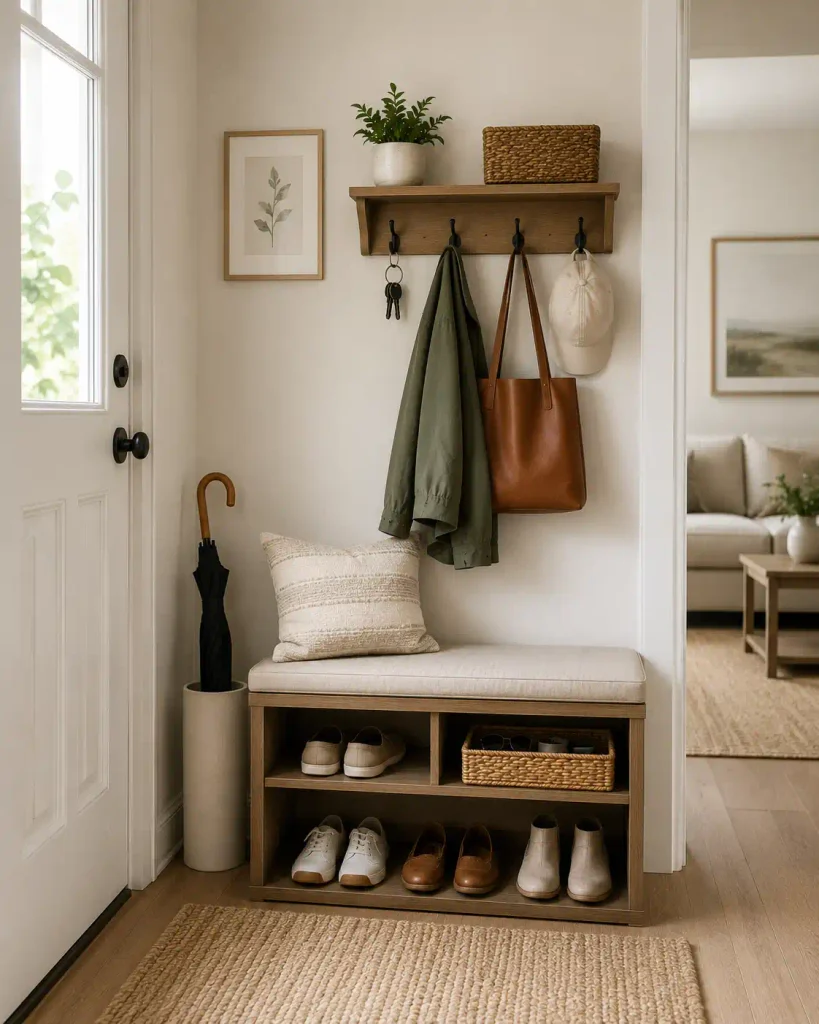
A compact combination of hooks, shoe storage, and a small bench may provide more practical value than several separate pieces. Focus on the storage functions you use most rather than trying to fit every possible storage type into a small space.
3.3 Entryways Without a Closet
If your home does not have an entryway closet, combine several smaller storage solutions to recreate its main functions.
For example:
- Wall hooks or a coat rack for outerwear
- A shoe cabinet or rack for footwear
- A storage bench for seating and additional storage
- Baskets for accessories
- A freestanding cabinet for seasonal or less frequently used items
This approach allows you to create a practical storage zone without requiring built-in construction.
3.4 Awkward Corners and Unused Areas
Unused corners and wall sections can also provide valuable storage opportunities.
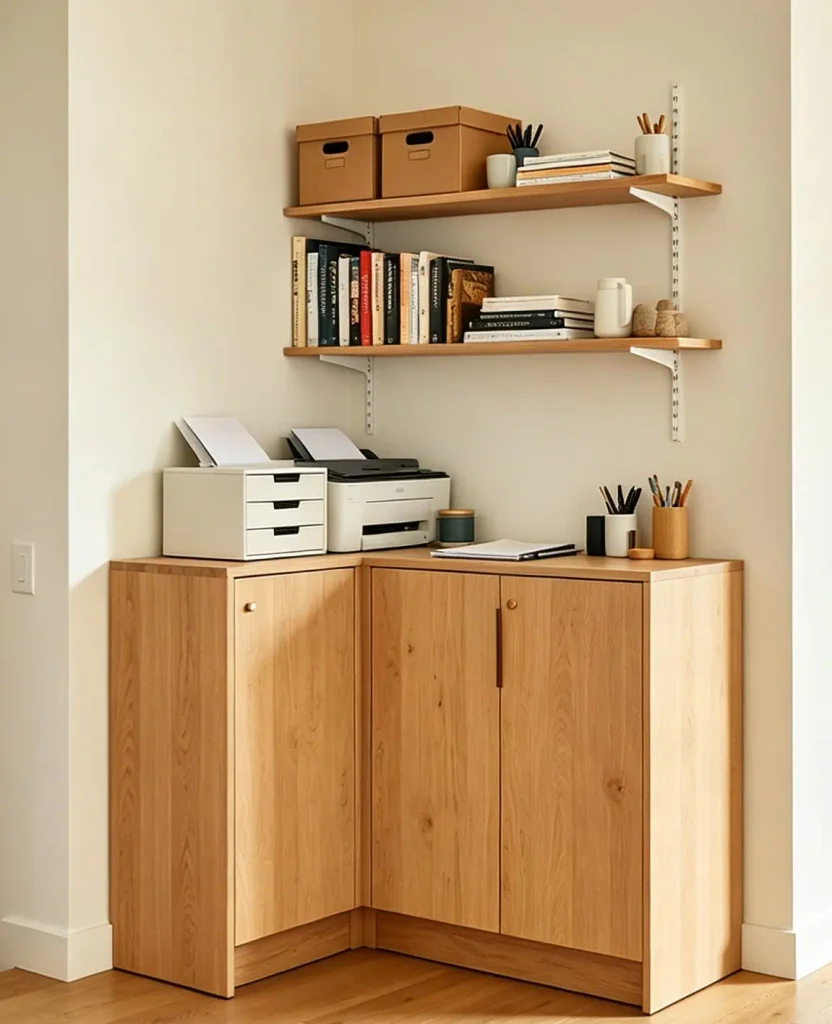
A compact corner unit, narrow shelving, or appropriately sized cabinet can turn an overlooked area into useful storage. However, always check that the furniture does not interfere with doors, stairs, or the main walking route.
The best storage solution depends on how the available space is shaped, not simply on how much floor area it contains.
4. Choose Storage for Different Entryway Items
Different entryway items require different types of storage. Instead of using the same solution for everything, match each category to a storage method that makes it easy to access, put away, and keep organized.
4.1 Combine Shoe Storage With Seating
A storage bench can solve two practical problems at once by providing both seating and space for footwear or accessories.
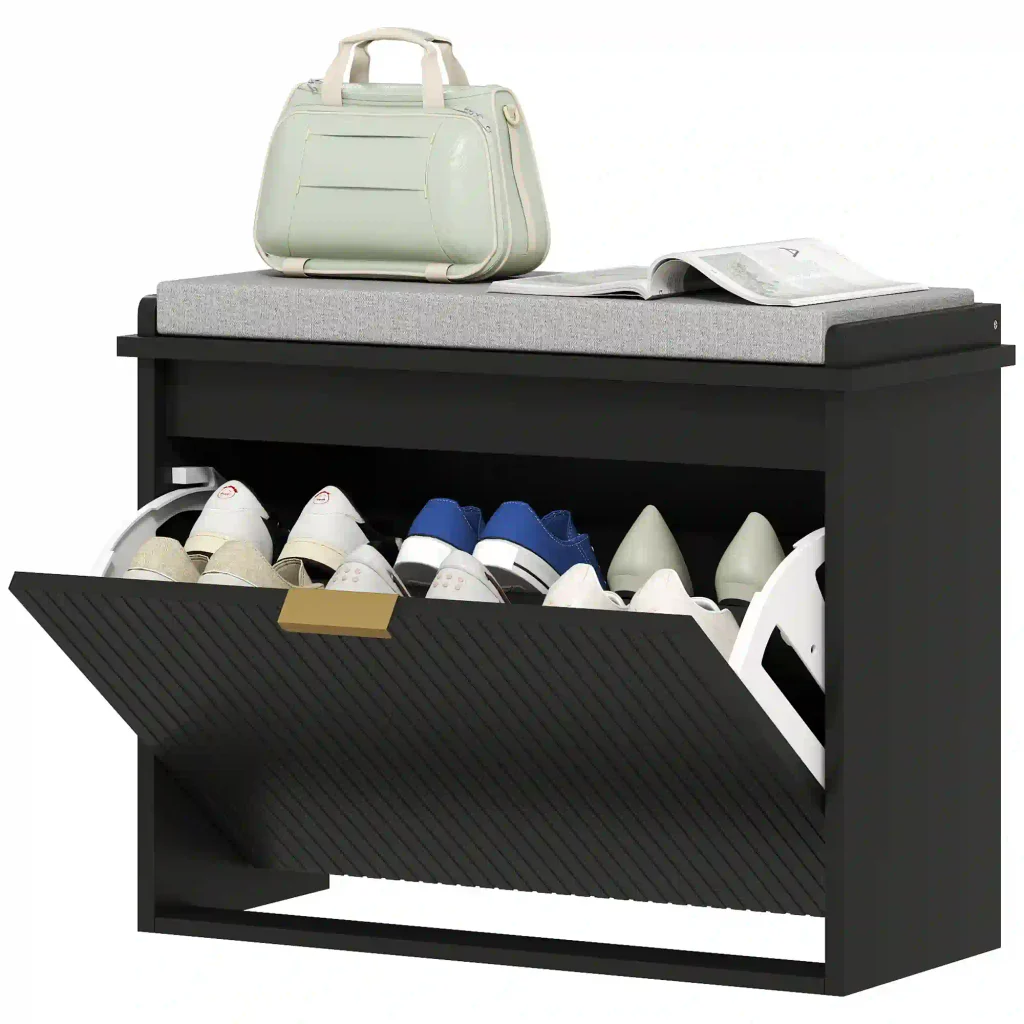
[HOMCOM Shoe Storage Bench with Padded Seat Cushion and Flip-Drawer]
For example, a shoe storage bench can keep frequently worn footwear close at hand while also providing a convenient place to sit when putting on or removing shoes. This type of multifunctional furniture can be particularly useful in smaller entryways where separate seating and shoe storage would require additional floor space.
4.2 Choose Open or Closed Storage Based on Access Needs
Open and closed storage serve different purposes.
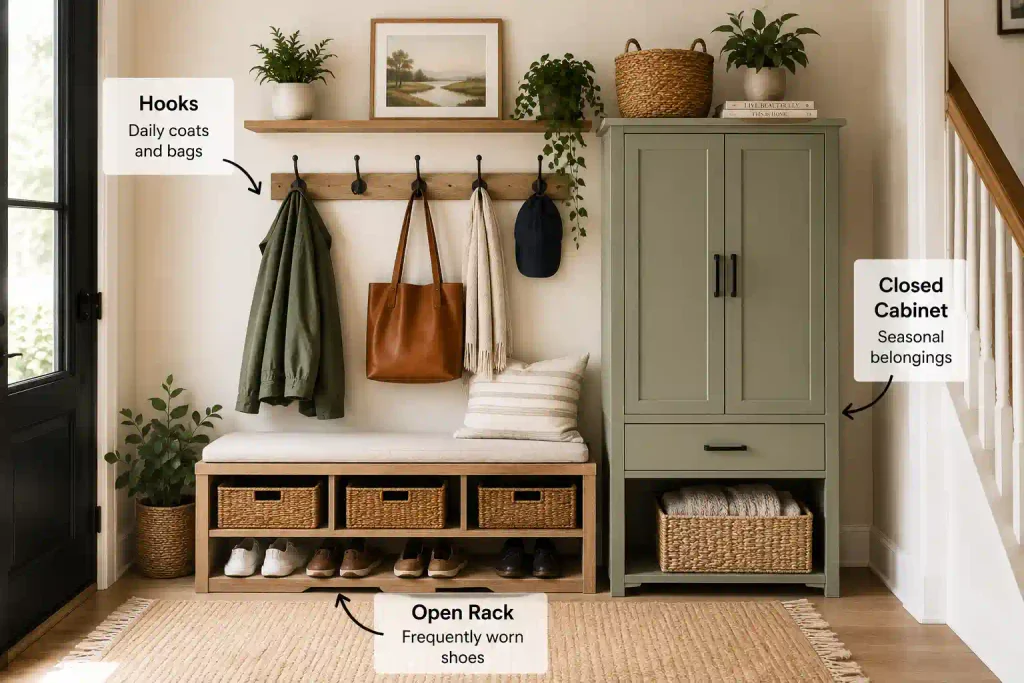
Open storage works well for items you grab frequently, such as everyday shoes, coats, bags, and umbrellas. Hooks, open shelves, and shoe racks make these belongings easy to see and access.
Closed storage is better suited to seasonal footwear, extra accessories, and other items that do not need to remain visible. Cabinets and cupboards can help create a cleaner visual appearance.
You do not need to choose only one type. A combination can be more practical—for example, hooks for daily coats and bags, an open shoe rack for frequently worn footwear, and a closed cabinet for seasonal belongings.
4.3 Create a Dedicated Drop Zone for Small Essentials
Small belongings can create just as much clutter as shoes and coats when they do not have a designated place.
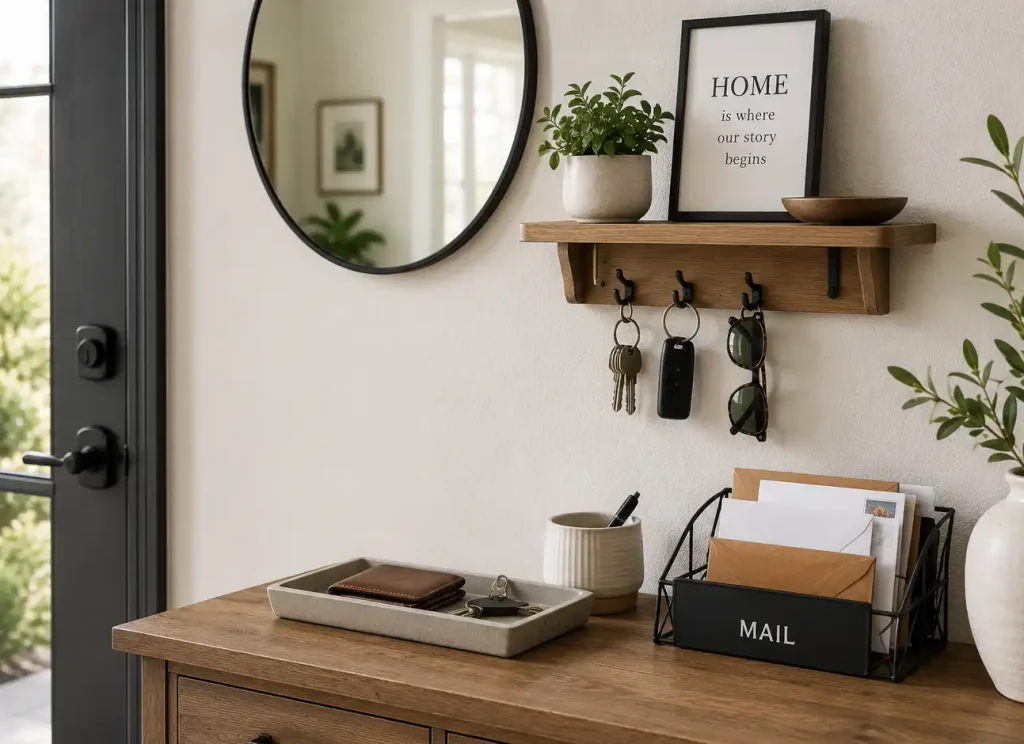
Use a small shelf, drawer, tray, basket, or wall organizer for items such as keys, sunglasses, wallets, mail, and other everyday essentials.
You can also group similar items together. For example, one basket can hold hats and gloves, while another can store small accessories.
The exact system is less important than consistency. Every frequently used category should have a predictable place to return to after you come home.
5. Keep the Entryway Organized Without Making It Feel Overloaded
Once the main storage functions are in place, the entryway should remain easy to maintain and visually balanced. More storage does not necessarily mean a more organized entryway.
5.1 Create Clear Storage Zones
Group related belongings together so that each area has a clear purpose.
For example:
- Shoes in one designated area
- Coats and bags around the hook zone
- Keys and small essentials in a tray, drawer, or basket
- Seasonal belongings in closed or higher storage
Clear zones make it easier to find belongings and return them to the correct place.
5.2 Avoid Turning Every Surface Into Storage
A console, bench, shelf, or cabinet top can quickly become a dumping ground if it has no defined purpose.
Instead of adding more containers whenever clutter appears, reconsider whether each item has an appropriate storage location. The goal is to create enough designated storage for the things you actually use rather than filling every available surface.
5.3 Add Simple Decor Without Overloading the Space
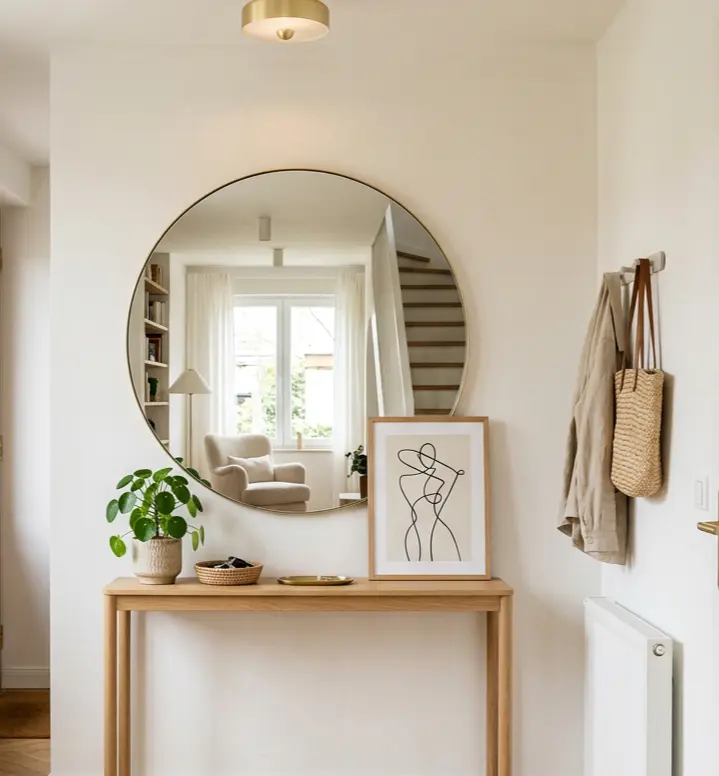
Once the main storage is organized, use a few simple decorative elements to make the entryway feel more welcoming without taking away useful space. A mirror can make a small area feel more open, while suitable lighting can improve visibility and make the space more inviting.
Keep decorative items and storage accessories visually consistent where possible. Matching finishes, baskets, hooks, or other small organizational elements can help the entryway look intentional rather than cluttered. Keep decorative elements limited so the storage system remains the focus.
6. Entryway Storage Checklist Before You Buy
Before choosing an entryway or hallway storage solution, ask yourself:
- What items actually need to be stored?
- Which items need to be easily accessible?
- How much usable floor space do I have?
- How deep can my storage furniture be without blocking the walkway?
- Will doors, stairs, and walking routes remain clear?
- Do I need open, closed, or mixed storage?
- Can one piece serve more than one purpose?
- Have I checked the actual product dimensions?
Taking a few minutes to answer these questions can help you choose storage that fits both your space and your daily routine.
7. Conclusion
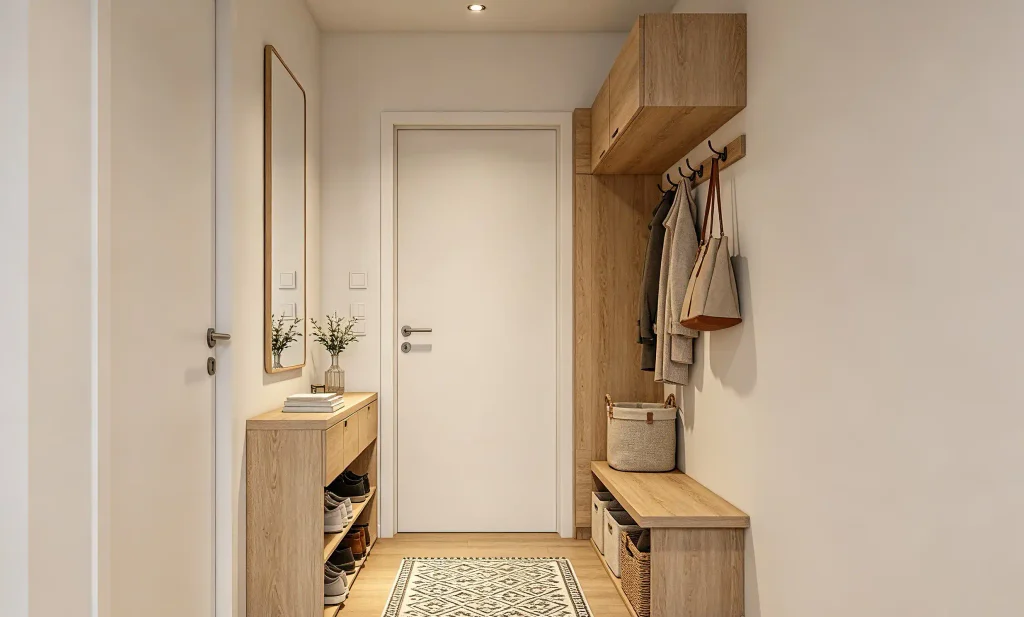
The best entryway storage ideas are not necessarily the ones that provide the most storage. They are the solutions that make everyday belongings easy to access while keeping the entrance clear, organized, and comfortable to use.
Whether you are organizing a narrow hallway, a small entryway, or a home without a closet, choose storage that fits your available space and supports your daily routine. A well-planned entryway does not need to be filled with furniture—it simply needs a clear place for the things you use most.
FAQs
1. How do you organize an entryway with no closet?
Start by dividing the functions normally handled by a closet. Use hooks or a coat rack for jackets and bags, shoe storage for footwear, baskets for smaller accessories, and a bench or cabinet for additional storage. Keeping each category in a defined zone can create a practical alternative to a built-in closet.
2. How can I add storage to a narrow hallway without blocking it?
Prioritize wall-mounted or shallow storage and pay close attention to furniture depth. Hooks, floating shelves, slim shoe storage, and tall narrow cabinets can provide useful capacity while preserving the main walking route. Always measure the available space and check the actual dimensions of furniture before buying.
3. Where should shoes be stored in a small entryway?
Keep frequently worn shoes in the most accessible storage area, such as an open rack or easily accessible shoe cabinet. Seasonal and rarely worn footwear can be stored in closed or less accessible areas. The goal is to prevent shoes from spreading into the main walking path.
4. How can renters add entryway storage without drilling?
Freestanding furniture is one of the most flexible options for renters. Storage benches, cabinets, shelving, and coat racks can add storage without permanently changing the walls. Removable hooks may also be suitable for some situations, provided they are appropriate for the wall surface and used according to the manufacturer’s instructions.