
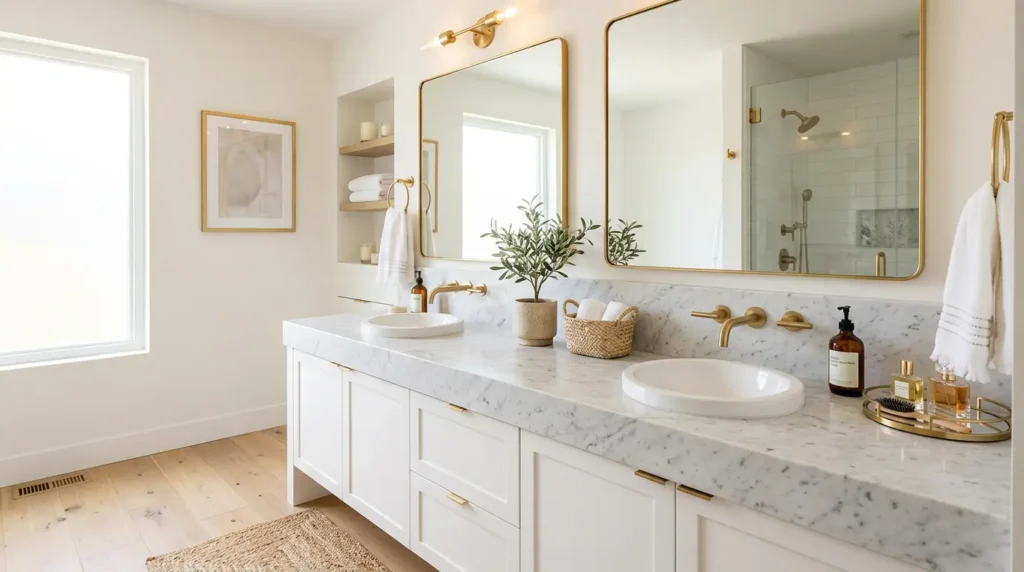
Choosing a bathroom vanity is about more than finding a cabinet you like. The right vanity needs to fit your bathroom, work with your plumbing, provide enough storage, and complement the way you use the space.
Whether you are furnishing a compact powder room or updating a larger primary bathroom, making the wrong choice can create practical problems. A vanity that is too deep can restrict movement, while the wrong sink configuration can leave you with less usable counter space than expected.
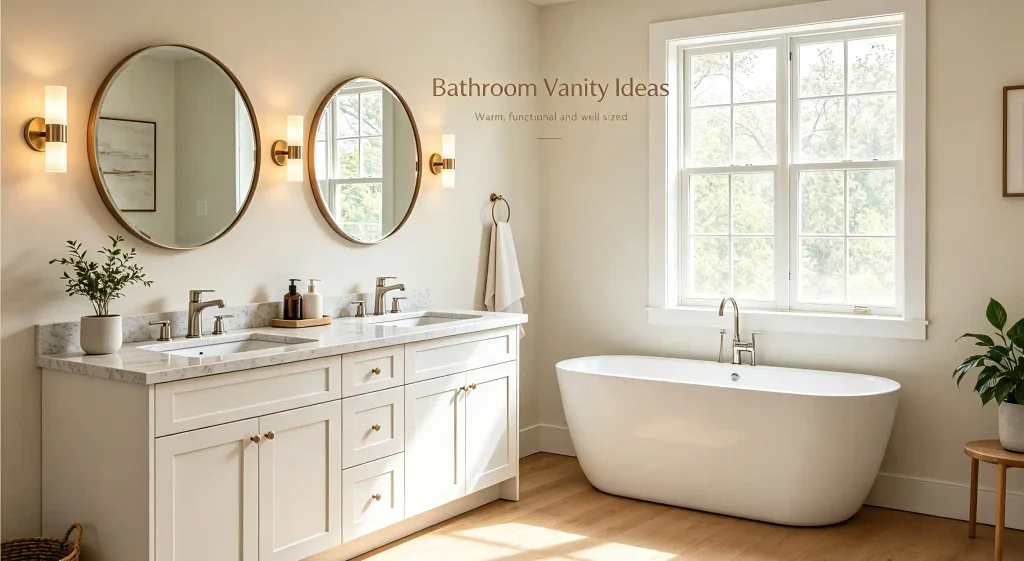
This bathroom vanity buying guide walks through the most important decisions—from measuring your space and choosing the right size to comparing storage, installation styles, sinks, materials, finishes, and overall value.
Start With Your Bathroom: Measure the Space Before Shopping
The first step is not choosing a style. It is measuring the space available for the vanity.
A vanity may look perfect online but still be unsuitable if it interferes with a door, blocks a walkway, or does not work with your existing plumbing.
1. Measure the Available Width, Depth, and Height
Measure the area where the vanity will sit and check:
- Available wall width
- Maximum vanity depth
- Available height
- Door and drawer clearance
- Walking space in front of the vanity
- Location of existing plumbing
- Position of nearby fixtures, doors, and walls
Common vanity dimensions can be used as general planning guidelines, but the actual product specifications should always be checked before purchasing.
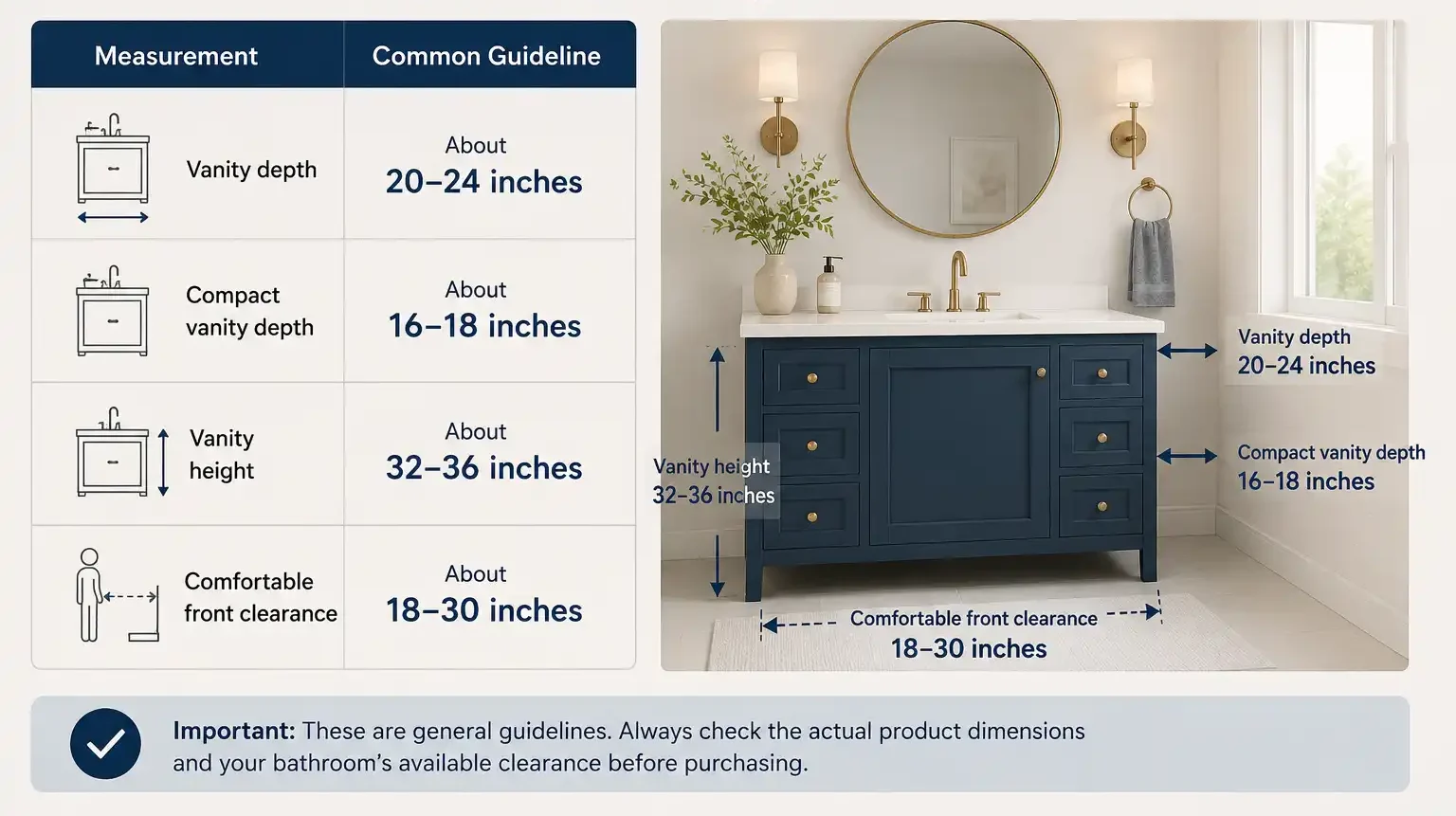
These are general guidelines rather than universal requirements. Your bathroom layout, household needs, and selected product can change what works best.
2. Don’t Forget Plumbing
Check where the existing water supply and drain connections are located.
If the plumbing does not align with the new vanity, modifications may increase installation complexity and cost. This is particularly important when replacing an existing vanity rather than designing a bathroom from scratch.
Simple rule: measure the room first, then shop for a vanity that fits the room—not the other way around.
Choose the Right Vanity Size and Sink Configuration
Once you understand the available space, consider how much counter space, storage, and sink capacity you actually need.
1. Single Vanity vs. Double Vanity
A single vanity is generally the more flexible choice for smaller bathrooms, guest bathrooms, and powder rooms. It can also provide more uninterrupted counter space around one sink.
A double vanity can be useful in a shared bathroom where two people regularly need access to the sink at the same time.
Common planning ranges include:
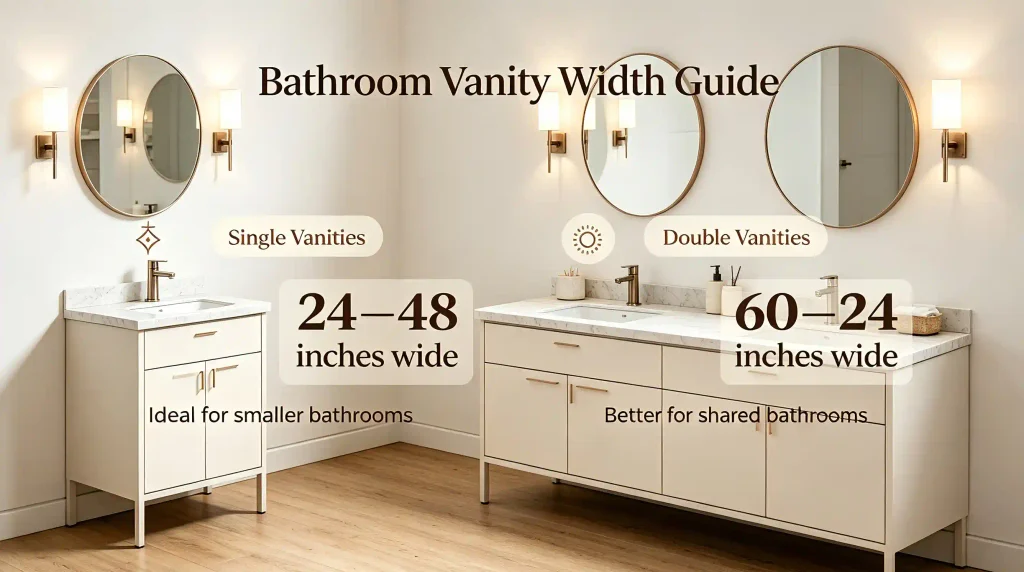
A double vanity needs enough room to accommodate two sinks without making the bathroom feel cramped.
Instead of asking whether a double vanity is “better,” consider:
Choose a single vanity when:
- Bathroom floor space is limited.
- One person normally uses the bathroom at a time.
- You want more continuous countertop space.
- You want to maximize flexibility around other fixtures.
Consider a double vanity when:
- The bathroom is shared regularly.
- Two people need to use the sink simultaneously.
- The room has enough width for comfortable movement.
- Separate sink areas are more useful than additional counter space.
2. Think About How the Bathroom Is Used
A vanity for a guest bathroom does not necessarily need the same storage capacity as one in a primary bathroom.
Think about what will actually be stored there:
- Makeup and skincare
- Hair tools
- Towels
- Cleaning supplies
- Toiletries
- Everyday bathroom accessories
The goal is not simply to buy the largest vanity that fits. It is to choose the size that provides the right balance of storage, counter space, and movement.
Compare Storage, Installation Types, and Practical Function
A bathroom vanity is both furniture and functional storage, so the internal layout matters as much as the exterior.
1. Drawers vs. Cabinet Doors
Drawers are particularly useful for smaller everyday items because their contents are easier to see and access.
They can work well for:
- Makeup
- Brushes
- Skincare
- Small bathroom accessories
Cabinet doors are more useful for larger or awkwardly shaped items such as:
- Cleaning supplies
- Spare towels
- Hair dryers
- Larger containers
Some vanities combine drawers and cabinet storage, giving you different options within the same unit.
Remember that plumbing can occupy space beneath the sink. As a result, storage directly underneath the basin may be less usable than it appears from the outside.
2. Freestanding vs. Wall-Mounted Vanities
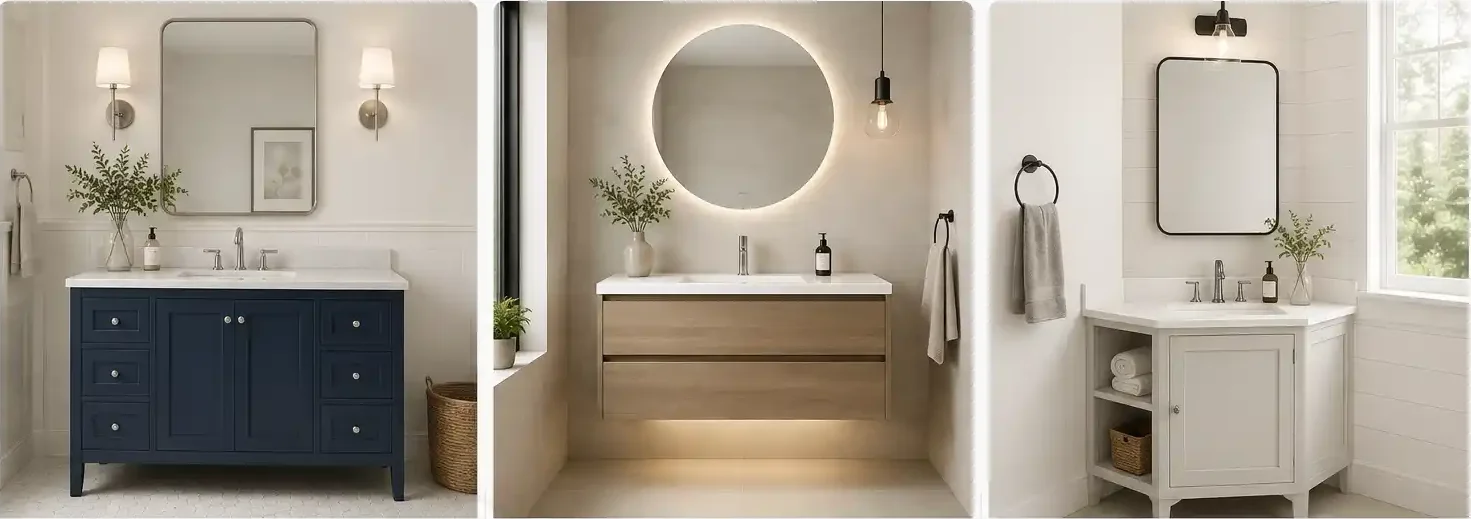
The installation style also affects both appearance and functionality.
Freestanding vanities sit directly on the floor and generally offer a familiar furniture-like appearance. They can work particularly well in traditional, transitional, or classic bathrooms.
Wall-mounted or floating vanities are attached to the wall rather than sitting directly on the floor. They can create a more contemporary appearance and leave visible floor space underneath, which may make a compact bathroom feel more open.
However, wall-mounted designs require appropriate wall support and careful installation.
A corner vanity can also be useful when wall space is limited or the bathroom layout has an unused corner.
3. Consider Installation Before You Buy
Ask:
- Does the vanity work with the existing plumbing?
- Does a wall-mounted model have adequate wall support?
- Can doors and drawers open fully?
- Is the vanity stable and properly secured?
- Will professional installation be necessary?
A visually attractive vanity is not a good purchase if it creates installation problems that could have been identified beforehand.
Choose the Sink and Countertop Together
The sink and countertop affect both the appearance and everyday usability of a bathroom vanity.
1. Common Sink Types
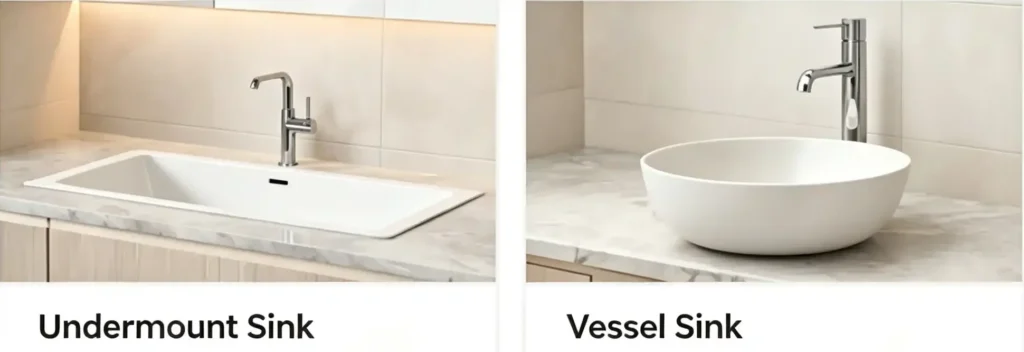
Undermount sinks sit below the countertop surface and create a clean transition that is relatively easy to wipe down.
Vessel sinks sit on top of the counter and can become a strong visual feature. However, they also affect the amount of usable countertop space and the overall height of the basin.
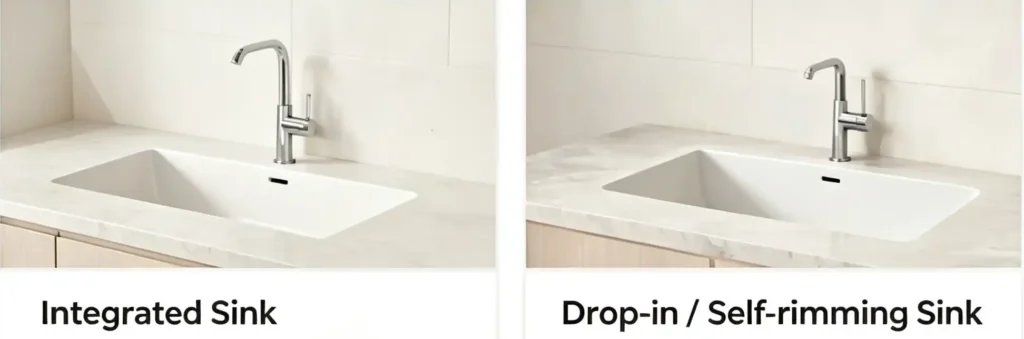
Integrated sinks combine the sink and countertop into one continuous surface, reducing visible seams and making cleaning straightforward.
Drop-in or self-rimming sinks are another familiar option and can be practical for a variety of bathroom layouts.
There is no universally best sink type. Consider how much counter space you want, how easy you want cleaning to be, and what visual style you prefer.
2. Countertop Materials
Common bathroom vanity countertop materials include:
- Quartz
- Granite
- Marble
- Laminate
- Solid surface
- Concrete
Natural stone can provide a distinctive appearance but may require additional care depending on the material and finish.
The important point is to evaluate the vanity cabinet, countertop, and sink as one system rather than choosing each component independently.
Consider Materials, Moisture Resistance, and Durability
Bathrooms expose furniture to humidity, splashes, and frequent cleaning, so material selection matters.
Vanity cabinets may use materials such as:
- Solid wood
- Plywood
- Engineered wood
- MDF
- Laminate
- Melamine
The material itself does not tell the entire story. Construction quality, edge treatment, surface finish, and moisture protection can all affect long-term performance.
1. Look for Bathroom-Appropriate Finishes
A vanity should be designed or finished appropriately for a bathroom environment.
When comparing products, consider:
- Moisture resistance
- Ease of cleaning
- Surface finish
- Construction quality
- Hardware quality
- Manufacturer care instructions
If you prefer the appearance of natural wood, remember that bathroom suitability depends on the specific construction and finish rather than simply the word “wood.”
2. Think About the Countertop Separately
A durable cabinet can still require more countertop maintenance depending on the material selected.
For example, some natural stone surfaces may need periodic sealing, while other countertop materials can offer simpler everyday maintenance.
The best choice depends on how much maintenance you are willing to perform—not simply which material looks most premium.
Match the Vanity to Your Bathroom Style
Once the practical requirements are established, you can focus on appearance.
The vanity is often one of the largest pieces of furniture in a bathroom, so its color, shape, hardware, and finish can have a noticeable effect on the entire room.
1. Match the Overall Design Direction
Common bathroom styles include:
- Modern
- Contemporary
- Traditional
- Transitional
- Farmhouse
- Industrial
- Mid-century
A floating vanity can complement a clean, contemporary bathroom, while a furniture-style freestanding vanity may work better with traditional or transitional interiors.
2. Coordinate Colors and Hardware
Consider how the vanity works with:
- Wall color
- Floor tile
- Shower or bathtub
- Mirror
- Lighting
- Faucet
- Cabinet hardware
Popular hardware finishes include chrome, brushed nickel, matte black, and brass.
You do not necessarily need every finish in the bathroom to be identical. The more important consideration is whether the different elements look intentionally coordinated.
3. Think About Visual Weight
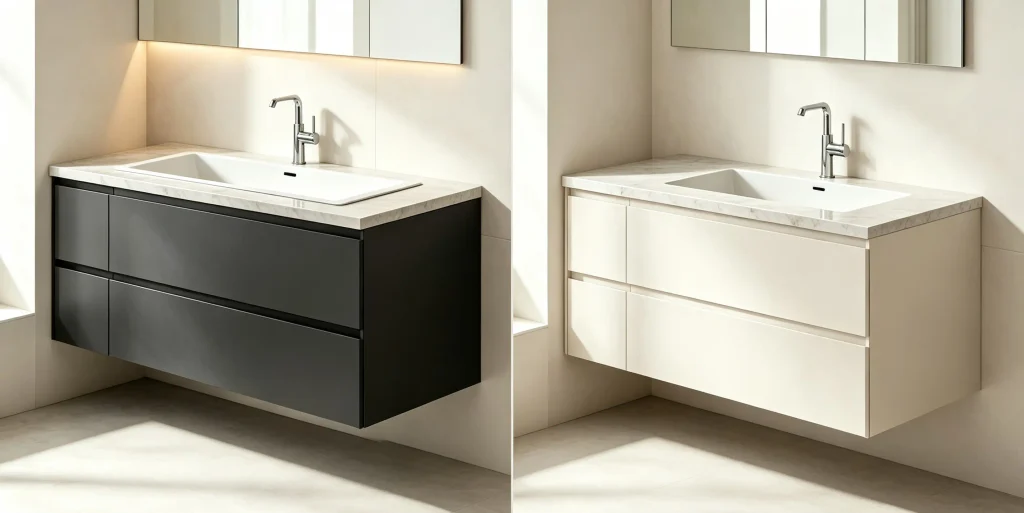
Dark or heavily detailed vanities can become a strong focal point. Lighter finishes and simpler silhouettes may create a more visually open appearance.
However, style should come after function.
A beautiful vanity that provides inadequate storage or makes the bathroom difficult to use is unlikely to be a good long-term choice.
Check the Faucet, Mirror, Lighting, and Installation Details
A vanity does not exist in isolation. Several surrounding components need to work with it.
1. Check the Faucet Configuration
Before purchasing a faucet, check the sink or countertop’s hole configuration.
Common configurations include:
- Single-hole
- 4-inch centerset
- 8-inch widespread
Also consider faucet spout height and reach. The faucet should work comfortably with the selected basin without creating unnecessary splashing.
2. Plan the Mirror
The mirror should be proportionate to the vanity and positioned at a practical height.
A mirror that is too small can look disconnected from a wide vanity, while one that is too large may interfere with lighting or other fixtures.
3. Don’t Overlook Lighting
Good vanity lighting affects both functionality and appearance.
Consider whether the lighting provides enough illumination for tasks such as shaving, applying makeup, or grooming.
Ideally, lighting should minimize harsh shadows across the face rather than simply making the bathroom brighter.
4. Confirm Installation Requirements
Before ordering, perform a final check:
- Vanity dimensions
- Sink configuration
- Countertop compatibility
- Plumbing location
- Faucet compatibility
- Wall support, if applicable
- Door and drawer clearance
- Mirror and lighting position
This final check can prevent expensive surprises after delivery.
Compare the Total Cost and Long-Term Value
The purchase price is only one part of the total cost of a bathroom vanity project.
Depending on the product, you may need to budget separately for:
- Vanity cabinet
- Countertop
- Sink
- Faucet
- Mirror
- Installation
- Plumbing modifications
- Additional hardware or accessories
A ready-to-use vanity package can simplify purchasing because several components may already be designed to work together.
On the other hand, buying components separately can provide greater flexibility if you have specific requirements.
1. Look Beyond the Initial Price
A cheaper vanity is not necessarily better value if it:
- Does not fit the bathroom correctly
- Provides insufficient storage
- Requires extensive modifications
- Uses materials unsuitable for the environment
- Needs replacement sooner than expected
Likewise, the most expensive vanity is not automatically the best choice.
Think about fit, functionality, durability, maintenance, and installation requirements together.Here is an example of investigation before purchasing:
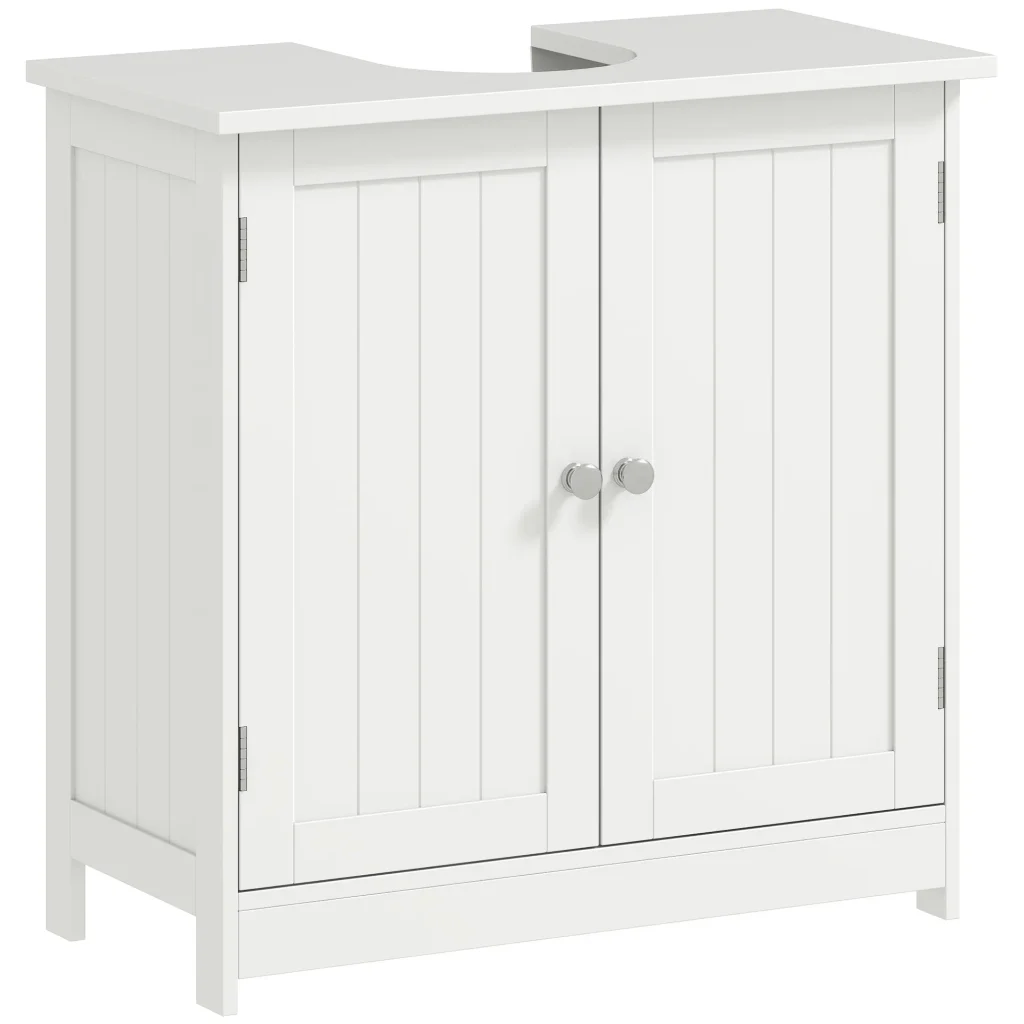
If I want to buy a HOMCOM Under Sink Bathroom Cabinet with Shelf, White, and then I will pay much attention to its products details, instead of just considering its prices and color.
Bathroom Vanity Buying Checklist
Before you place your order, run through this checklist:
1. Space
- Does the vanity fit the available width and depth?
- Can doors and drawers open without obstruction?
- Is there enough space to move comfortably around it?
2. Sink and Countertop
- Do you need one sink or two?
- Does the sink provide enough usable counter space?
- Is the countertop material appropriate for your maintenance preferences?
3. Storage
- Do you need drawers, cabinets, or a combination?
- Will the storage accommodate your everyday bathroom items?
- Has plumbing reduced the usable space underneath the sink?
4. Installation
- Does the vanity work with your existing plumbing?
- Does a wall-mounted model have adequate support?
- Will you need professional installation?
5. Design
- Does the vanity complement the bathroom style?
- Do the finish and hardware work with your faucet and other fixtures?
- Is the visual scale appropriate for the room?
6. Budget
- Have you considered the cost of the vanity, sink, countertop, faucet, and installation?
- Are you paying for features you will actually use?
If the answer to all of these questions is yes, you are much more likely to choose a vanity that works well after installation—not just one that looks good online.
Final Thoughts: Choose a Vanity That Works for Your Bathroom
A successful bathroom vanity purchase starts with function before appearance.
Measure your available space, check the plumbing, determine whether you need one sink or two, and think carefully about how much storage you actually use. Then compare installation styles, sink and countertop options, materials, finishes, and total project costs.
For a small bathroom, the priority may be efficient dimensions and smart storage. For a shared bathroom, sink configuration and countertop space may matter more. For a bathroom renovation focused on style, the vanity’s finish, hardware, and relationship with the mirror and lighting may become more important.
The best bathroom vanity is not necessarily the largest, most expensive, or most fashionable option. It is the one that fits your bathroom, supports your daily routine, provides the storage you need, and remains practical over time.
FAQs
1. What are the bathroom vanity trends for 2026?
Current bathroom design discussions increasingly emphasize clean, functional designs rather than purely decorative vanities. Floating silhouettes, natural-looking finishes, mixed materials, statement hardware, and storage-focused layouts are common directions to consider.
However, trends should not override the practical requirements of your bathroom. A timeless vanity that fits your space and storage needs can be a better long-term choice than a trend-driven design.
2. How much should a quality bathroom vanity cost?
There is no single price that defines a quality bathroom vanity. Cost can vary considerably according to size, materials, countertop, sink configuration, construction, customization, and brand.
Instead of judging quality from price alone, compare the total package and consider what you are actually getting for the money. A well-fitting vanity with appropriate materials and useful storage may provide better value than a more expensive model with features you do not need.
3. What is the best bathroom vanity to buy?
The best bathroom vanity is the one that fits your space and matches how you use the bathroom.
For a small bathroom, a compact single vanity may be the most practical choice. For a shared primary bathroom, a larger double vanity may provide more convenient access. If floor space is limited, a wall-mounted design can help create a more open visual effect.
There is no universally best vanity—the right choice depends on size, storage, sink configuration, installation requirements, style, and budget.
4. What colors make a bathroom look expensive?
Neutral and sophisticated colors such as white, warm wood tones, soft gray, navy, black, and certain muted green tones can create an upscale appearance when coordinated with the rest of the bathroom.
The overall effect depends on more than the vanity color. Consistent finishes, appropriate lighting, quality-looking hardware, and balanced proportions can have a greater impact than simply choosing a particular “luxury” color.