
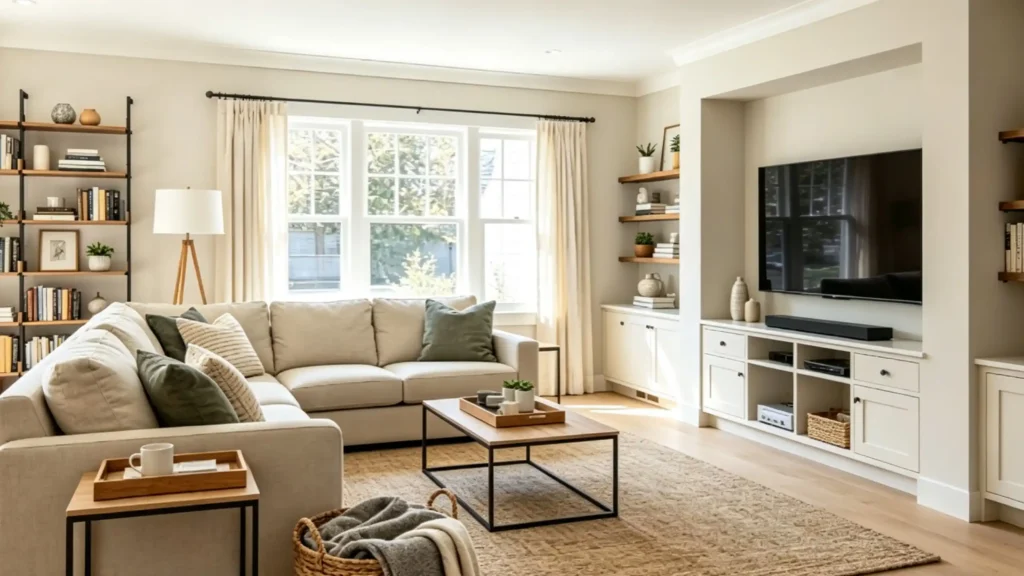
A well-organized living room is not simply a room with more cabinets, shelves, or storage boxes. The goal is to create a space where everyday items have a clear place, frequently used things are easy to access, and clutter does not take over the surfaces or floor.
The best living room organization ideas also need to work with the way you actually use the room. A family living room may need accessible toy storage, while a smaller space may benefit more from vertical shelving and multifunctional furniture. Before buying anything new, start by identifying what is creating clutter and what kind of storage would genuinely solve the problem.
Here are practical ways to organize your living room while keeping it comfortable, functional, and visually balanced.
1. Start by Decluttering and Identifying What Needs to Be Stored
Before adding storage furniture, take a closer look at what is already in the room. Adding another cabinet or shelf will not solve the problem if the room contains items that do not need to be there in the first place.
Clear the Most Visible Clutter
Start with the areas that make the room look untidy most quickly:
- Coffee tables
- Side tables
- Media consoles
- Sofa areas
- Open floor space
Remove anything that belongs in another room, such as paperwork, clothing, dishes, or items that have simply been left behind.
Sort Items Into Three Groups
A simple sorting system can make the process easier:
- Keep: Items you regularly use or genuinely want in the living room
- Relocate: Items that belong somewhere else in the home
- Remove: Broken, unused, duplicated, or unwanted items
This helps you determine how much storage you actually need rather than automatically assuming you need more furniture.
Identify Your Actual Storage Needs
Once unnecessary items are removed, group the things that remain by type. You may find that your main storage needs are:
- Books and magazines
- Blankets and pillows
- Toys and games
- Remote controls
- Electronics accessories
- Cables and chargers
- Decorative objects
Each category may require a different solution. Frequently used items should be easy to reach, while occasional-use items can be placed in less accessible storage.
The goal is not to store everything. It is to give the things you keep a logical home.
2. Give Everyday Items a Home With Simple Storage Solutions
Not every organization problem requires a large piece of furniture. Small storage accessories can prevent everyday objects from spreading across tables, sofas, and floors.
Use Baskets and Bins for Flexible Storage
Baskets are particularly useful for items that are frequently moved around the living room.
You can use them for:
- Blankets and pillows
- Children’s toys
- Board games
- Books
- Small accessories
Open baskets work well for items you use frequently because they are easy to access. Lidded baskets or storage bins can be better for items that you want to keep out of sight.
Choose containers that fit the size of the items you need to store. An oversized basket can quickly become a place where miscellaneous items accumulate rather than a useful organization system.
Use Trays to Contain Small Items
Small objects are often responsible for a surprisingly large amount of visible clutter.
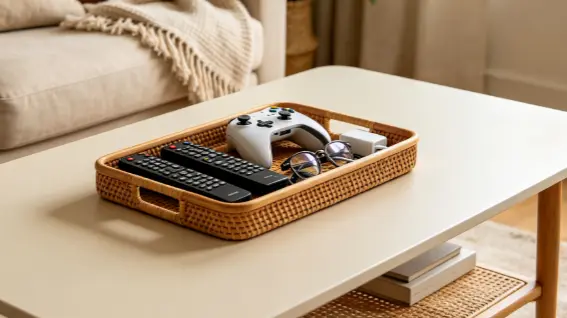
A tray on a coffee table or side table can give remote controls, controllers, chargers, and other small accessories a designated location.
Instead of having several small items scattered across a surface, group them together in one contained area. This also makes it easier to clear the table when you need more space.
Choose Multifunctional Furniture When Space Is Limited
When floor space is limited, consider furniture that performs more than one function.
For example:
- A storage bench can provide seating and storage.
- A storage ottoman can work as seating, a footrest, and hidden storage.
- A storage table can provide a useful surface while keeping smaller items contained.
This approach can be particularly effective in small living rooms because you can add storage without automatically adding another separate piece of furniture.
3. Choose the Right Storage Furniture for Your Living Room
Once you know what needs to be stored, you can choose furniture based on the type and frequency of use rather than simply buying the largest storage unit that fits.
Storage Cabinets: Best for Hiding Everyday Clutter
Closed cabinets are useful for items that you need to keep in the living room but do not necessarily want to display.
They can be suitable for:
- Toys
- Games
- Electronics
- Household accessories
- Miscellaneous items
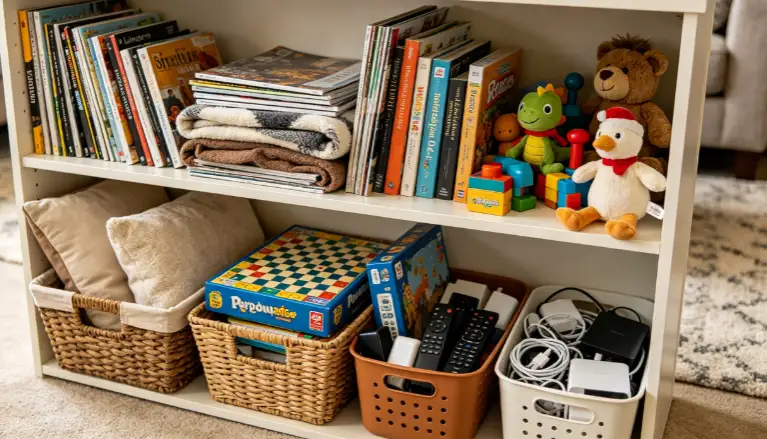
Closed storage can also make a room feel easier to maintain because small objects are kept out of sight.
Open Shelves and Bookcases: Best for Display and Easy Access
Open shelving works well when you want storage to become part of the room’s design.
Use it for:
- Books
- Plants
- Photos
- Decorative objects
- Collections
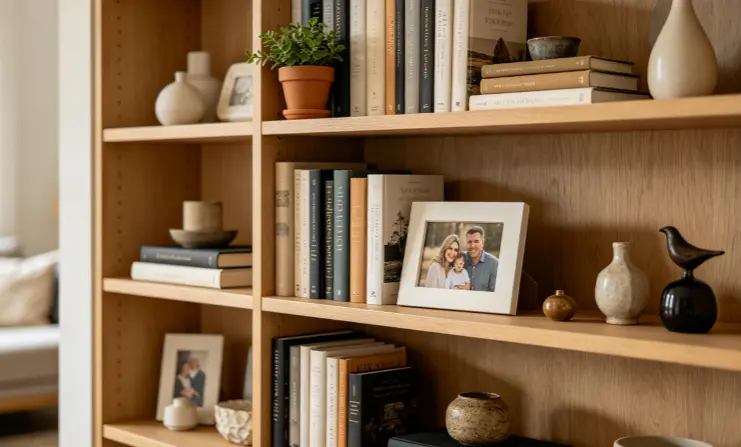
Open shelves are also convenient when you regularly use the items stored there. However, because everything is visible, they require more deliberate organization.
Storage Benches and Tables: Best When You Need More Than Storage
If you need additional seating or surface space as well as storage, multifunctional furniture can be more efficient than purchasing separate pieces.
For example, a storage bench can provide a place to sit while keeping blankets or other accessories inside. A storage table can give you a convenient surface while helping contain everyday items.
Match Storage to How Often You Use Something
A simple rule can help you decide where things should go:
- Daily-use items → easy-access storage
- Occasional-use items → closed or less accessible storage
- Decorative items → open display storage
- Bulky soft items → baskets, benches, or ottomans
This makes the organization system more practical because you are not constantly opening cabinets or moving objects to reach the things you use every day.
4. Use Walls, Corners and Other Underused Space
When floor space is limited, look upward and around the furniture you already have before adding another large piece to the center of the room.
Go Vertical Before Taking Up More Floor Space
Tall storage can make better use of the room’s height while preserving valuable floor area.Depending on the layout, options may include:
- Tall bookcases
- Wall shelves
- Wall-mounted cabinets
- Vertical storage units
For a smaller living room, this can be particularly useful because storage is increased without significantly reducing the open floor area.
Make Use of Corners
Corners are easy to overlook because standard furniture does not always fit them efficiently.Depending on the available space, consider:
- Corner shelving
- Narrow cabinets
- Tall storage units
- Compact accent cabinets
The right corner solution can turn an otherwise unused area into functional storage without interfering with the center of the room.
Look Above and Around Existing Furniture
Also consider practical wall areas:
- Above a sofa
- Around the TV area
- Beside existing furniture
- Other unused vertical areas
However, avoid filling every available wall simply because space exists.
Keep the Floor and Main Walking Path Open
The purpose of vertical and corner storage is to improve capacity while keeping movement comfortable.Before installing or positioning a storage unit, check whether it affects:
- Doorways
- Main walking routes
- Seating access
- Drawer or cabinet opening
Good organization should create more usable space, not simply put more furniture into the room.
5. Organize the Living Room by Activity Zone
Instead of treating the living room as one large storage area, organize different parts of the room according to how they are actually used.This makes it easier to decide what should be stored where.
Conversation and Relaxation Zone
The area around the sofa is usually where people spend the most time, so frequently used items should be easy to reach.
Think about:
- Remote controls
- Books
- Blankets
- Drinks
- Small personal items
Try this: Keep a small tray on a side table for remotes and other small accessories, while placing blankets in a nearby basket or storage bench.
This prevents the coffee table and sofa from becoming permanent storage areas.
TV and Entertainment Zone
The TV area often becomes a collection point for electronics, controllers, cables, and accessories.Group related items together instead of storing them throughout the room.
Try this: Use a drawer, cabinet compartment, or lidded basket for controllers, game accessories, and other small media items.
Keep Cords Under Control
Loose cables can make even an otherwise organized entertainment area look messy.You can:
- Group related cables together.
- Use cable clips, ties, or sleeves.
- Control excess cable length.
- Keep chargers and accessories in a designated location.
The goal is not to make every cable invisible, but to prevent cords from becoming a tangled and scattered part of the room.
Reading and Display Zone
If you have a reading chair or a small area dedicated to books, keep the storage close to where you actually use it.
A narrow bookcase, shelving unit, or compact side table can make books and reading accessories easier to access.
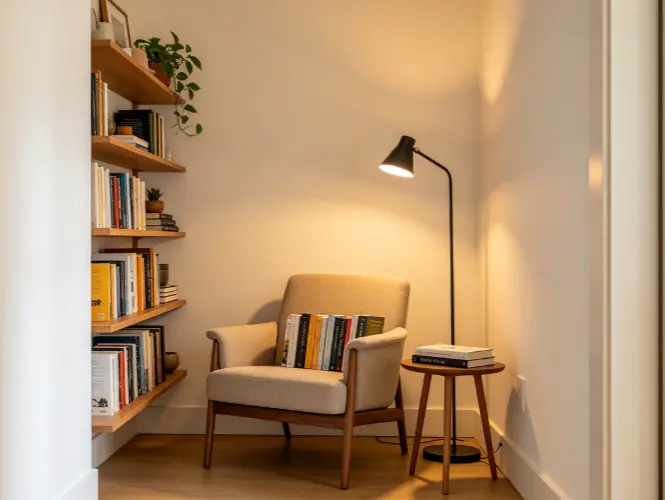
Try this: Keep your current reading material within easy reach and use higher shelves for decorative objects or books you access less frequently.
Family or Children’s Zone
A family living room often needs storage that is easy to use and quick to tidy.Baskets and accessible storage can work well for:
- Toys
- Games
- Craft supplies
- Children’s books
Try this: Place frequently used toys in accessible baskets and reserve closed storage for items that need to be cleared away after playtime.
This creates a simple system that children and adults can follow without requiring every item to be perfectly arranged.
Keep Circulation Paths Clear
No matter how much storage you add, make sure people can still move comfortably through the room.Check:
- The path from the door to the main seating area
- Access around the sofa
- Cabinet and drawer clearance
- The space around frequently used furniture
A clear walking path can make a living room feel significantly more functional.
6. Create a Visually Lighter and More Organized Look
Organization is not only about where objects are stored. The way storage is arranged can also determine whether the room feels calm or crowded.
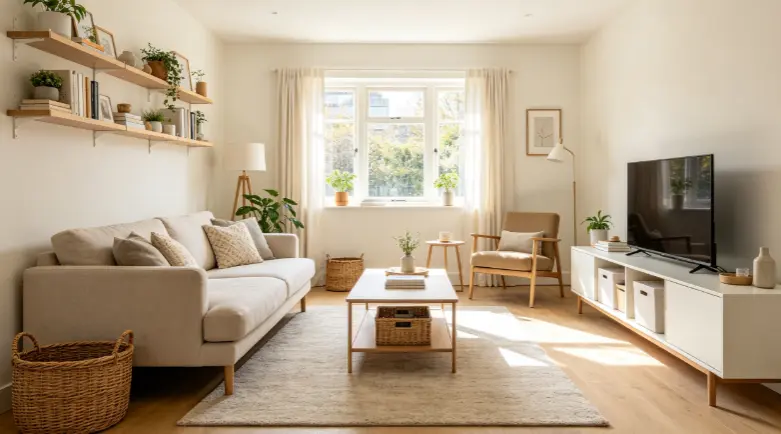
Avoid Overloading Open Shelves
An open shelf does not need to be completely full to be useful.Leave some visual space between groups of objects rather than filling every shelf from edge to edge.
You can combine:
- Books
- Decorative objects
- Plants
- Baskets
Varying the height and grouping of objects can make shelving feel more intentional without adding more decoration.
Use Baskets and Storage Boxes to Reduce Visual Noise
Storage containers can also contribute to a more cohesive appearance.
Instead of using many unrelated colors and materials, consider choosing containers with complementary finishes or colors.
The goal is to make several small objects visually read as one organized group.
Keep a Consistent Visual Palette
Storage furniture should work with the existing room rather than compete with it.
Consider coordinating:
- Furniture finishes
- Storage containers
- Wall colors
- Decorative accents
You do not need everything to match exactly. A consistent overall palette is usually enough to make different storage solutions feel connected.
Use Visually Light Furniture in Small Rooms
In a smaller living room, storage furniture with visible legs can leave more of the floor visible, which can make the room feel less visually heavy.
Lighter-colored storage furniture can also reduce the sense of visual bulk.
Use Mirrors Strategically
A well-positioned mirror can reflect light and create more visual depth.If a storage-heavy wall feels enclosed, a mirror can help break up the solid appearance while making the area feel more open.
These techniques should support the organization system rather than replace it. A room will not feel organized simply because it contains lighter colors or mirrors.
7. Make Your Organization System Easy to Maintain
An organization system only works if you can realistically maintain it.
A complicated system may look impressive immediately after it is created but become difficult to use a few weeks later.
Create a Quick Daily Reset
At the end of the day, return commonly misplaced items to their designated homes:
- Put remotes back in their tray.
- Return books to the shelf.
- Fold or store blankets.
- Put toys back into baskets.
- Clear unnecessary items from tables.
A few small actions can prevent clutter from accumulating.
Make Storage Easy to Use
Pay attention to convenience.
A storage system may fail if:
- Frequently used items are difficult to reach.
- Containers are too full.
- Cabinets are difficult to open.
- Items are stacked in a way that requires moving several things to reach one object.
The easier something is to put away, the more likely it is to stay organized.
Reassess What You Own
Your storage needs can change over time.
Periodically remove:
- Unused items
- Broken items
- Duplicates
- Things that no longer belong in the living room
This prevents your storage system from gradually becoming overcrowded.
Don’t Keep Buying More Organizers
More baskets, boxes, and cabinets do not automatically create better organization.
If clutter continues to accumulate, ask whether the problem is a lack of storage or simply too many things.
Sometimes removing unnecessary items is more effective than adding another storage solution.
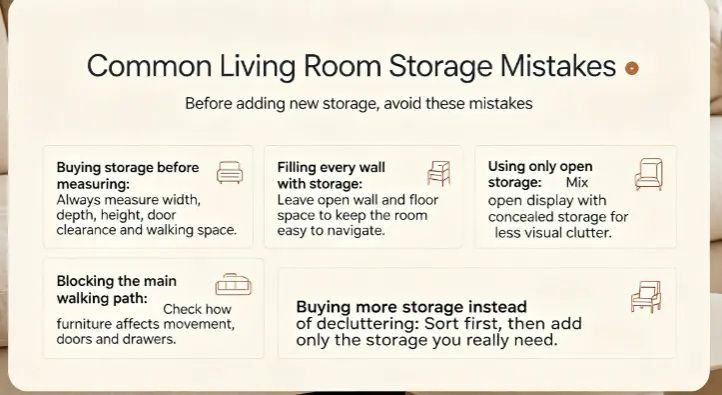
8. Common Living Room Organization Mistakes to Avoid
9. How to Choose Living Room Storage Furniture Before Buying
Once you understand your storage needs and the way your living room is used, choosing furniture becomes much easier.
Measure the Full Footprint
Do not look at width alone.Before purchasing, consider:
- Overall width
- Depth
- Height
- Door or drawer clearance
- Walking space around the furniture
A piece that fits against a wall may still make the room uncomfortable if there is insufficient space to move around it.
Match Storage Capacity to Your Needs
Ask yourself:
- What exactly will I store?
- How often will I use it?
- Do I need open or closed storage?
- Would drawers, shelves, or cabinets work better?
- Do I need all of the available storage capacity?
Choosing based on these questions helps prevent buying furniture that is either too small to be useful or unnecessarily large.
Consider Multifunctionality
If space is limited, ask whether the furniture can solve more than one problem.
For example:
- Can it provide seating and storage?
- Can it provide display space and concealed storage?
- Can it provide a useful surface as well as storage?
Multifunctional furniture can be especially valuable when every square foot of the room needs to work harder.
Consider Style and Maintenance
Finally, think about how the furniture will look and function over time.
Ask:
- Does it fit the existing furniture?
- Is the surface easy to clean?
- Will open shelves require frequent tidying?
- Can you comfortably access the storage areas?
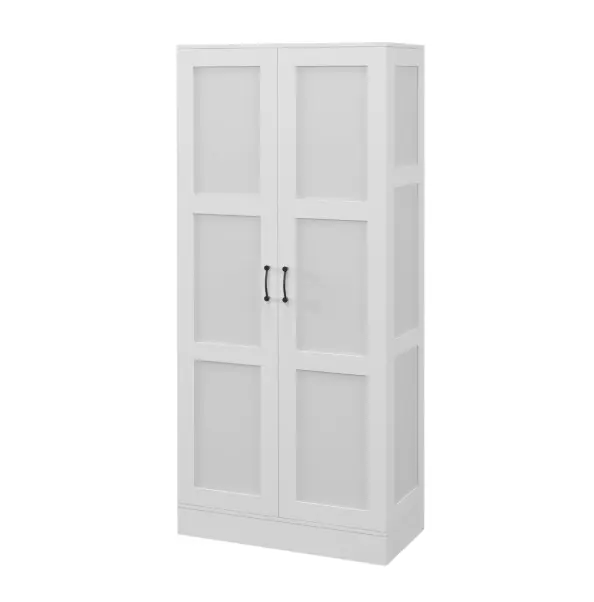
Take the HOMCOM 71″ Tall Storage Cabinet with Movable Storage Shelves, Modern Style Pantry Cupboard Cabinet with Soft Close Doors as an example.
Conclusion
The best living room organization ideas are not about fitting as much storage as possible into the room. They start by removing unnecessary clutter, identifying what actually needs to be stored, and giving everyday items a convenient home.
From baskets and trays to storage cabinets, shelves, benches, and multifunctional furniture, each solution should serve a specific purpose. Vertical space and overlooked corners can provide additional storage without filling the floor, while activity-based organization makes it easier to keep frequently used items within reach.
Most importantly, choose a system that is simple enough to maintain. When everything has a logical place and putting things away takes little effort, keeping the living room organized becomes part of everyday life rather than another chore.
FAQs
1. What is the 2/3 rule for living rooms?
A: The 2/3 rule for living‑room decor suggests filling roughly two‑thirds of your available storage and surface space, while leaving the remaining one‑third empty. This intentional negative space prevents shelves, cabinets and tabletops from feeling overstuffed and cluttered. It keeps the room visually balanced, functional, and gives everyday items breathing room.
2. How do I organize my living room?
A: Start by decluttering and sorting items into keep, relocate, and remove groups. Assign fixed homes for frequently‑used objects using baskets, trays and multi‑functional furniture. Take advantage of vertical and corner space for extra storage, and arrange belongings by activity zones. Maintain the system with quick daily tidying to stop clutter from building up.
3. How do I make my living room cozy but not cluttered?
A: Stick to a restrained colour palette and use soft textiles like throw pillows and blankets stored inside baskets or ottomans. Mix closed concealed storage with selective open display, and leave empty space on shelves and floor areas. Limit decorative decor to a few meaningful pieces, and keep flat surfaces mostly clear to achieve warmth without mess.
4. What is the hardest thing to declutter?
A: Sentimental items are usually the hardest to declutter. They may include old toys, keepsakes, gifts, and memorabilia that hold emotional value even if they are rarely used. Many people struggle to let these go, so practical tips include keeping only a small curated selection and finding compact storage solutions for what you choose to retain.